

4.3 Preliminary Operations
Object
Bulk sample
Composite sample
Laboratory
sample
Test sample
® Al
AI
A2
Al
~~~
"'-1/
~
$
ij
T
CMP
159
®
81
~
B I
c::::=::>
B I
BI
B2
Bl
CMP
CMP
CMP
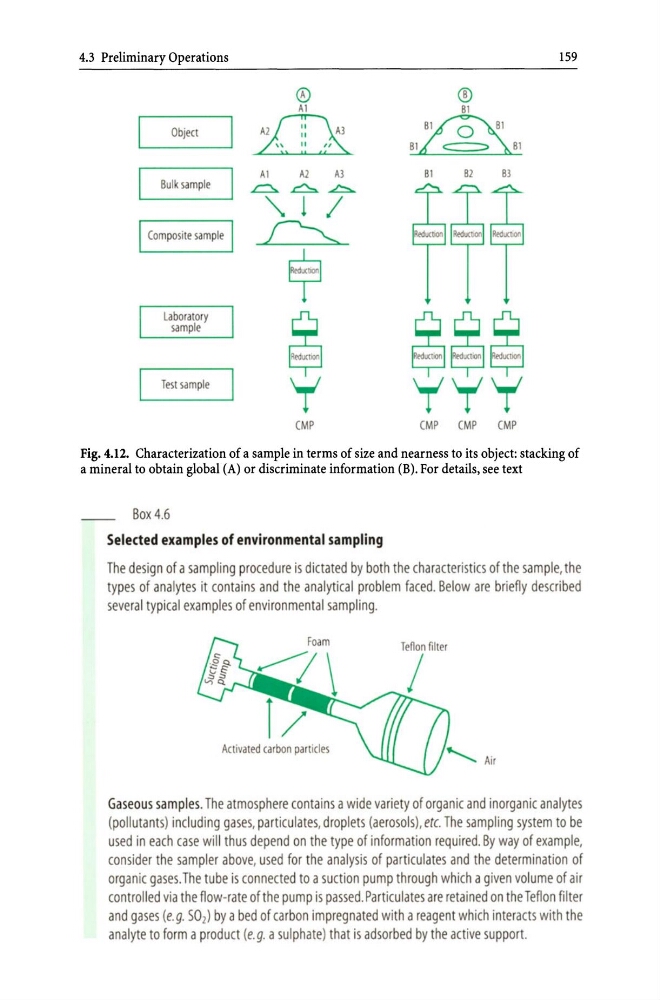
Fig. 4.12. Characterization of a sample in terms of size and nearness to its object: stacking of
a mineral to obtain global (A) or discriminate information (B). For details, see text
Box 4.6
Seleded examples of environmental sampling
The design of a sampling procedu re is dictated by both the characteristics of the sample, the
types of analytes it contains and the analytical problem faced. Below are briefly described
several typica l examples of environmenta l sampling.
Foam
AC livated carbon particles
Gaseous samples. The atmosphere contains a wide va riety of organic and inorganic analytes
(pollutants) including gases, particulates, droplets (aerosols), ere. The sampling system to be
used in each case will thus depend on the type of information requi red. By way of example,
consider the sampler above, used for the ana lysis of particulates and the determination of
organic gases. The tube is connected to a suction pump through which a given volume of air
controlled via the flow- rate of the pump is passed. Particulates are retained on the Tefl on filter
and gases (e. g. S02) by a bed of carbon impregnated with a reagent which interacts with the
analyte to form a product (e.g. a sul phate) that is adsorbed by the active support.
Object
Bulk sample
Composite sample
Laboratory
sample
Test sample
® Al
AI
A2
Al
~~~
"'-1/
~
$
ij
T
CMP
159
®
81
~
B I
c::::=::>
B I
BI
B2
Bl
CMP
CMP
CMP
Fig. 4.12. Characterization of a sample in terms of size and nearness to its object: stacking of
a mineral to obtain global (A) or discriminate information (B). For details, see text
Box 4.6
Seleded examples of environmental sampling
The design of a sampling procedu re is dictated by both the characteristics of the sample, the
types of analytes it contains and the analytical problem faced. Below are briefly described
several typica l examples of environmenta l sampling.
Foam
AC livated carbon particles
Gaseous samples. The atmosphere contains a wide va riety of organic and inorganic analytes
(pollutants) including gases, particulates, droplets (aerosols), ere. The sampling system to be
used in each case will thus depend on the type of information requi red. By way of example,
consider the sampler above, used for the ana lysis of particulates and the determination of
organic gases. The tube is connected to a suction pump through which a given volume of air
controlled via the flow- rate of the pump is passed. Particulates are retained on the Tefl on filter
and gases (e. g. S02) by a bed of carbon impregnated with a reagent which interacts with the
analyte to form a product (e.g. a sul phate) that is adsorbed by the active support.