

146
4 The Measurement Process in Chemistry
CHEMICAL MEASUREMENT PROCESS
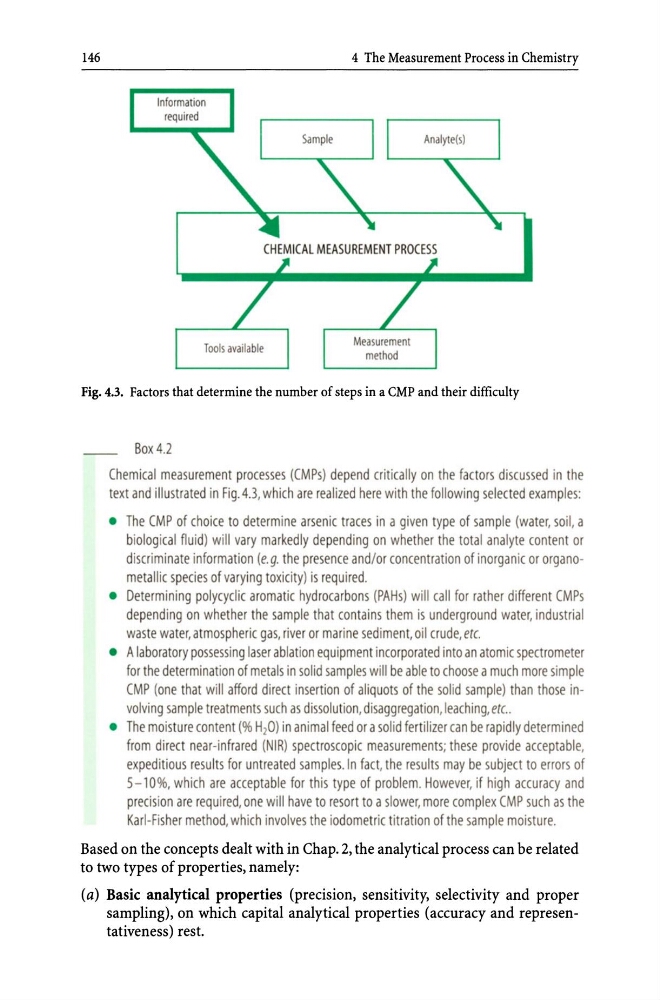
Fig. 4.3. Factors that determine the number of steps in a CMP and their difficulty
Box 4.2
Chemical measurement processes (CMPs) depend critically on the factors discussed in the
text and illustrated in Fig. 4.3, which are realized here with the following selected examples:
• The CMP of choice to determine arsenic traces in a given type of sample (water, soil, a
biological fluid) will vary markedly depending on whether the total analyte content or
discriminate information (e. g. the presence and/or concentration of inorganic or organometallic species of varying toxicity) is required.
• Determining polycyclic aromatic hydrocarbons (PAHs) will call for rather different CMPs
depending on whether the sample that contains them is underground water, industrial
waste water, atmospheric gas, river or marine sediment, oil crude, etc
• A laboratory possessing laser ablation equipment incorporated into an atomic spectrometer
for the determination of metals in solid samples will be able to choose a much more simple
CMP (one that will afford direct insertion of aliquots of the solid sample) than those involving sample treatments such as dissolution, disaggregation, leaching, etc..
• The moisture content (% H20) in animal feed or a solid fertilizer can be rapidly determined
from direct near-infrared (NIR) spectroscopic measurements; these provide acceptable,
expeditious results for untreated samples. In fact, the results may be subject to errors of
5-10%, which are acceptable for this type of problem. However, if high accuracy and
precision are required, one will have to resort to a slower, more complex CMP such as the
Karl-Fisher method, which involves the iodometric titration of the sample moisture.
Based on the concepts dealt with in Chap. 2, the analytical process can be related
to two types of properties, namely:
(a) Basic analytical properties (precision, sensitivity, selectivity and proper
sampling), on which capital analytical properties (accuracy and representativeness) rest.
4 The Measurement Process in Chemistry
CHEMICAL MEASUREMENT PROCESS
Fig. 4.3. Factors that determine the number of steps in a CMP and their difficulty
Box 4.2
Chemical measurement processes (CMPs) depend critically on the factors discussed in the
text and illustrated in Fig. 4.3, which are realized here with the following selected examples:
• The CMP of choice to determine arsenic traces in a given type of sample (water, soil, a
biological fluid) will vary markedly depending on whether the total analyte content or
discriminate information (e. g. the presence and/or concentration of inorganic or organometallic species of varying toxicity) is required.
• Determining polycyclic aromatic hydrocarbons (PAHs) will call for rather different CMPs
depending on whether the sample that contains them is underground water, industrial
waste water, atmospheric gas, river or marine sediment, oil crude, etc
• A laboratory possessing laser ablation equipment incorporated into an atomic spectrometer
for the determination of metals in solid samples will be able to choose a much more simple
CMP (one that will afford direct insertion of aliquots of the solid sample) than those involving sample treatments such as dissolution, disaggregation, leaching, etc..
• The moisture content (% H20) in animal feed or a solid fertilizer can be rapidly determined
from direct near-infrared (NIR) spectroscopic measurements; these provide acceptable,
expeditious results for untreated samples. In fact, the results may be subject to errors of
5-10%, which are acceptable for this type of problem. However, if high accuracy and
precision are required, one will have to resort to a slower, more complex CMP such as the
Karl-Fisher method, which involves the iodometric titration of the sample moisture.
Based on the concepts dealt with in Chap. 2, the analytical process can be related
to two types of properties, namely:
(a) Basic analytical properties (precision, sensitivity, selectivity and proper
sampling), on which capital analytical properties (accuracy and representativeness) rest.