

4.1 Definition of Chemical Measurement Process
Chemical
measurem ent
process (C MP)
-~.tJ> Results
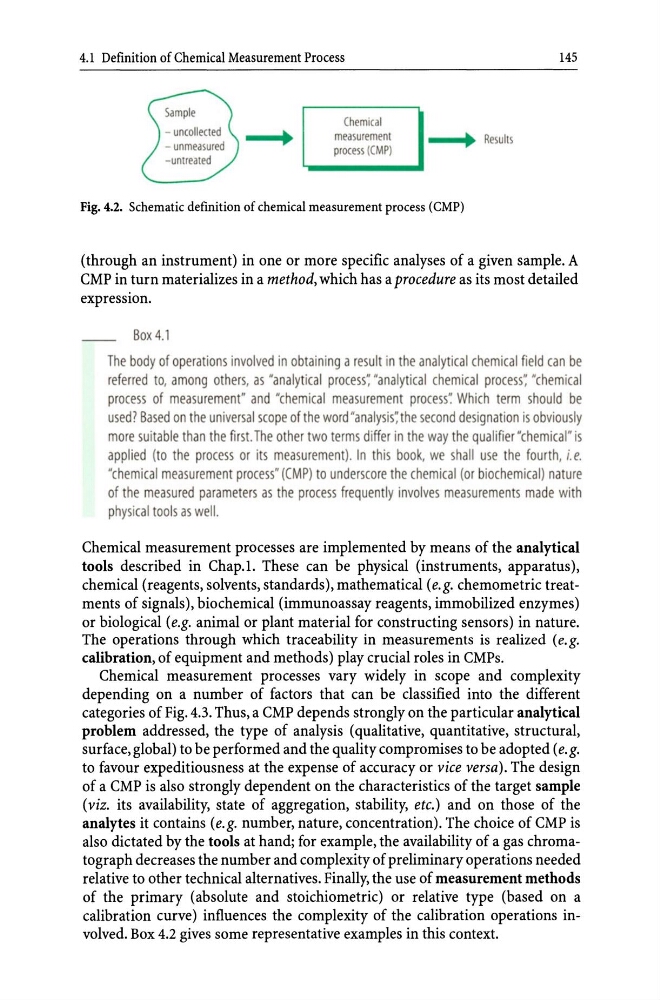
Fig. 4.2. Schematic definition of chemical measurement process (CMP)
145
(through an instrument) in one or more specific analyses of a given sample. A
CMP in turn materializes in a method, which has a procedure as its most detailed
expression.
Box 4.1
The body of operations involved in obtaining a result in the analytical chemical field can be
referred to, among others, as "analytical process' ; "analytical chemical process' ; "chemical
process of measurement" and "chemical measurement process'~ Which term should be
used? Based on the universal scope of the word "analysis'; the second designation is obviously
more suitable than the first. The other two terms differ in the way the qualifier "chemical" is
applied (to the process or its measurement). In this book, we shall use the fourth, i. e.
"chemical measurement process" (CMP) to underscore the chemica l (or biochemical) nature
of the measured parameters as the process frequently involves measurements made with
physical tools as well.
Chemical measurement processes are implemented by means of the analytical
tools described in Chap. I. These can be physical (instruments, apparatus),
chemical (reagents, solvents, standards), mathematical (e.g. chemometric treatments of signals), biochemical (immunoassay reagents, immobilized enzymes)
or biological (e.g. animal or plant material for constructing sensors) in nature.
The operations through which traceability in measurements is realized (e.g.
calibration, of equipment and methods) play crucial roles in CMPs.
Chemical measurement processes vary widely in scope and complexity
depending on a number of factors that can be classified into the different
categories of Fig. 4.3. Thus, a CMP depends strongly on the particular analytical
problem addressed, the type of analysis (qualitative, quantitative, structural,
surface, global) to be performed and the quality compromises to be adopted (e.g.
to favour expeditiousness at the expense of accuracy or vice versa). The design
of a CMP is also strongly dependent on the characteristics of the target sample
(viz. its availability, state of aggregation, stability, etc.) and on those of the
analytes it contains (e.g. number, nature, concentration). The choice of CMP is
also dictated by the tools at hand; for example, the availability of a gas chromatograph decreases the number and complexity of preliminary operations needed
relative to other technical alternatives. Finally, the use of measurement methods
of the primary (absolute and stoichiometric) or relative type (based on a
calibration curve) influences the complexity of the calibration operations involved. Box 4.2 gives some representative examples in this context.
Chemical
measurem ent
process (C MP)
-~.tJ> Results
Fig. 4.2. Schematic definition of chemical measurement process (CMP)
145
(through an instrument) in one or more specific analyses of a given sample. A
CMP in turn materializes in a method, which has a procedure as its most detailed
expression.
Box 4.1
The body of operations involved in obtaining a result in the analytical chemical field can be
referred to, among others, as "analytical process' ; "analytical chemical process' ; "chemical
process of measurement" and "chemical measurement process'~ Which term should be
used? Based on the universal scope of the word "analysis'; the second designation is obviously
more suitable than the first. The other two terms differ in the way the qualifier "chemical" is
applied (to the process or its measurement). In this book, we shall use the fourth, i. e.
"chemical measurement process" (CMP) to underscore the chemica l (or biochemical) nature
of the measured parameters as the process frequently involves measurements made with
physical tools as well.
Chemical measurement processes are implemented by means of the analytical
tools described in Chap. I. These can be physical (instruments, apparatus),
chemical (reagents, solvents, standards), mathematical (e.g. chemometric treatments of signals), biochemical (immunoassay reagents, immobilized enzymes)
or biological (e.g. animal or plant material for constructing sensors) in nature.
The operations through which traceability in measurements is realized (e.g.
calibration, of equipment and methods) play crucial roles in CMPs.
Chemical measurement processes vary widely in scope and complexity
depending on a number of factors that can be classified into the different
categories of Fig. 4.3. Thus, a CMP depends strongly on the particular analytical
problem addressed, the type of analysis (qualitative, quantitative, structural,
surface, global) to be performed and the quality compromises to be adopted (e.g.
to favour expeditiousness at the expense of accuracy or vice versa). The design
of a CMP is also strongly dependent on the characteristics of the target sample
(viz. its availability, state of aggregation, stability, etc.) and on those of the
analytes it contains (e.g. number, nature, concentration). The choice of CMP is
also dictated by the tools at hand; for example, the availability of a gas chromatograph decreases the number and complexity of preliminary operations needed
relative to other technical alternatives. Finally, the use of measurement methods
of the primary (absolute and stoichiometric) or relative type (based on a
calibration curve) influences the complexity of the calibration operations involved. Box 4.2 gives some representative examples in this context.