

3.5 Analytical Chemical Standards
EV
Me
-------I
Preliminary
operations
substances
Physical or physico·
chemical standards
EC
... ,.....-------,
Measurement and
transducing of
analytical signal
Instrument
Data aquisition
and processing
-------------------------123
CMP
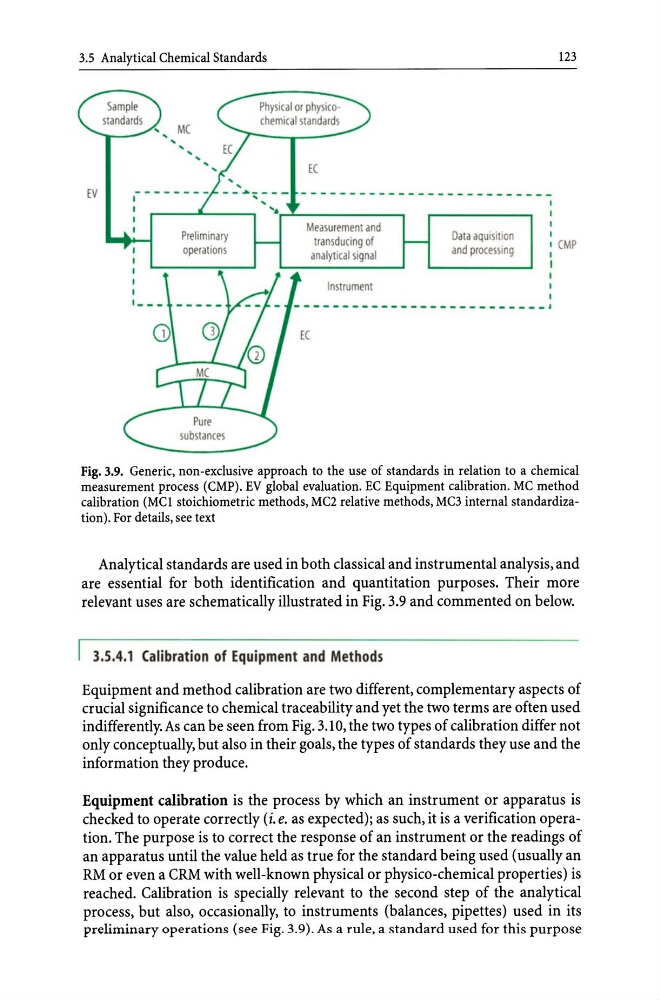
Fig. 3.9. Generic, non-exclusive approach to the use of standards in relation to a chemical
measurement process (CMP). EV global evaluation. EC Equipment calibration. MC method
calibration (MCl stoichiometric methods, MC2 relative methods, MC3 internal standardization). For details, see text
Analytical standards are used in both classical and instrumental analysis, and
are essential for both identification and quantitation purposes. Their more
relevant uses are schematically illustrated in Fig. 3.9 and commented on below.
I 3.5.4.1 Calibration of Equipment and Methods
Equipment and method calibration are two different, complementary aspects of
crucial significance to chemical traceability and yet the two terms are often used
indifferently. As can be seen from Fig. 3.10, the two types of calibration differ not
only conceptually, but also in their goals, the types of standards they use and the
information they produce.
Equipment calibration is the process by which an instrument or apparatus is
checked to operate correctly (i. e. as expected); as such, it is a verification operation. The purpose is to correct the response of an instrument or the readings of
an apparatus until the value held as true for the standard being used (usually an
RM or even a CRM with well-known physical or physico-chemical properties) is
reached. Calibration is specially relevant to the second step of the analytical
process, but also, occasionally, to instruments (balances, pipettes) used in its
preliminary operations (see Fig. 3.9). As a rule, a standard used for this purpose
EV
Me
-------I
Preliminary
operations
substances
Physical or physico·
chemical standards
EC
... ,.....-------,
Measurement and
transducing of
analytical signal
Instrument
Data aquisition
and processing
-------------------------123
CMP
Fig. 3.9. Generic, non-exclusive approach to the use of standards in relation to a chemical
measurement process (CMP). EV global evaluation. EC Equipment calibration. MC method
calibration (MCl stoichiometric methods, MC2 relative methods, MC3 internal standardization). For details, see text
Analytical standards are used in both classical and instrumental analysis, and
are essential for both identification and quantitation purposes. Their more
relevant uses are schematically illustrated in Fig. 3.9 and commented on below.
I 3.5.4.1 Calibration of Equipment and Methods
Equipment and method calibration are two different, complementary aspects of
crucial significance to chemical traceability and yet the two terms are often used
indifferently. As can be seen from Fig. 3.10, the two types of calibration differ not
only conceptually, but also in their goals, the types of standards they use and the
information they produce.
Equipment calibration is the process by which an instrument or apparatus is
checked to operate correctly (i. e. as expected); as such, it is a verification operation. The purpose is to correct the response of an instrument or the readings of
an apparatus until the value held as true for the standard being used (usually an
RM or even a CRM with well-known physical or physico-chemical properties) is
reached. Calibration is specially relevant to the second step of the analytical
process, but also, occasionally, to instruments (balances, pipettes) used in its
preliminary operations (see Fig. 3.9). As a rule, a standard used for this purpose