

124
Definition
Purpose
Standard
Information
EQUIPMENT
CALIBRATION
Checking that an instrument or apparatus
operates as expected
Apparatus or instrument
Correcting the instrument response or
apparatus indication
Does not contain the analyte
Analytical
other
3 Traceability: Reference Materials
METHOO
CALIBRATION
Characterizing the instrument
response in terms of analyte
characteristics
Analytical method (CMP)
Establishing an unequivocal relation
between measurements (signals)
an analyte characteristics
Contains the analyte (except in
titrimetric standardization)
Analytical
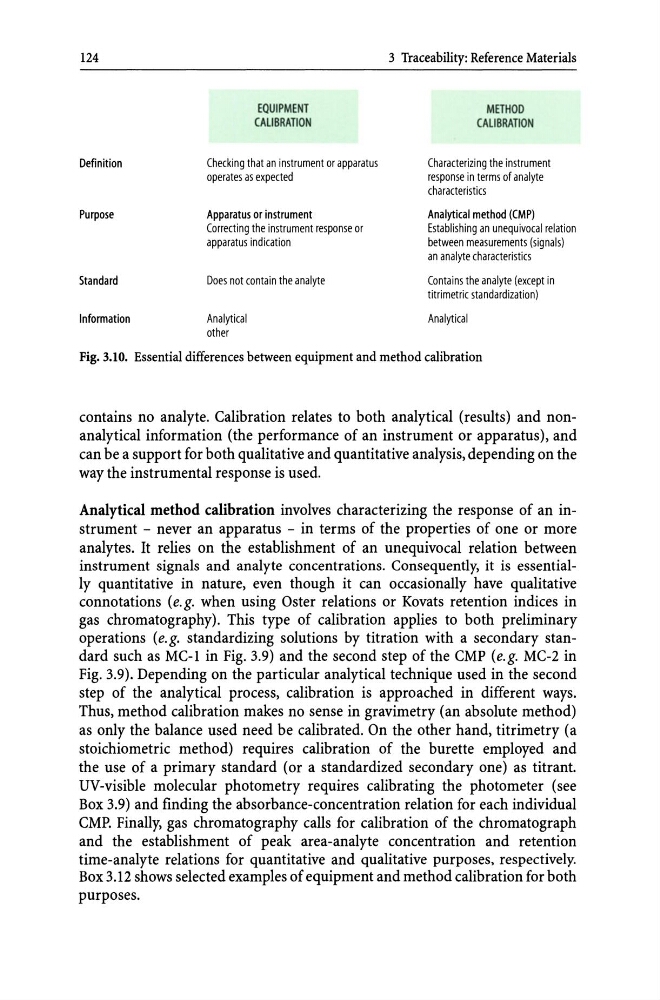
Fig. 3.10. Essential differences between equipment and method calibration
contains no analyte. Calibration relates to both analytical (results) and nonanalytical information (the performance of an instrument or apparatus), and
can be a support for both qualitative and quantitative analysis, depending on the
way the instrumental response is used.
Analytical method calibration involves characterizing the response of an instrument - never an apparatus - in terms of the properties of one or more
analytes. It relies on the establishment of an unequivocal relation between
instrument signals and analyte concentrations. Consequently, it is essentially quantitative in nature, even though it can occasionally have qualitative
connotations (e.g. when using Oster relations or Kovats retention indices in
gas chromatography). This type of calibration applies to both preliminary
operations (e.g. standardizing solutions by titration with a secondary standard such as MC-l in Fig. 3.9) and the second step of the CMP (e.g. MC-2 in
Fig. 3.9). Depending on the particular analytical technique used in the second
step of the analytical process, calibration is approached in different ways.
Thus, method calibration makes no sense in gravimetry (an absolute method)
as only the balance used need be calibrated. On the other hand, titrimetry (a
stoichiometric method) requires calibration of the burette employed and
the use of a primary standard (or a standardized secondary one) as titrant.
UV-visible molecular photometry requires calibrating the photometer (see
Box 3.9) and finding the absorbance-concentration relation for each individual
CMP. Finally, gas chromatography calls for calibration of the chromatograph
and the establishment of peak area-analyte concentration and retention
time-analyte relations for quantitative and qualitative purposes, respectively.
Box 3.12 shows selected examples of equipment and method calibration for both
purposes.
Definition
Purpose
Standard
Information
EQUIPMENT
CALIBRATION
Checking that an instrument or apparatus
operates as expected
Apparatus or instrument
Correcting the instrument response or
apparatus indication
Does not contain the analyte
Analytical
other
3 Traceability: Reference Materials
METHOO
CALIBRATION
Characterizing the instrument
response in terms of analyte
characteristics
Analytical method (CMP)
Establishing an unequivocal relation
between measurements (signals)
an analyte characteristics
Contains the analyte (except in
titrimetric standardization)
Analytical
Fig. 3.10. Essential differences between equipment and method calibration
contains no analyte. Calibration relates to both analytical (results) and nonanalytical information (the performance of an instrument or apparatus), and
can be a support for both qualitative and quantitative analysis, depending on the
way the instrumental response is used.
Analytical method calibration involves characterizing the response of an instrument - never an apparatus - in terms of the properties of one or more
analytes. It relies on the establishment of an unequivocal relation between
instrument signals and analyte concentrations. Consequently, it is essentially quantitative in nature, even though it can occasionally have qualitative
connotations (e.g. when using Oster relations or Kovats retention indices in
gas chromatography). This type of calibration applies to both preliminary
operations (e.g. standardizing solutions by titration with a secondary standard such as MC-l in Fig. 3.9) and the second step of the CMP (e.g. MC-2 in
Fig. 3.9). Depending on the particular analytical technique used in the second
step of the analytical process, calibration is approached in different ways.
Thus, method calibration makes no sense in gravimetry (an absolute method)
as only the balance used need be calibrated. On the other hand, titrimetry (a
stoichiometric method) requires calibration of the burette employed and
the use of a primary standard (or a standardized secondary one) as titrant.
UV-visible molecular photometry requires calibrating the photometer (see
Box 3.9) and finding the absorbance-concentration relation for each individual
CMP. Finally, gas chromatography calls for calibration of the chromatograph
and the establishment of peak area-analyte concentration and retention
time-analyte relations for quantitative and qualitative purposes, respectively.
Box 3.12 shows selected examples of equipment and method calibration for both
purposes.