

110
Isotope 12
of carbon
Avogadro' s
number
Atomic weights
3 Traceability: Reference Materials
Base standards
Analytical chemical standards
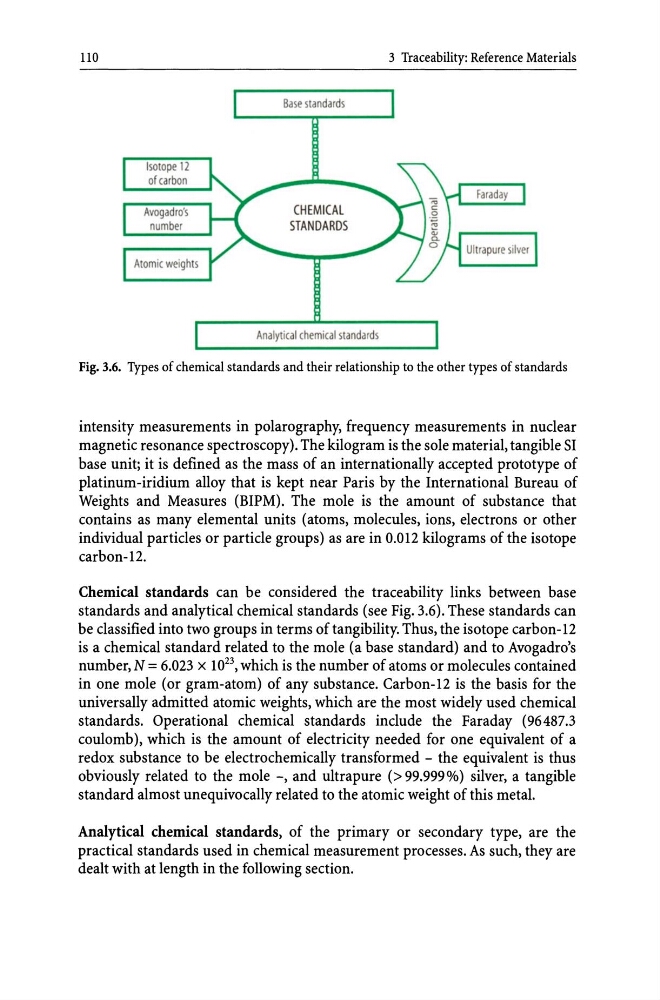
Fig. 3.6. Types of chemical standards and their relationship to the other types of standards
intensity measurements in polarography, frequency measurements in nuclear
magnetic resonance spectroscopy}. The kilogram is the sole material, tangible SI
base unit; it is defined as the mass of an internationally accepted prototype of
platinum-iridium alloy that is kept near Paris by the International Bureau of
Weights and Measures (BIPM). The mole is the amount of substance that
contains as many elemental units (atoms, molecules, ions, electrons or other
individual particles or particle groups) as are in 0.012 kilograms of the isotope
carbon-12.
Chemical standards can be considered the traceability links between base
standards and analytical chemical standards (see Fig. 3.6). These standards can
be classified into two groups in terms of tangibility. Thus, the isotope carbon-12
is a chemical standard related to the mole (a base standard) and to Avogadro's
number, N = 6.023 x 10 23 , which is the number of atoms or molecules contained
in one mole (or gram-atom) of any substance. Carbon-12 is the basis for the
universally admitted atomic weights, which are the most widely used chemical
standards. Operational chemical standards include the Faraday (96487.3
coulomb), which is the amount of electricity needed for one equivalent of a
redox substance to be electrochemically transformed - the equivalent is thus
obviously related to the mole -, and ultrapure (> 99.999%) silver, a tangible
standard almost unequivocally related to the atomic weight of this metal.
Analytical chemical standards, of the primary or secondary type, are the
practical standards used in chemical measurement processes. As such, they are
dealt with at length in the following section.
Isotope 12
of carbon
Avogadro' s
number
Atomic weights
3 Traceability: Reference Materials
Base standards
Analytical chemical standards
Fig. 3.6. Types of chemical standards and their relationship to the other types of standards
intensity measurements in polarography, frequency measurements in nuclear
magnetic resonance spectroscopy}. The kilogram is the sole material, tangible SI
base unit; it is defined as the mass of an internationally accepted prototype of
platinum-iridium alloy that is kept near Paris by the International Bureau of
Weights and Measures (BIPM). The mole is the amount of substance that
contains as many elemental units (atoms, molecules, ions, electrons or other
individual particles or particle groups) as are in 0.012 kilograms of the isotope
carbon-12.
Chemical standards can be considered the traceability links between base
standards and analytical chemical standards (see Fig. 3.6). These standards can
be classified into two groups in terms of tangibility. Thus, the isotope carbon-12
is a chemical standard related to the mole (a base standard) and to Avogadro's
number, N = 6.023 x 10 23 , which is the number of atoms or molecules contained
in one mole (or gram-atom) of any substance. Carbon-12 is the basis for the
universally admitted atomic weights, which are the most widely used chemical
standards. Operational chemical standards include the Faraday (96487.3
coulomb), which is the amount of electricity needed for one equivalent of a
redox substance to be electrochemically transformed - the equivalent is thus
obviously related to the mole -, and ultrapure (> 99.999%) silver, a tangible
standard almost unequivocally related to the atomic weight of this metal.
Analytical chemical standards, of the primary or secondary type, are the
practical standards used in chemical measurement processes. As such, they are
dealt with at length in the following section.