

288
A. Berkessel
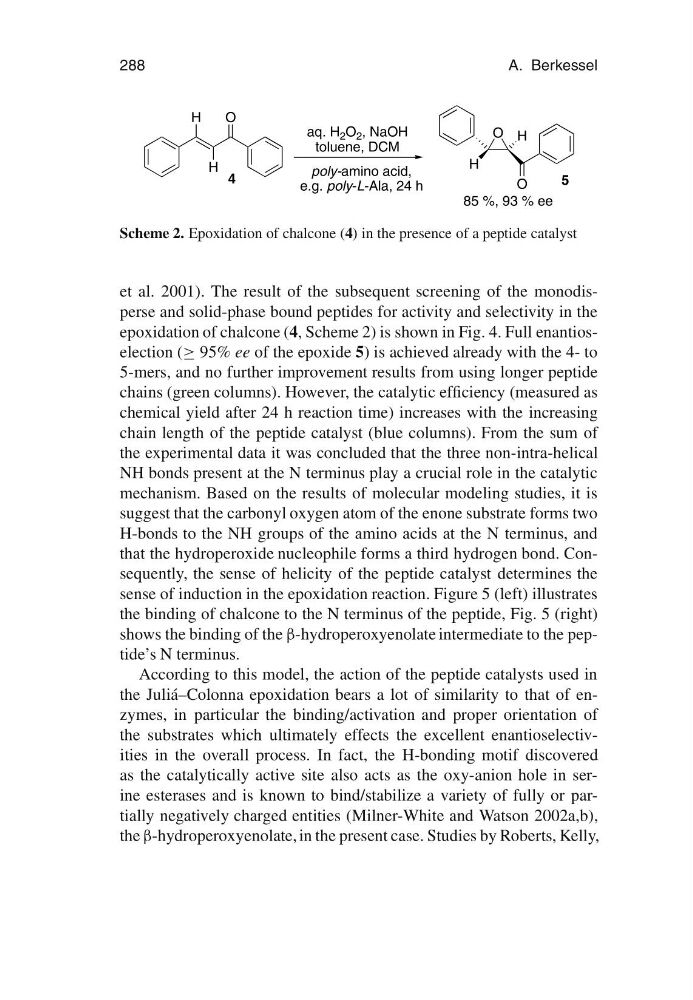
Scheme 2. Epoxidation of chalcone (4) in the presence of a peptide catalyst
et al. 2001). The result of the subsequent screening of the monodisperse and solid-phase bound peptides for activity and selectivity in the
epoxidation of chalcone (4, Scheme 2) is shown in Fig. 4. Full enantioselection (≥ 95% ee of the epoxide 5) is achieved already with the 4- to
5-mers, and no further improvement results from using longer peptide
chains (green columns). However, the catalytic efficiency (measured as
chemical yield after 24 h reaction time) increases with the increasing
chain length of the peptide catalyst (blue columns). From the sum of
the experimental data it was concluded that the three non-intra-helical
NH bonds present at the N terminus play a crucial role in the catalytic
mechanism. Based on the results of molecular modeling studies, it is
suggest that the carbonyl oxygen atom of the enone substrate forms two
H-bonds to the NH groups of the amino acids at the N terminus, and
that the hydroperoxide nucleophile forms a third hydrogen bond. Consequently, the sense of helicity of the peptide catalyst determines the
sense of induction in the epoxidation reaction. Figure 5 (left) illustrates
the binding of chalcone to the N terminus of the peptide, Fig. 5 (right)
shows the binding of the β-hydroperoxyenolate intermediate to the peptide’s N terminus.
According to this model, the action of the peptide catalysts used in
the Juliá–Colonna epoxidation bears a lot of similarity to that of enzymes, in particular the binding/activation and proper orientation of
the substrates which ultimately effects the excellent enantioselectivities in the overall process. In fact, the H-bonding motif discovered
as the catalytically active site also acts as the oxy-anion hole in serine esterases and is known to bind/stabilize a variety of fully or partially negatively charged entities (Milner-White and Watson 2002a,b),
the β-hydroperoxyenolate, in the present case. Studies by Roberts, Kelly,