

Organocatalysis by Hydrogen Bonding Networks
287
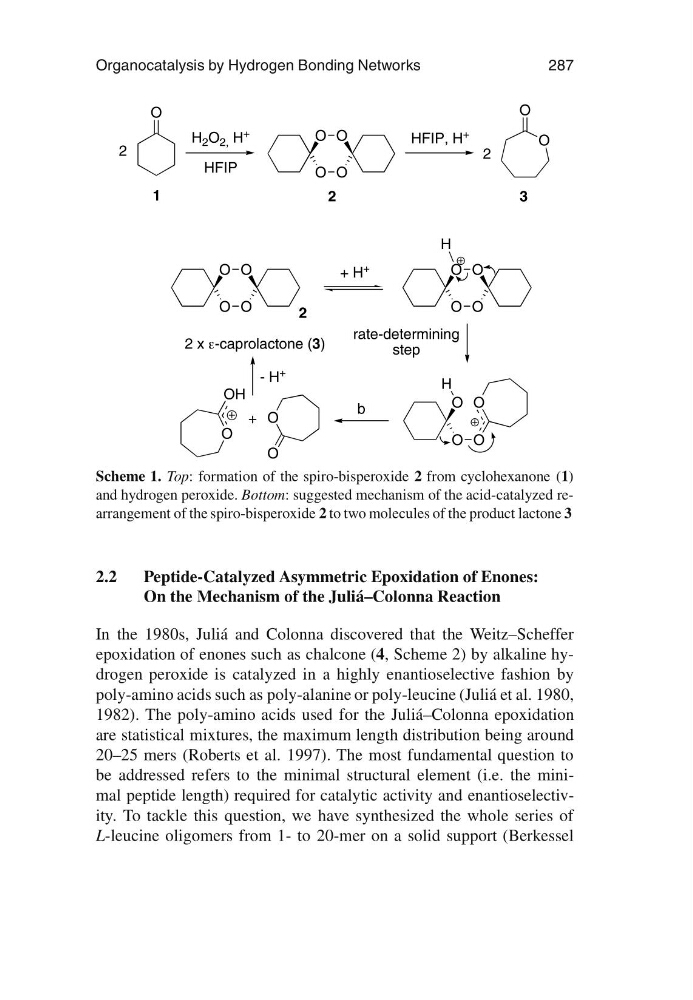
Scheme 1. Top: formation of the spiro-bisperoxide 2 from cyclohexanone (1)
and hydrogen peroxide. Bottom: suggested mechanism of the acid-catalyzed rearrangement of the spiro-bisperoxide 2 to two molecules of the product lactone 3
2.2
Peptide-Catalyzed Asymmetric Epoxidation of Enones:
On the Mechanism of the Juliá–Colonna Reaction
In the 1980s, Juliá and Colonna discovered that the Weitz–Scheffer
epoxidation of enones such as chalcone (4, Scheme 2) by alkaline hydrogen peroxide is catalyzed in a highly enantioselective fashion by
poly-amino acids such as poly-alanine or poly-leucine (Juliá et al. 1980,
1982). The poly-amino acids used for the Juliá–Colonna epoxidation
are statistical mixtures, the maximum length distribution being around
20–25 mers (Roberts et al. 1997). The most fundamental question to
be addressed refers to the minimal structural element (i.e. the minimal peptide length) required for catalytic activity and enantioselectivity. To tackle this question, we have synthesized the whole series of
L-leucine oligomers from 1- to 20-mer on a solid support (Berkessel