

216
M. Rueping, E. Sugiono
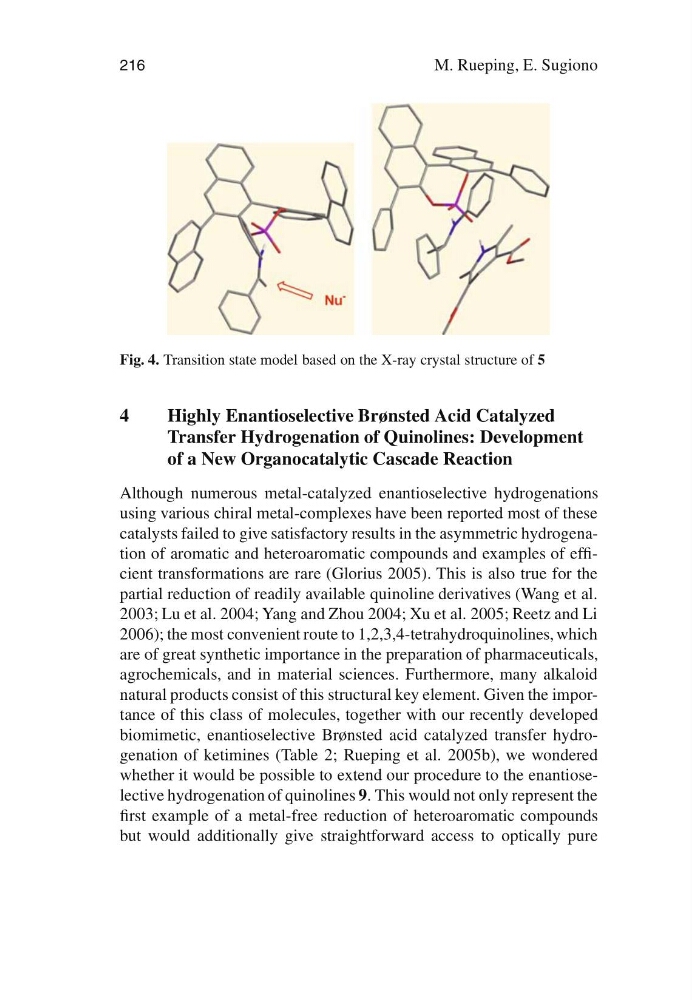
Fig. 4. Transition state model based on the X-ray crystal structure of 5
4
Highly Enantioselective Brønsted Acid Catalyzed
Transfer Hydrogenation of Quinolines: Development
of a New Organocatalytic Cascade Reaction
Although numerous metal-catalyzed enantioselective hydrogenations
using various chiral metal-complexes have been reported most of these
catalysts failed to give satisfactory results in the asymmetric hydrogenation of aromatic and heteroaromatic compounds and examples of efficient transformations are rare (Glorius 2005). This is also true for the
partial reduction of readily available quinoline derivatives (Wang et al.
2003; Lu et al. 2004; Yang and Zhou 2004; Xu et al. 2005; Reetz and Li
2006); the most convenient route to 1,2,3,4-tetrahydroquinolines, which
are of great synthetic importance in the preparation of pharmaceuticals,
agrochemicals, and in material sciences. Furthermore, many alkaloid
natural products consist of this structural key element. Given the importance of this class of molecules, together with our recently developed
biomimetic, enantioselective Brønsted acid catalyzed transfer hydrogenation of ketimines (Table 2; Rueping et al. 2005b), we wondered
whether it would be possible to extend our procedure to the enantioselective hydrogenation of quinolines 9. This would not only represent the
first example of a metal-free reduction of heteroaromatic compounds
but would additionally give straightforward access to optically pure