

New Developments in EnantioselectiveBrønsted Acid Catalysis
215
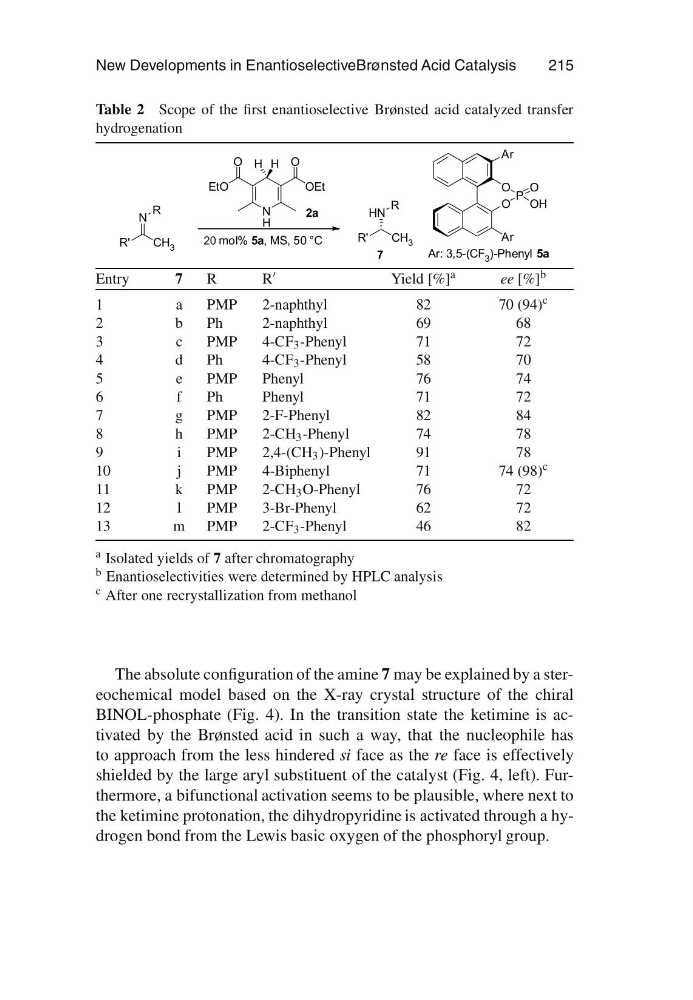
Table 2 Scope of the first enantioselective Brønsted acid catalyzed transfer
hydrogenation
Entry
7
R
R
Yield [%] a
ee [%] b
1
a
PMP
2-naphthyl
82
70 (94) c
2
b
Ph
2-naphthyl
69
68
3
c
P M P
4 - C F 3 -Phenyl
71
72
4
d
P h
4 - C F 3 -Phenyl
58
70
5
e
P M P
P h e n y l
7 6
7 4
6
f
Ph
Phenyl
71
72
7
g
PMP
2-F-Phenyl
82
84
8
h
P M P
2 - C H 3 -Phenyl
74
78
9
i
PMP
2,4-(CH 3 )-Phenyl
91
78
10
j
PMP
4-Biphenyl
71
74 (98) c
11
k
PMP
2-CH 3 O-Phenyl
76
72
12
l
PMP
3-Br-Phenyl
62
72
13
m PMP
2-CF 3 -Phenyl
46
82
a Isolated yields of 7 after chromatography
b Enantioselectivities were determined by HPLC analysis
c After one recrystallization from methanol
The absolute configuration of the amine 7 may be explained by a stereochemical model based on the X-ray crystal structure of the chiral
BINOL-phosphate (Fig. 4). In the transition state the ketimine is activated by the Brønsted acid in such a way, that the nucleophile has
to approach from the less hindered si face as the re face is effectively
shielded by the large aryl substituent of the catalyst (Fig. 4, left). Furthermore, a bifunctional activation seems to be plausible, where next to
the ketimine protonation, the dihydropyridine is activated through a hydrogen bond from the Lewis basic oxygen of the phosphoryl group.