

Asymmetric Organocatalysis on a Technical Scale
147
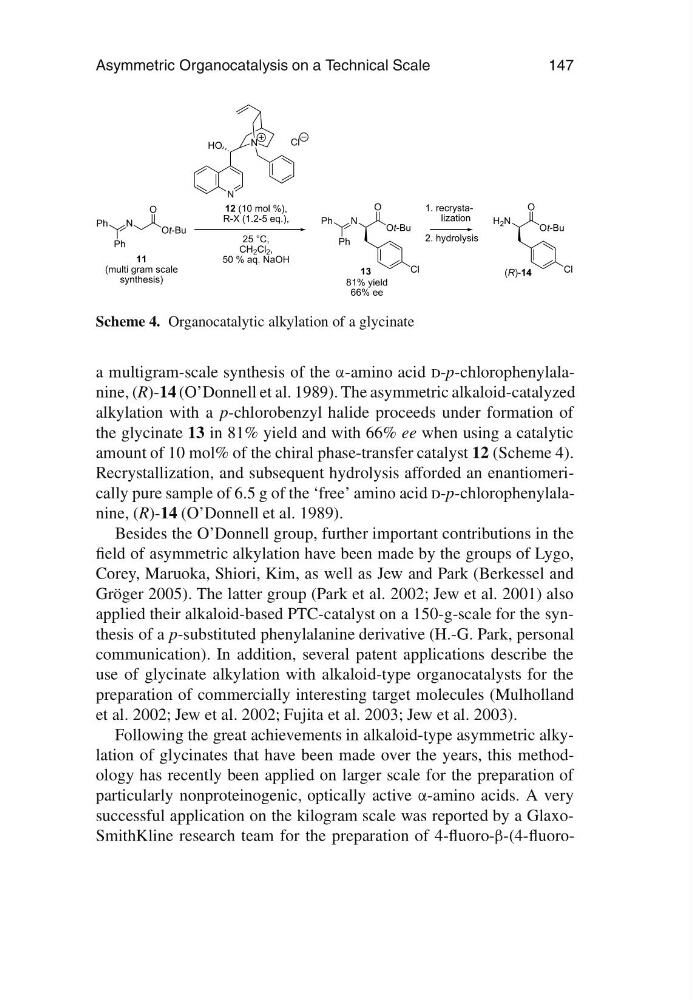
Scheme 4. Organocatalytic alkylation of a glycinate
a multigram-scale synthesis of the α-amino acid d-p-chlorophenylalanine, (R)-14 (O’Donnell et al. 1989). The asymmetric alkaloid-catalyzed
alkylation with a p-chlorobenzyl halide proceeds under formation of
the glycinate 13 in 81% yield and with 66% ee when using a catalytic
amount of 10 mol% of the chiral phase-transfer catalyst 12 (Scheme 4).
Recrystallization, and subsequent hydrolysis afforded an enantiomerically pure sample of 6.5 g of the ‘free’ amino acid d-p-chlorophenylalanine, (R)-14 (O’Donnell et al. 1989).
Besides the O’Donnell group, further important contributions in the
field of asymmetric alkylation have been made by the groups of Lygo,
Corey, Maruoka, Shiori, Kim, as well as Jew and Park (Berkessel and
Gröger 2005). The latter group (Park et al. 2002; Jew et al. 2001) also
applied their alkaloid-based PTC-catalyst on a 150-g-scale for the synthesis of a p-substituted phenylalanine derivative (H.-G. Park, personal
communication). In addition, several patent applications describe the
use of glycinate alkylation with alkaloid-type organocatalysts for the
preparation of commercially interesting target molecules (Mulholland
et al. 2002; Jew et al. 2002; Fujita et al. 2003; Jew et al. 2003).
Following the great achievements in alkaloid-type asymmetric alkylation of glycinates that have been made over the years, this methodology has recently been applied on larger scale for the preparation of
particularly nonproteinogenic, optically active α-amino acids. A very
successful application on the kilogram scale was reported by a GlaxoSmithKline research team for the preparation of 4-fluoro-β-(4-fluoro-