

Asymmetric Organocatalysis on a Technical Scale
145
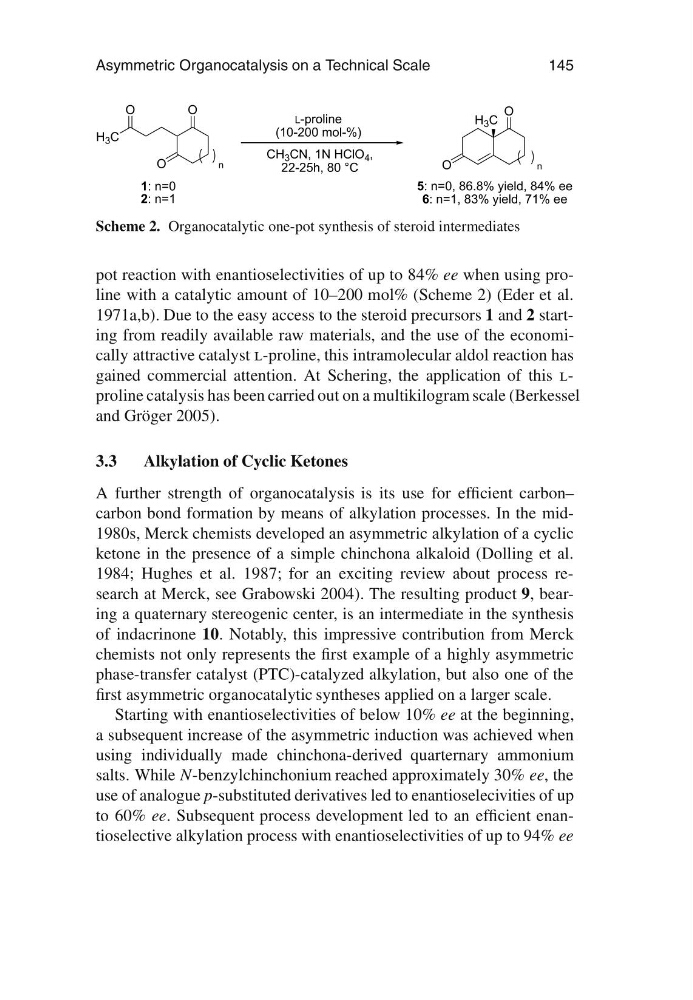
Scheme 2. Organocatalytic one-pot synthesis of steroid intermediates
pot reaction with enantioselectivities of up to 84% ee when using proline with a catalytic amount of 10–200 mol% (Scheme 2) (Eder et al.
1971a,b). Due to the easy access to the steroid precursors 1 and 2 starting from readily available raw materials, and the use of the economically attractive catalyst l-proline, this intramolecular aldol reaction has
gained commercial attention. At Schering, the application of this lproline catalysis has been carried out on a multikilogram scale (Berkessel
and Gröger 2005).
3.3
Alkylation of Cyclic Ketones
A further strength of organocatalysis is its use for efficient carbon–
carbon bond formation by means of alkylation processes. In the mid1980s, Merck chemists developed an asymmetric alkylation of a cyclic
ketone in the presence of a simple chinchona alkaloid (Dolling et al.
1984; Hughes et al. 1987; for an exciting review about process research at Merck, see Grabowski 2004). The resulting product 9, bearing a quaternary stereogenic center, is an intermediate in the synthesis
of indacrinone 10. Notably, this impressive contribution from Merck
chemists not only represents the first example of a highly asymmetric
phase-transfer catalyst (PTC)-catalyzed alkylation, but also one of the
first asymmetric organocatalytic syntheses applied on a larger scale.
Starting with enantioselectivities of below 10% ee at the beginning,
a subsequent increase of the asymmetric induction was achieved when
using individually made chinchona-derived quarternary ammonium
salts. While N-benzylchinchonium reached approximately 30% ee, the
use of analogue p-substituted derivatives led to enantioselecivities of up
to 60% ee. Subsequent process development led to an efficient enantioselective alkylation process with enantioselectivities of up to 94% ee