

Biomimetic Organocatalytic C–C-Bond Formations
107
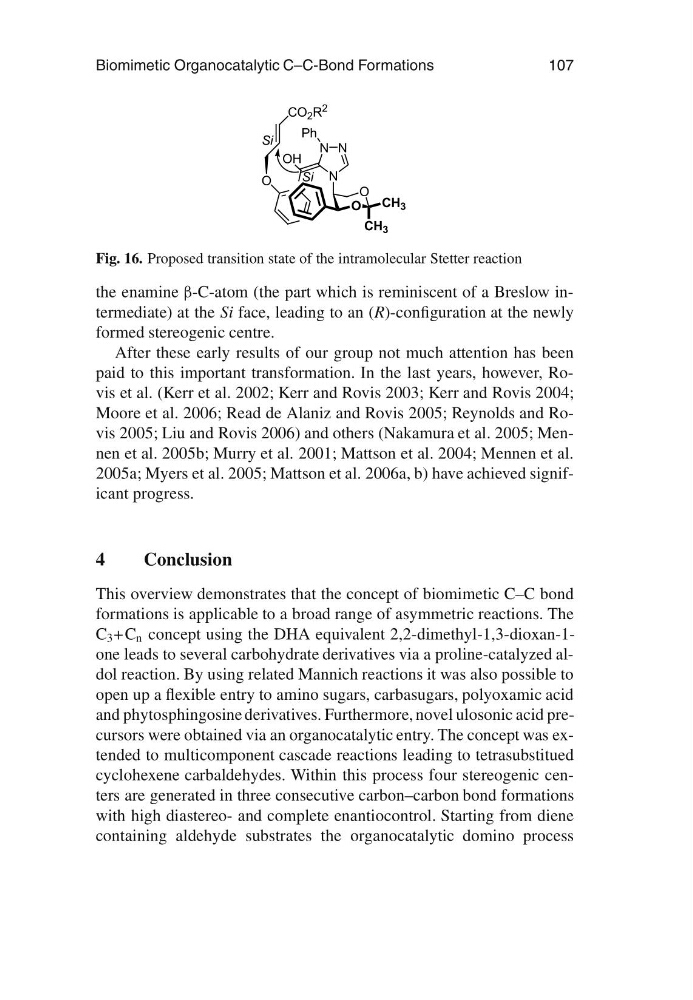
Fig. 16. Proposed transition state of the intramolecular Stetter reaction
the enamine β-C-atom (the part which is reminiscent of a Breslow intermediate) at the Si face, leading to an (R)-configuration at the newly
formed stereogenic centre.
After these early results of our group not much attention has been
paid to this important transformation. In the last years, however, Rovis et al. (Kerr et al. 2002; Kerr and Rovis 2003; Kerr and Rovis 2004;
Moore et al. 2006; Read de Alaniz and Rovis 2005; Reynolds and Rovis 2005; Liu and Rovis 2006) and others (Nakamura et al. 2005; Mennen et al. 2005b; Murry et al. 2001; Mattson et al. 2004; Mennen et al.
2005a; Myers et al. 2005; Mattson et al. 2006a, b) have achieved significant progress.
4
Conclusion
This overview demonstrates that the concept of biomimetic C–C bond
formations is applicable to a broad range of asymmetric reactions. The
C 3 +C n concept using the DHA equivalent 2,2-dimethyl-1,3-dioxan-1one leads to several carbohydrate derivatives via a proline-catalyzed aldol reaction. By using related Mannich reactions it was also possible to
open up a flexible entry to amino sugars, carbasugars, polyoxamic acid
and phytosphingosine derivatives. Furthermore, novel ulosonic acid precursors were obtained via an organocatalytic entry. The concept was extended to multicomponent cascade reactions leading to tetrasubstitued
cyclohexene carbaldehydes. Within this process four stereogenic centers are generated in three consecutive carbon–carbon bond formations
with high diastereo- and complete enantiocontrol. Starting from diene
containing aldehyde substrates the organocatalytic domino process