

84
D. Enders, M.R.M. Hüttl, O. Niemeier
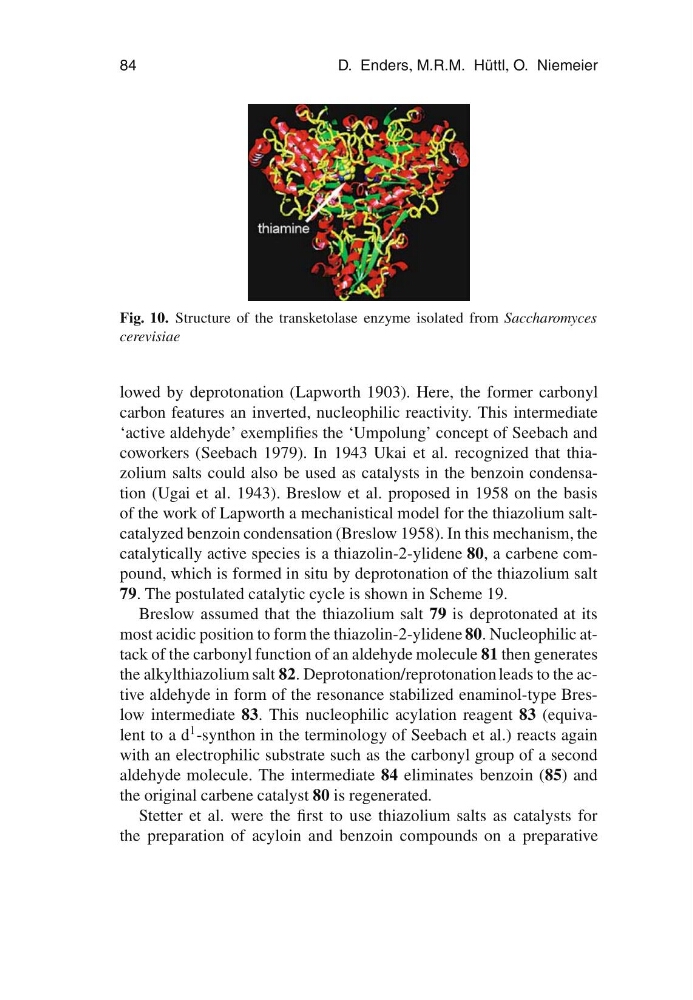
Fig. 10. Structure of the transketolase enzyme isolated from Saccharomyces
cerevisiae
lowed by deprotonation (Lapworth 1903). Here, the former carbonyl
carbon features an inverted, nucleophilic reactivity. This intermediate
‘active aldehyde’ exemplifies the ‘Umpolung’ concept of Seebach and
coworkers (Seebach 1979). In 1943 Ukai et al. recognized that thiazolium salts could also be used as catalysts in the benzoin condensation (Ugai et al. 1943). Breslow et al. proposed in 1958 on the basis
of the work of Lapworth a mechanistical model for the thiazolium saltcatalyzed benzoin condensation (Breslow 1958). In this mechanism, the
catalytically active species is a thiazolin-2-ylidene 80, a carbene compound, which is formed in situ by deprotonation of the thiazolium salt
79. The postulated catalytic cycle is shown in Scheme 19.
Breslow assumed that the thiazolium salt 79 is deprotonated at its
most acidic position to form the thiazolin-2-ylidene 80. Nucleophilic attack of the carbonyl function of an aldehyde molecule 81 then generates
the alkylthiazolium salt 82. Deprotonation/reprotonation leads to the active aldehyde in form of the resonance stabilized enaminol-type Breslow intermediate 83. This nucleophilic acylation reagent 83 (equivalent to a d
1 -synthon in the terminology of Seebach et al.) reacts again
with an electrophilic substrate such as the carbonyl group of a second
aldehyde molecule. The intermediate 84 eliminates benzoin (85) and
the original carbene catalyst 80 is regenerated.
Stetter et al. were the first to use thiazolium salts as catalysts for
the preparation of acyloin and benzoin compounds on a preparative
D. Enders, M.R.M. Hüttl, O. Niemeier
Fig. 10. Structure of the transketolase enzyme isolated from Saccharomyces
cerevisiae
lowed by deprotonation (Lapworth 1903). Here, the former carbonyl
carbon features an inverted, nucleophilic reactivity. This intermediate
‘active aldehyde’ exemplifies the ‘Umpolung’ concept of Seebach and
coworkers (Seebach 1979). In 1943 Ukai et al. recognized that thiazolium salts could also be used as catalysts in the benzoin condensation (Ugai et al. 1943). Breslow et al. proposed in 1958 on the basis
of the work of Lapworth a mechanistical model for the thiazolium saltcatalyzed benzoin condensation (Breslow 1958). In this mechanism, the
catalytically active species is a thiazolin-2-ylidene 80, a carbene compound, which is formed in situ by deprotonation of the thiazolium salt
79. The postulated catalytic cycle is shown in Scheme 19.
Breslow assumed that the thiazolium salt 79 is deprotonated at its
most acidic position to form the thiazolin-2-ylidene 80. Nucleophilic attack of the carbonyl function of an aldehyde molecule 81 then generates
the alkylthiazolium salt 82. Deprotonation/reprotonation leads to the active aldehyde in form of the resonance stabilized enaminol-type Breslow intermediate 83. This nucleophilic acylation reagent 83 (equivalent to a d
1 -synthon in the terminology of Seebach et al.) reacts again
with an electrophilic substrate such as the carbonyl group of a second
aldehyde molecule. The intermediate 84 eliminates benzoin (85) and
the original carbene catalyst 80 is regenerated.
Stetter et al. were the first to use thiazolium salts as catalysts for
the preparation of acyloin and benzoin compounds on a preparative