

COOa
L-alanine
COOH
I
H2N - - C - - H
I
H3C - - C - - H
I
C2HS
b
L-isoleucine
NH!
I
C
/'"
-OOC
CH 3
Planar carbanion
mirror
s. Pantoja· S. Wakeham
COOD-alanine
COOH
I
H - - C - - NH2
I
H3C - - C - - H
I
C2HS
D-alloisoleucine
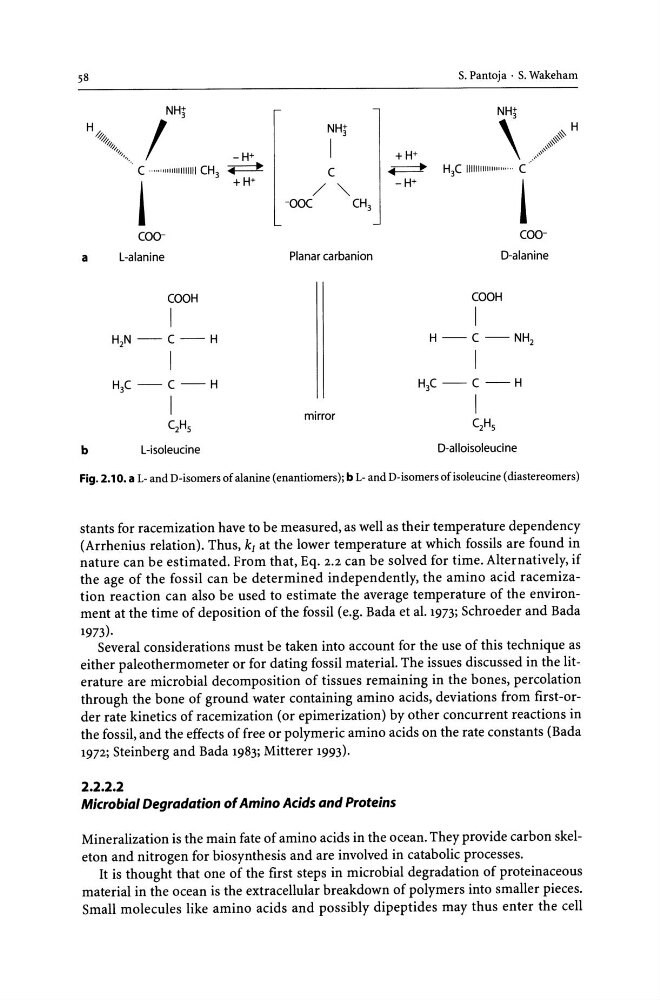
Fig. 2.10. a L- and D-isomers of alanine (enantiomers); b L- and D-isomers of isoleucine (diastereomers)
stants for racemization have to be measured, as well as their temperature dependency
(Arrhenius relation). Thus, k[ at the lower temperature at which fossils are found in
nature can be estimated. From that, Eq. 2.2 can be solved for time. Alternatively, if
the age of the fossil can be determined independently, the amino acid racemization reaction can also be used to estimate the average temperature of the environment at the time of deposition of the fossil (e.g. Bada et al. 1973; Schroeder and Bada
1973)·
Several considerations must be taken into account for the use of this technique as
either paleothermometer or for dating fossil material. The issues discussed in the literature are microbial decomposition of tissues remaining in the bones, percolation
through the bone of ground water containing amino acids, deviations from first-order rate kinetics of racemization (or epimerization) by other concurrent reactions in
the fossil, and the effects of free or polymeric amino acids on the rate constants (Bada
1972; Steinberg and Bada 1983; Mitterer 1993).
2.2.2.2
Microbial Degradation of Amino Acids and Proteins
Mineralization is the main fate of amino acids in the ocean. They provide carbon skeleton and nitrogen for biosynthesis and are involved in catabolic processes.
It is thought that one of the first steps in microbial degradation of proteinaceous
material in the ocean is the extracellular breakdown of polymers into smaller pieces.
Small molecules like amino acids and possibly dipeptides may thus enter the cell
L-alanine
COOH
I
H2N - - C - - H
I
H3C - - C - - H
I
C2HS
b
L-isoleucine
NH!
I
C
/'"
-OOC
CH 3
Planar carbanion
mirror
s. Pantoja· S. Wakeham
COOD-alanine
COOH
I
H - - C - - NH2
I
H3C - - C - - H
I
C2HS
D-alloisoleucine
Fig. 2.10. a L- and D-isomers of alanine (enantiomers); b L- and D-isomers of isoleucine (diastereomers)
stants for racemization have to be measured, as well as their temperature dependency
(Arrhenius relation). Thus, k[ at the lower temperature at which fossils are found in
nature can be estimated. From that, Eq. 2.2 can be solved for time. Alternatively, if
the age of the fossil can be determined independently, the amino acid racemization reaction can also be used to estimate the average temperature of the environment at the time of deposition of the fossil (e.g. Bada et al. 1973; Schroeder and Bada
1973)·
Several considerations must be taken into account for the use of this technique as
either paleothermometer or for dating fossil material. The issues discussed in the literature are microbial decomposition of tissues remaining in the bones, percolation
through the bone of ground water containing amino acids, deviations from first-order rate kinetics of racemization (or epimerization) by other concurrent reactions in
the fossil, and the effects of free or polymeric amino acids on the rate constants (Bada
1972; Steinberg and Bada 1983; Mitterer 1993).
2.2.2.2
Microbial Degradation of Amino Acids and Proteins
Mineralization is the main fate of amino acids in the ocean. They provide carbon skeleton and nitrogen for biosynthesis and are involved in catabolic processes.
It is thought that one of the first steps in microbial degradation of proteinaceous
material in the ocean is the extracellular breakdown of polymers into smaller pieces.
Small molecules like amino acids and possibly dipeptides may thus enter the cell