

CHAPTER 5 . Organic Matter Preservation: Lipid Behavior from Plankton to Sediments
133
2S:3 HBI
37:2 Alkenone
50
12
498m
10
40
8
30
6
20
4
10
2
0
0
50
12
1478m
10
1478m
'i 40
'i
"C
"C
8
'i' 30
'i'
E
E 6
CI
CI
oS 20
oS
><
><
4
::::I
10
::::I
u:::
u::: 2
0
0
50
12
2898m
10
2898m
40
8
30
6
20
4
10
2
0
NDJ FMAMJ JASOND
0
--N DIJ F M A MI J I J A I SON D
1994
1995
1994
1995
Date
Date
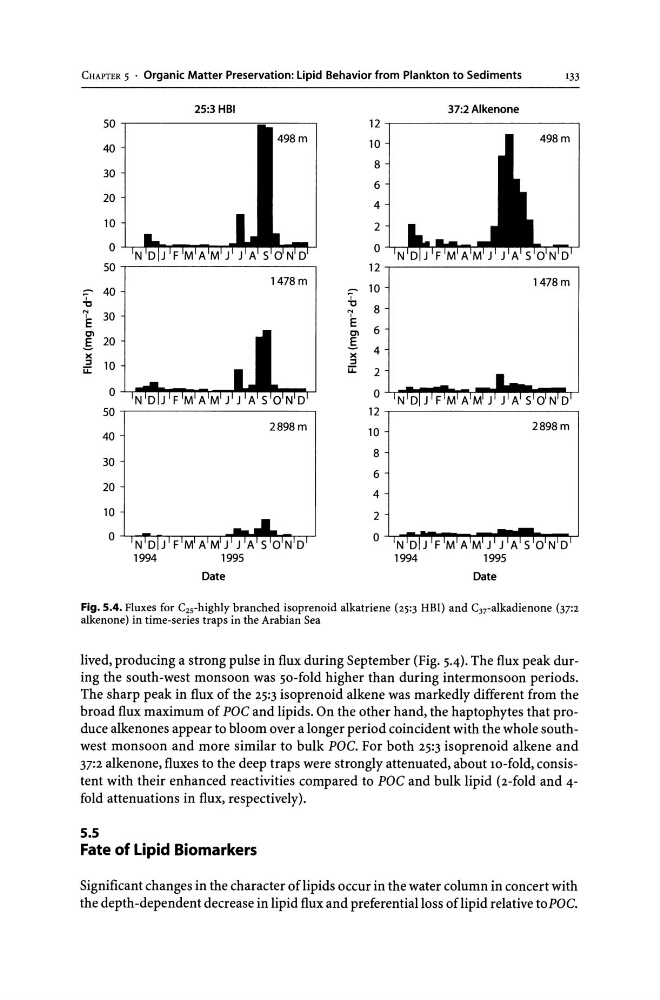
Fig. 5.4. Fluxes for C25-highly branched isoprenoid alkatriene (25:3 HBI) and C37-alkadienone (37:2
alkenone) in time-series traps in the Arabian Sea
lived, producing a strong pulse in flux during September (Fig. S.4). The flux peak during the south-west monsoon was so-fold higher than during intermonsoon periods.
The sharp peak in flux of the 2S:3 isoprenoid alkene was markedly different from the
broad flux maximum of pac and lipids. On the other hand, the haptophytes that produce alkenones appear to bloom over a longer period coincident with the whole southwest monsoon and more similar to bulk pac. For both 2S:3 isoprenoid alkene and
37:2 alkenone, fluxes to the deep traps were strongly attenuated, about lo-fold, consistent with their enhanced reactivities compared to pac and bulk lipid (2-fold and 4fold attenuations in flux, respectively).
5.5
Fate of Lipid Biomarkers
Significant changes in the character of lipids occur in the water column in concert with
the depth-dependent decrease in lipid flux and preferential loss oflipid relative toPOC.
133
2S:3 HBI
37:2 Alkenone
50
12
498m
10
40
8
30
6
20
4
10
2
0
0
50
12
1478m
10
1478m
'i 40
'i
"C
"C
8
'i' 30
'i'
E
E 6
CI
CI
oS 20
oS
><
><
4
::::I
10
::::I
u:::
u::: 2
0
0
50
12
2898m
10
2898m
40
8
30
6
20
4
10
2
0
NDJ FMAMJ JASOND
0
--N DIJ F M A MI J I J A I SON D
1994
1995
1994
1995
Date
Date
Fig. 5.4. Fluxes for C25-highly branched isoprenoid alkatriene (25:3 HBI) and C37-alkadienone (37:2
alkenone) in time-series traps in the Arabian Sea
lived, producing a strong pulse in flux during September (Fig. S.4). The flux peak during the south-west monsoon was so-fold higher than during intermonsoon periods.
The sharp peak in flux of the 2S:3 isoprenoid alkene was markedly different from the
broad flux maximum of pac and lipids. On the other hand, the haptophytes that produce alkenones appear to bloom over a longer period coincident with the whole southwest monsoon and more similar to bulk pac. For both 2S:3 isoprenoid alkene and
37:2 alkenone, fluxes to the deep traps were strongly attenuated, about lo-fold, consistent with their enhanced reactivities compared to pac and bulk lipid (2-fold and 4fold attenuations in flux, respectively).
5.5
Fate of Lipid Biomarkers
Significant changes in the character of lipids occur in the water column in concert with
the depth-dependent decrease in lipid flux and preferential loss oflipid relative toPOC.