

176
J. W.Morse
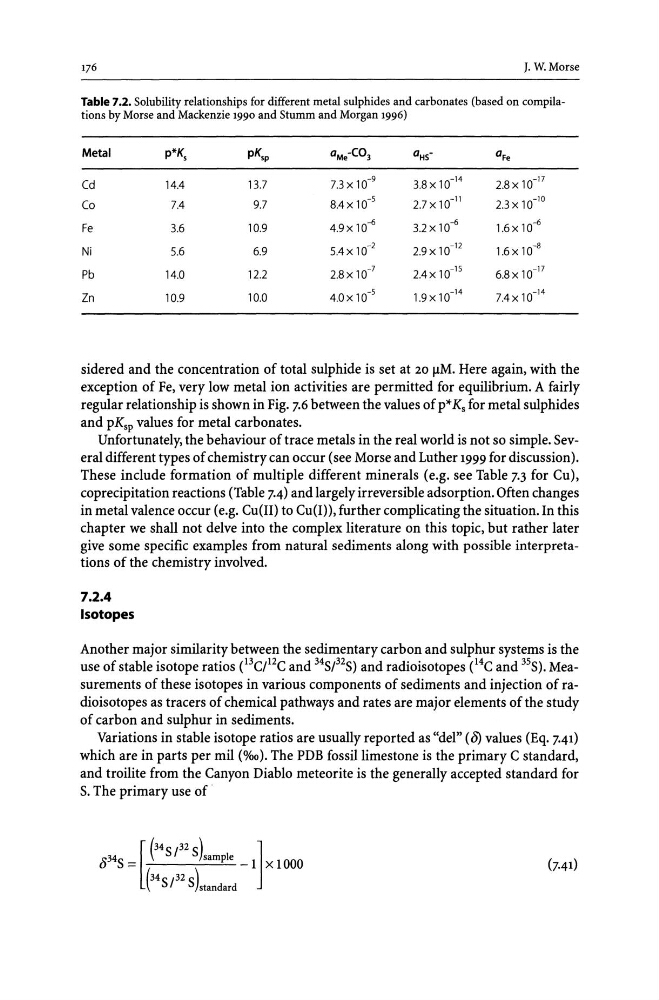
Table 7.2. Solubility relationships for different metal sulphides and carbonates (based on compilations by Morse and Mackenzie 1990 and Stumm and Morgan 1996)
Metal
p*K,
pK,p
°Me-C03
°HS°Fe
Cd
14.4
13.7
7.3 x 10- 9
3.8 X 10- 14
2.8 X 10- 17
Co
7.4
9.7
8.4 x 10- 5
2.7 x 10- 11
2.3 xl 0- 10
Fe
3.6
10.9
4.9x 10- 6
3.2xl0- 6
1.6 x 10- 6
Ni
5.6
6.9
S.4x 10- 2
2.9 x 10- 12
1.6 X 10- 8
Pb
14.0
12.2
2.8x10- 7
2.4 x 10- 15
6.8 x 10- 17
Zn
10.9
10.0
4.0x 10- 5
1.9 X 10- 14
7.4 x 10- 14
sidered and the concentration of total sulphide is set at 20 flM. Here again, with the
exception of Fe, very low metal ion activities are permitted for equilibrium. A fairly
regular relationship is shown in Fig. 7.6 between the values of p* Ks for metal sulphides
and pKsp values for metal carbonates.
Unfortunately, the behaviour of trace metals in the real world is not so simple. Several different types of chemistry can occur (see Morse and Luther 1999 for discussion).
These include formation of multiple different minerals (e.g. see Table 7.3 for Cu),
coprecipitation reactions (Table 7.4) and largely irreversible adsorption. Often changes
in metal valence occur (e.g. Cu(II) to Cu(I», further complicating the situation. In this
chapter we shall not delve into the complex literature on this topic, but rather later
give some specific examples from natural sediments along with possible interpretations of the chemistry involved.
7.2.4
Isotopes
Another major similarity between the sedimentary carbon and sulphur systems is the
use of stable isotope ratios (13C/12C and 34SP2S) and radioisotopes e 4 C and 35S). Measurements of these isotopes in various components of sediments and injection of radioisotopes as tracers of chemical pathways and rates are major elements of the study
of carbon and sulphur in sediments.
Variations in stable isotope ratios are usually reported as "del" (8) values (Eq. 7-41)
which are in parts per mil (%0). The PDB fossil limestone is the primary C standard,
and troilite from the Canyon Diablo meteorite is the generally accepted standard for
S. The primary use of
[
(34 S /32 S )samPle _ 1] x 1000
8 34 S -
)
- (34 S /32 S standard
(J.41)
J. W.Morse
Table 7.2. Solubility relationships for different metal sulphides and carbonates (based on compilations by Morse and Mackenzie 1990 and Stumm and Morgan 1996)
Metal
p*K,
pK,p
°Me-C03
°HS°Fe
Cd
14.4
13.7
7.3 x 10- 9
3.8 X 10- 14
2.8 X 10- 17
Co
7.4
9.7
8.4 x 10- 5
2.7 x 10- 11
2.3 xl 0- 10
Fe
3.6
10.9
4.9x 10- 6
3.2xl0- 6
1.6 x 10- 6
Ni
5.6
6.9
S.4x 10- 2
2.9 x 10- 12
1.6 X 10- 8
Pb
14.0
12.2
2.8x10- 7
2.4 x 10- 15
6.8 x 10- 17
Zn
10.9
10.0
4.0x 10- 5
1.9 X 10- 14
7.4 x 10- 14
sidered and the concentration of total sulphide is set at 20 flM. Here again, with the
exception of Fe, very low metal ion activities are permitted for equilibrium. A fairly
regular relationship is shown in Fig. 7.6 between the values of p* Ks for metal sulphides
and pKsp values for metal carbonates.
Unfortunately, the behaviour of trace metals in the real world is not so simple. Several different types of chemistry can occur (see Morse and Luther 1999 for discussion).
These include formation of multiple different minerals (e.g. see Table 7.3 for Cu),
coprecipitation reactions (Table 7.4) and largely irreversible adsorption. Often changes
in metal valence occur (e.g. Cu(II) to Cu(I», further complicating the situation. In this
chapter we shall not delve into the complex literature on this topic, but rather later
give some specific examples from natural sediments along with possible interpretations of the chemistry involved.
7.2.4
Isotopes
Another major similarity between the sedimentary carbon and sulphur systems is the
use of stable isotope ratios (13C/12C and 34SP2S) and radioisotopes e 4 C and 35S). Measurements of these isotopes in various components of sediments and injection of radioisotopes as tracers of chemical pathways and rates are major elements of the study
of carbon and sulphur in sediments.
Variations in stable isotope ratios are usually reported as "del" (8) values (Eq. 7-41)
which are in parts per mil (%0). The PDB fossil limestone is the primary C standard,
and troilite from the Canyon Diablo meteorite is the generally accepted standard for
S. The primary use of
[
(34 S /32 S )samPle _ 1] x 1000
8 34 S -
)
- (34 S /32 S standard
(J.41)