

8.6 Sediment Transport in Coastal Zone
299
plunge point breakpoint
~ ~
~-----------------.---------.-----------------------x
III
II
I
: zone:
, transition '
broken wave zone
zone
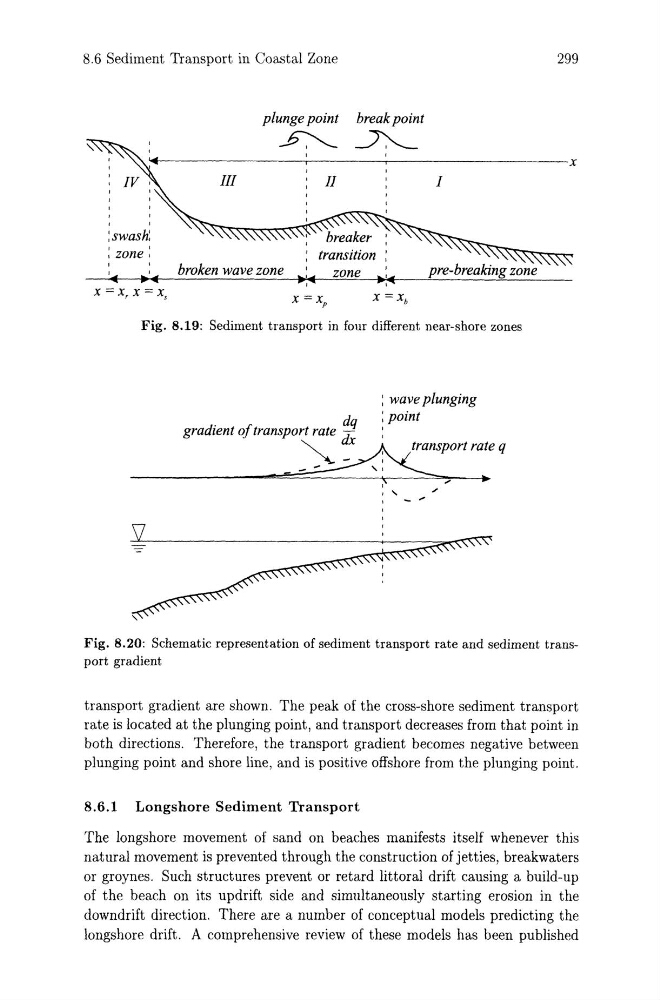
Fig. 8.19: Sediment transport in four different near-shore zones
: wave plunging
d
: point
gradient of transport rate d q
:
.. ~ortrateq
I
, . , ' "
, ,
- -Fig. 8.20: Schematic representation of sediment transport rate and sediment transport gradient
transport gradient are shown. The peak of the cross-shore sediment transport
rate is located at the plunging point, and transport decreases from that point in
both directions. Therefore, the transport gradient becomes negative between
plunging point and shore line, and is positive offshore from the plunging point.
8.6.1 Longshore Sediment Transport
The longshore movement of sand on beaches manifests itself whenever this
natural movement is prevented through the construction of jetties, breakwaters
or groynes. Such structures prevent or retard littoral drift causing a build-up
of the beach on its up drift side and simultaneously starting erosion in the
downdrift direction. There are a number of conceptual models predicting the
longshore drift. A comprehensive review of these models has been published
299
plunge point breakpoint
~ ~
~-----------------.---------.-----------------------x
III
II
I
: zone:
, transition '
broken wave zone
zone
Fig. 8.19: Sediment transport in four different near-shore zones
: wave plunging
d
: point
gradient of transport rate d q
:
.. ~ortrateq
I
, . , ' "
, ,
- -Fig. 8.20: Schematic representation of sediment transport rate and sediment transport gradient
transport gradient are shown. The peak of the cross-shore sediment transport
rate is located at the plunging point, and transport decreases from that point in
both directions. Therefore, the transport gradient becomes negative between
plunging point and shore line, and is positive offshore from the plunging point.
8.6.1 Longshore Sediment Transport
The longshore movement of sand on beaches manifests itself whenever this
natural movement is prevented through the construction of jetties, breakwaters
or groynes. Such structures prevent or retard littoral drift causing a build-up
of the beach on its up drift side and simultaneously starting erosion in the
downdrift direction. There are a number of conceptual models predicting the
longshore drift. A comprehensive review of these models has been published