

Incus
Malleus
Cochlea
Round
window
Eustachian tube
Tympanic
cavity
Tympanic
membrane
External
auditory canal
Cochlear
nerve
Vestibular
nerve
Semicircular
canals
Stapes
(attached to
oval window)
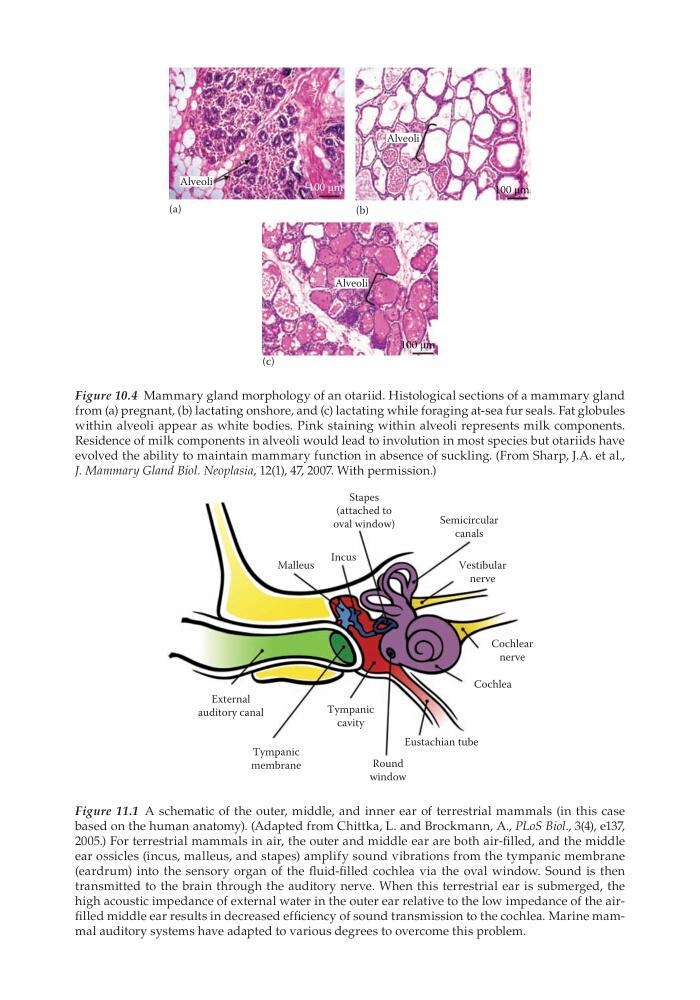
Figure 11.1 A schematic of the outer, middle, and inner ear of terrestrial mammals (in this case
based on the human anatomy). (Adapted from Chittka, L. and Brockmann, A., PLoS Biol., 3(4), e137,
2005.) For terrestrial mammals in air, the outer and middle ear are both air-filled, and the middle
ear ossicles (incus, malleus, and stapes) amplify sound vibrations from the tympanic membrane
(eardrum) into the sensory organ of the fluid-filled cochlea via the oval window. Sound is then
transmitted to the brain through the auditory nerve. When this terrestrial ear is submerged, the
high acoustic impedance of external water in the outer ear relative to the low impedance of the airfilled middle ear results in decreased efficiency of sound transmission to the cochlea. Marine mammal auditory systems have adapted to various degrees to overcome this problem.
(b)
Alveoli
100 µm
(a)
Alveoli
100 µm
100 µm
(c)
Alveoli
Figure 10.4 Mammary gland morphology of an otariid. Histological sections of a mammary gland
from (a) pregnant, (b) lactating onshore, and (c) lactating while foraging at-sea fur seals. Fat globules
within alveoli appear as white bodies. Pink staining within alveoli represents milk components.
Residence of milk components in alveoli would lead to involution in most species but otariids have
evolved the ability to maintain mammary function in absence of suckling. (From Sharp, J.A. et al.,
J. Mammary Gland Biol. Neoplasia, 12(1), 47, 2007. With permission.)
Malleus
Cochlea
Round
window
Eustachian tube
Tympanic
cavity
Tympanic
membrane
External
auditory canal
Cochlear
nerve
Vestibular
nerve
Semicircular
canals
Stapes
(attached to
oval window)
Figure 11.1 A schematic of the outer, middle, and inner ear of terrestrial mammals (in this case
based on the human anatomy). (Adapted from Chittka, L. and Brockmann, A., PLoS Biol., 3(4), e137,
2005.) For terrestrial mammals in air, the outer and middle ear are both air-filled, and the middle
ear ossicles (incus, malleus, and stapes) amplify sound vibrations from the tympanic membrane
(eardrum) into the sensory organ of the fluid-filled cochlea via the oval window. Sound is then
transmitted to the brain through the auditory nerve. When this terrestrial ear is submerged, the
high acoustic impedance of external water in the outer ear relative to the low impedance of the airfilled middle ear results in decreased efficiency of sound transmission to the cochlea. Marine mammal auditory systems have adapted to various degrees to overcome this problem.
(b)
Alveoli
100 µm
(a)
Alveoli
100 µm
100 µm
(c)
Alveoli
Figure 10.4 Mammary gland morphology of an otariid. Histological sections of a mammary gland
from (a) pregnant, (b) lactating onshore, and (c) lactating while foraging at-sea fur seals. Fat globules
within alveoli appear as white bodies. Pink staining within alveoli represents milk components.
Residence of milk components in alveoli would lead to involution in most species but otariids have
evolved the ability to maintain mammary function in absence of suckling. (From Sharp, J.A. et al.,
J. Mammary Gland Biol. Neoplasia, 12(1), 47, 2007. With permission.)