

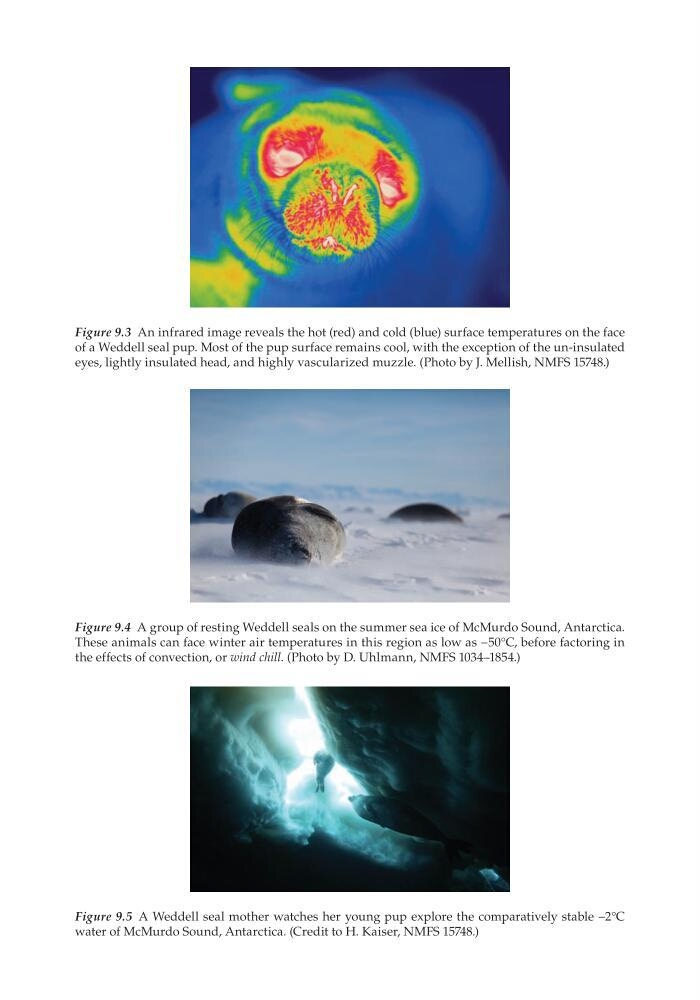
Figure 9.4 A group of resting Weddell seals on the summer sea ice of McMurdo Sound, Antarctica.
These animals can face winter air temperatures in this region as low as −50°C, before factoring in
the effects of convection, or wind chill. (Photo by D. Uhlmann, NMFS 1034–1854.)
Figure 9.5 A Weddell seal mother watches her young pup explore the comparatively stable −2°C
water of McMurdo Sound, Antarctica. (Credit to H. Kaiser, NMFS 15748.)
Figure 9.3 An infrared image reveals the hot (red) and cold (blue) surface temperatures on the face
of a Weddell seal pup. Most of the pup surface remains cool, with the exception of the un-insulated
eyes, lightly insulated head, and highly vascularized muzzle. (Photo by J. Mellish, NMFS 15748.)
These animals can face winter air temperatures in this region as low as −50°C, before factoring in
the effects of convection, or wind chill. (Photo by D. Uhlmann, NMFS 1034–1854.)
Figure 9.5 A Weddell seal mother watches her young pup explore the comparatively stable −2°C
water of McMurdo Sound, Antarctica. (Credit to H. Kaiser, NMFS 15748.)
Figure 9.3 An infrared image reveals the hot (red) and cold (blue) surface temperatures on the face
of a Weddell seal pup. Most of the pup surface remains cool, with the exception of the un-insulated
eyes, lightly insulated head, and highly vascularized muzzle. (Photo by J. Mellish, NMFS 15748.)