

Rigid
trachea
Tracheal
Compression
(b)
(a)
Volume relative to starting
volume
0
0.2 0.4 0.6 0.8
1
Pressure (ATA)
1
2
3
4
5
6
7
8
9
10
(c)
(d)
Invasion rate (surface area × pressure)
0
0 .5
1
1 .5
Trachea
Total
Alveoli
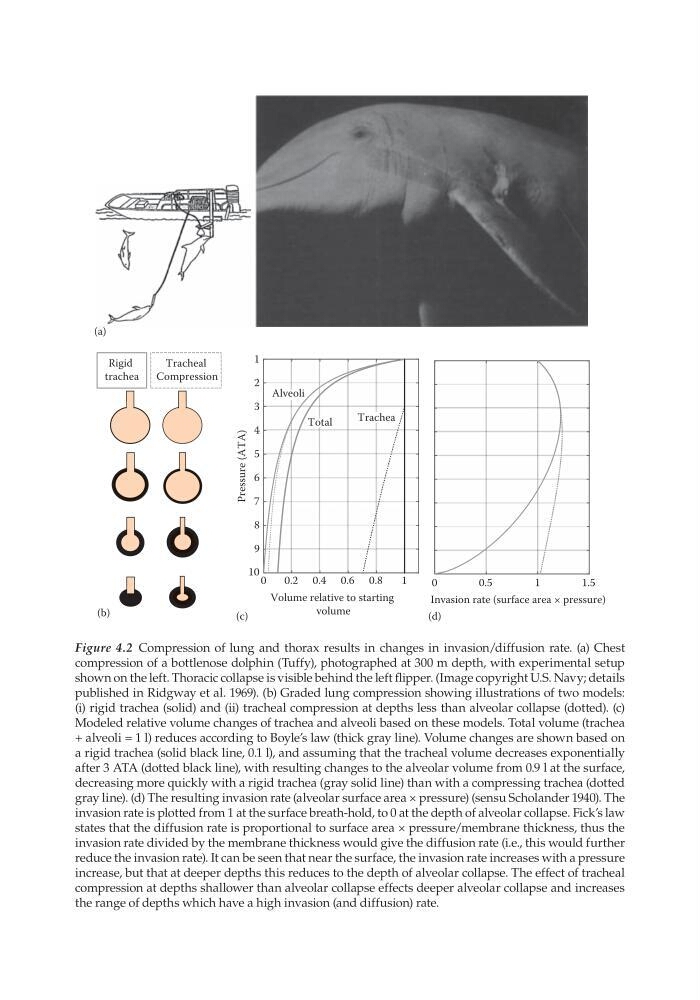
Figure 4.2 Compression of lung and thorax results in changes in invasion/diffusion rate. (a) Chest
compression of a bottlenose dolphin (Tuffy), photographed at 300 m depth, with experimental setup
shown on the left. Thoracic collapse is visible behind the left flipper. (Image copyright U.S. Navy; details
published in Ridgway et al. 1969). (b) Graded lung compression showing illustrations of two models:
(i) rigid trachea (solid) and (ii) tracheal compression at depths less than alveolar collapse (dotted). (c)
Modeled relative volume changes of trachea and alveoli based on these models. Total volume (trachea
+ alveoli = 1 l) reduces according to Boyle’s law (thick gray line). Volume changes are shown based on
a rigid trachea (solid black line, 0.1 l), and assuming that the tracheal volume decreases exponentially
after 3 ATA (dotted black line), with resulting changes to the alveolar volume from 0.9 l at the surface,
decreasing more quickly with a rigid trachea (gray solid line) than with a compressing trachea (dotted
gray line). (d) The resulting invasion rate (alveolar surface area × pressure) (sensu Scholander 1940). The
invasion rate is plotted from 1 at the surface breath-hold, to 0 at the depth of alveolar collapse. Fick’s law
states that the diffusion rate is proportional to surface area × pressure/membrane thickness, thus the
invasion rate divided by the membrane thickness would give the diffusion rate (i.e., this would further
reduce the invasion rate). It can be seen that near the surface, the invasion rate increases with a pressure
increase, but that at deeper depths this reduces to the depth of alveolar collapse. The effect of tracheal
compression at depths shallower than alveolar collapse effects deeper alveolar collapse and increases
the range of depths which have a high invasion (and diffusion) rate.
trachea
Tracheal
Compression
(b)
(a)
Volume relative to starting
volume
0
0.2 0.4 0.6 0.8
1
Pressure (ATA)
1
2
3
4
5
6
7
8
9
10
(c)
(d)
Invasion rate (surface area × pressure)
0
0 .5
1
1 .5
Trachea
Total
Alveoli
Figure 4.2 Compression of lung and thorax results in changes in invasion/diffusion rate. (a) Chest
compression of a bottlenose dolphin (Tuffy), photographed at 300 m depth, with experimental setup
shown on the left. Thoracic collapse is visible behind the left flipper. (Image copyright U.S. Navy; details
published in Ridgway et al. 1969). (b) Graded lung compression showing illustrations of two models:
(i) rigid trachea (solid) and (ii) tracheal compression at depths less than alveolar collapse (dotted). (c)
Modeled relative volume changes of trachea and alveoli based on these models. Total volume (trachea
+ alveoli = 1 l) reduces according to Boyle’s law (thick gray line). Volume changes are shown based on
a rigid trachea (solid black line, 0.1 l), and assuming that the tracheal volume decreases exponentially
after 3 ATA (dotted black line), with resulting changes to the alveolar volume from 0.9 l at the surface,
decreasing more quickly with a rigid trachea (gray solid line) than with a compressing trachea (dotted
gray line). (d) The resulting invasion rate (alveolar surface area × pressure) (sensu Scholander 1940). The
invasion rate is plotted from 1 at the surface breath-hold, to 0 at the depth of alveolar collapse. Fick’s law
states that the diffusion rate is proportional to surface area × pressure/membrane thickness, thus the
invasion rate divided by the membrane thickness would give the diffusion rate (i.e., this would further
reduce the invasion rate). It can be seen that near the surface, the invasion rate increases with a pressure
increase, but that at deeper depths this reduces to the depth of alveolar collapse. The effect of tracheal
compression at depths shallower than alveolar collapse effects deeper alveolar collapse and increases
the range of depths which have a high invasion (and diffusion) rate.