

SHALLOW
Gas diffusion rate highest,
high absorption
Alveolar collapse
Depth
INTERMEDIATE
Gas diffusion rate lower,
some gas absorption
DEEP
No gas diffusion,
constant body gases
∆V/∆P low
Shallow water blackout
Decompression sickness
HPNS
N 2 narcosis
O 2 toxicity
Volume
(PN 2 tissue > PN 2 amb)
∆V/∆P high
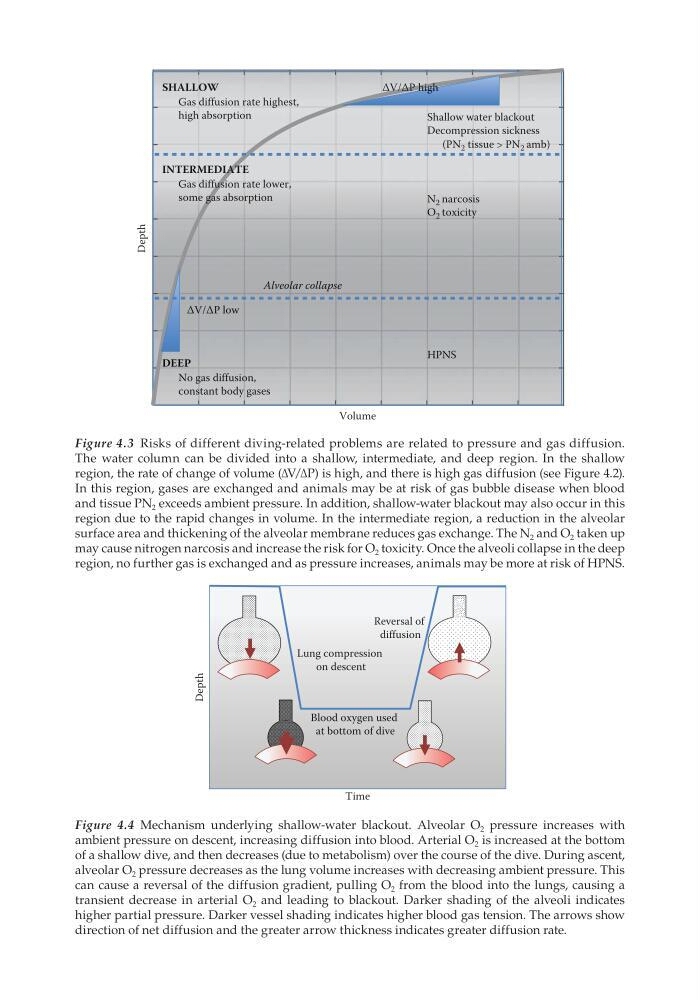
Figure 4.3 Risks of different diving-related problems are related to pressure and gas diffusion.
The water column can be divided into a shallow, intermediate, and deep region. In the shallow
region, the rate of change of volume (ΔV/ΔP) is high, and there is high gas diffusion (see Figure 4.2).
In this region, gases are exchanged and animals may be at risk of gas bubble disease when blood
and tissue PN 2 exceeds ambient pressure. In addition, shallow-water blackout may also occur in this
region due to the rapid changes in volume. In the intermediate region, a reduction in the alveolar
surface area and thickening of the alveolar membrane reduces gas exchange. The N 2 and O 2 taken up
may cause nitrogen narcosis and increase the risk for O 2 toxicity. Once the alveoli collapse in the deep
region, no further gas is exchanged and as pressure increases, animals may be more at risk of HPNS.
Reversal of
diffusion
Blood oxygen used
at bottom of dive
Lung compression
on descent
Depth
Time
Figure 4.4 Mechanism underlying shallow-water blackout. Alveolar O 2 pressure increases with
ambient pressure on descent, increasing diffusion into blood. Arterial O 2 is increased at the bottom
of a shallow dive, and then decreases (due to metabolism) over the course of the dive. During ascent,
alveolar O 2 pressure decreases as the lung volume increases with decreasing ambient pressure. This
can cause a reversal of the diffusion gradient, pulling O 2 from the blood into the lungs, causing a
transient decrease in arterial O 2 and leading to blackout. Darker shading of the alveoli indicates
higher partial pressure. Darker vessel shading indicates higher blood gas tension. The arrows show
direction of net diffusion and the greater arrow thickness indicates greater diffusion rate.
Gas diffusion rate highest,
high absorption
Alveolar collapse
Depth
INTERMEDIATE
Gas diffusion rate lower,
some gas absorption
DEEP
No gas diffusion,
constant body gases
∆V/∆P low
Shallow water blackout
Decompression sickness
HPNS
N 2 narcosis
O 2 toxicity
Volume
(PN 2 tissue > PN 2 amb)
∆V/∆P high
Figure 4.3 Risks of different diving-related problems are related to pressure and gas diffusion.
The water column can be divided into a shallow, intermediate, and deep region. In the shallow
region, the rate of change of volume (ΔV/ΔP) is high, and there is high gas diffusion (see Figure 4.2).
In this region, gases are exchanged and animals may be at risk of gas bubble disease when blood
and tissue PN 2 exceeds ambient pressure. In addition, shallow-water blackout may also occur in this
region due to the rapid changes in volume. In the intermediate region, a reduction in the alveolar
surface area and thickening of the alveolar membrane reduces gas exchange. The N 2 and O 2 taken up
may cause nitrogen narcosis and increase the risk for O 2 toxicity. Once the alveoli collapse in the deep
region, no further gas is exchanged and as pressure increases, animals may be more at risk of HPNS.
Reversal of
diffusion
Blood oxygen used
at bottom of dive
Lung compression
on descent
Depth
Time
Figure 4.4 Mechanism underlying shallow-water blackout. Alveolar O 2 pressure increases with
ambient pressure on descent, increasing diffusion into blood. Arterial O 2 is increased at the bottom
of a shallow dive, and then decreases (due to metabolism) over the course of the dive. During ascent,
alveolar O 2 pressure decreases as the lung volume increases with decreasing ambient pressure. This
can cause a reversal of the diffusion gradient, pulling O 2 from the blood into the lungs, causing a
transient decrease in arterial O 2 and leading to blackout. Darker shading of the alveoli indicates
higher partial pressure. Darker vessel shading indicates higher blood gas tension. The arrows show
direction of net diffusion and the greater arrow thickness indicates greater diffusion rate.