

50
Biology of Sea Turtles, Vol. II
The dentary may have many small cusps in young turtles; these are usually reduced
or absent in older animals. The skulls of C. caretta, L. olivacea, L. kempii, and N.
depressus are relatively large, and wide posteriorly, with a snout that tapers anterior
to the orbits. Wide emarginations (parietal notches) are found along the posterior
borders of the squamosal, parietal, and supraoccipital bones. The jaws are robust,
and their buccal outline traces a wide “V.” Loggerheads have a relatively long
secondary palate that lacks alveolar ridges. The two maxillary bones articulate along
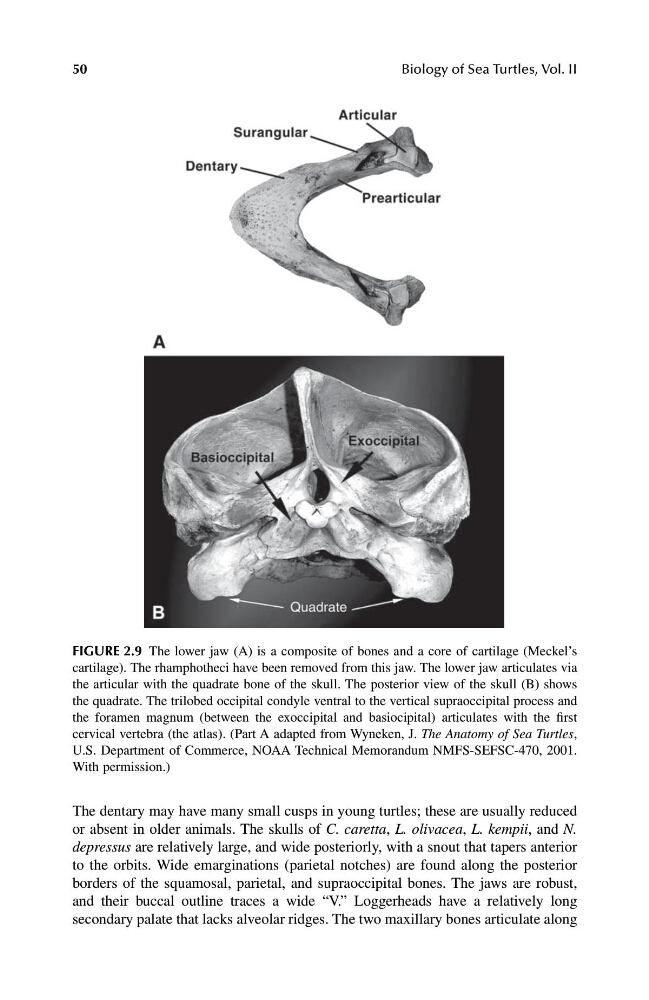
FIGURE 2.9 The lower jaw (A) is a composite of bones and a core of cartilage (Meckel’s
cartilage). The rhamphotheci have been removed from this jaw. The lower jaw articulates via
the articular with the quadrate bone of the skull. The posterior view of the skull (B) shows
the quadrate. The trilobed occipital condyle ventral to the vertical supraoccipital process and
the foramen magnum (between the exoccipital and basiocipital) articulates with the first
cervical vertebra (the atlas). (Part A adapted from Wyneken, J. The Anatomy of Sea Turtles,
U.S. Department of Commerce, NOAA Technical Memorandum NMFS-SEFSC-470, 2001.
With permission.)
1123_C02.fm Page 50 Friday, November 15, 2002 11:16 AM
Biology of Sea Turtles, Vol. II
The dentary may have many small cusps in young turtles; these are usually reduced
or absent in older animals. The skulls of C. caretta, L. olivacea, L. kempii, and N.
depressus are relatively large, and wide posteriorly, with a snout that tapers anterior
to the orbits. Wide emarginations (parietal notches) are found along the posterior
borders of the squamosal, parietal, and supraoccipital bones. The jaws are robust,
and their buccal outline traces a wide “V.” Loggerheads have a relatively long
secondary palate that lacks alveolar ridges. The two maxillary bones articulate along
FIGURE 2.9 The lower jaw (A) is a composite of bones and a core of cartilage (Meckel’s
cartilage). The rhamphotheci have been removed from this jaw. The lower jaw articulates via
the articular with the quadrate bone of the skull. The posterior view of the skull (B) shows
the quadrate. The trilobed occipital condyle ventral to the vertical supraoccipital process and
the foramen magnum (between the exoccipital and basiocipital) articulates with the first
cervical vertebra (the atlas). (Part A adapted from Wyneken, J. The Anatomy of Sea Turtles,
U.S. Department of Commerce, NOAA Technical Memorandum NMFS-SEFSC-470, 2001.
With permission.)
1123_C02.fm Page 50 Friday, November 15, 2002 11:16 AM