

58
3 Non-geometry standards
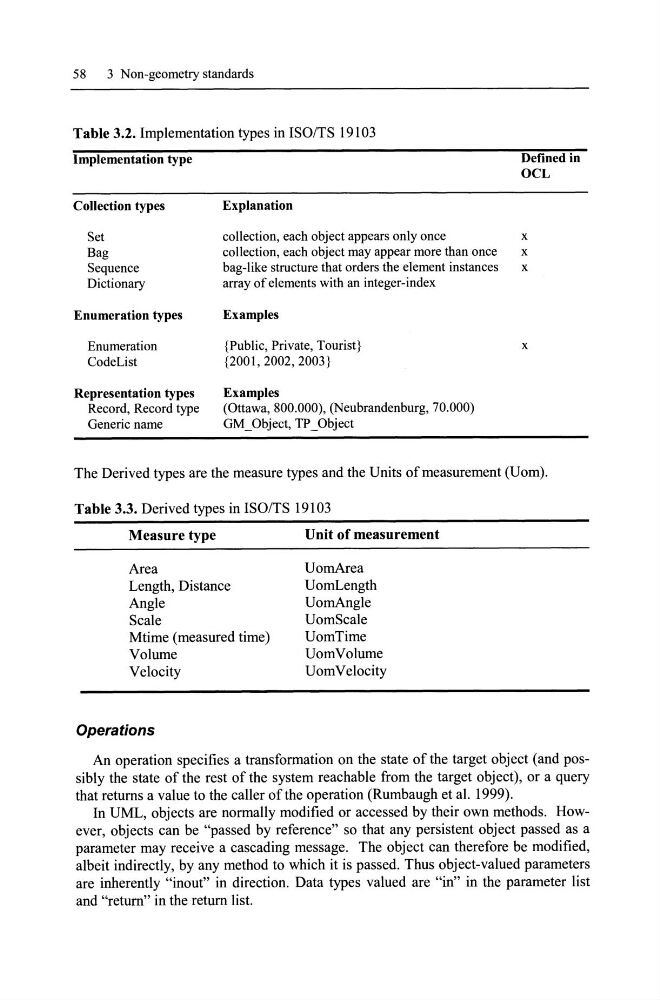
Table 3.2. Implementation types in ISOfTS 19103
Implementation type
Collection types
Explanation
Defined in
OCL
Set
collection, each object appears only once
x
Bag
Sequence
Dictionary
collection, each object may appear more than once
x
bag-like structure that orders the element instances
x
Enumeration types
Enumeration
CodeList
Representation types
Record, Record type
Generic name
array of elements with an integer-index
Examples
{Public, Private, Tourist}
{2001,2002,2003}
Examples
(Ottawa, 800.000), (Neubrandenburg, 70.000)
GM_Object, TP _Object
x
The Derived types are the measure types and the Units ofmeasurement (Uom).
Table 3.3. Derived types in ISOfTS 19103
Measure type
Area
Length, Distance
Angle
Scale
Mtime (measured time)
Volume
Velocity
Operations
Unit of measurement
UomArea
UomLength
UomAngle
UomScale
UomTime
UomVolume
UomVelocity
An operation specifies a transformation on the state of the target object (and possibly the state of the rest of the system reachable from the target object), or a query
that returns a value to the caller ofthe operation (Rumbaugh et al. 1999).
In UML, objects are normally modified or accessed by their own methods. However, objects can be "passed by reference" so that any persistent object passed as a
parameter may receive a cascading message. The object can therefore be modified,
albeit indirectly, by any method to which it is passed. Thus object-valued parameters
are inherently "inout" in direction. Data types valued are "in" in the parameter list
and "return" in the return list.
3 Non-geometry standards
Table 3.2. Implementation types in ISOfTS 19103
Implementation type
Collection types
Explanation
Defined in
OCL
Set
collection, each object appears only once
x
Bag
Sequence
Dictionary
collection, each object may appear more than once
x
bag-like structure that orders the element instances
x
Enumeration types
Enumeration
CodeList
Representation types
Record, Record type
Generic name
array of elements with an integer-index
Examples
{Public, Private, Tourist}
{2001,2002,2003}
Examples
(Ottawa, 800.000), (Neubrandenburg, 70.000)
GM_Object, TP _Object
x
The Derived types are the measure types and the Units ofmeasurement (Uom).
Table 3.3. Derived types in ISOfTS 19103
Measure type
Area
Length, Distance
Angle
Scale
Mtime (measured time)
Volume
Velocity
Operations
Unit of measurement
UomArea
UomLength
UomAngle
UomScale
UomTime
UomVolume
UomVelocity
An operation specifies a transformation on the state of the target object (and possibly the state of the rest of the system reachable from the target object), or a query
that returns a value to the caller ofthe operation (Rumbaugh et al. 1999).
In UML, objects are normally modified or accessed by their own methods. However, objects can be "passed by reference" so that any persistent object passed as a
parameter may receive a cascading message. The object can therefore be modified,
albeit indirectly, by any method to which it is passed. Thus object-valued parameters
are inherently "inout" in direction. Data types valued are "in" in the parameter list
and "return" in the return list.