

24
1 Basics of standards
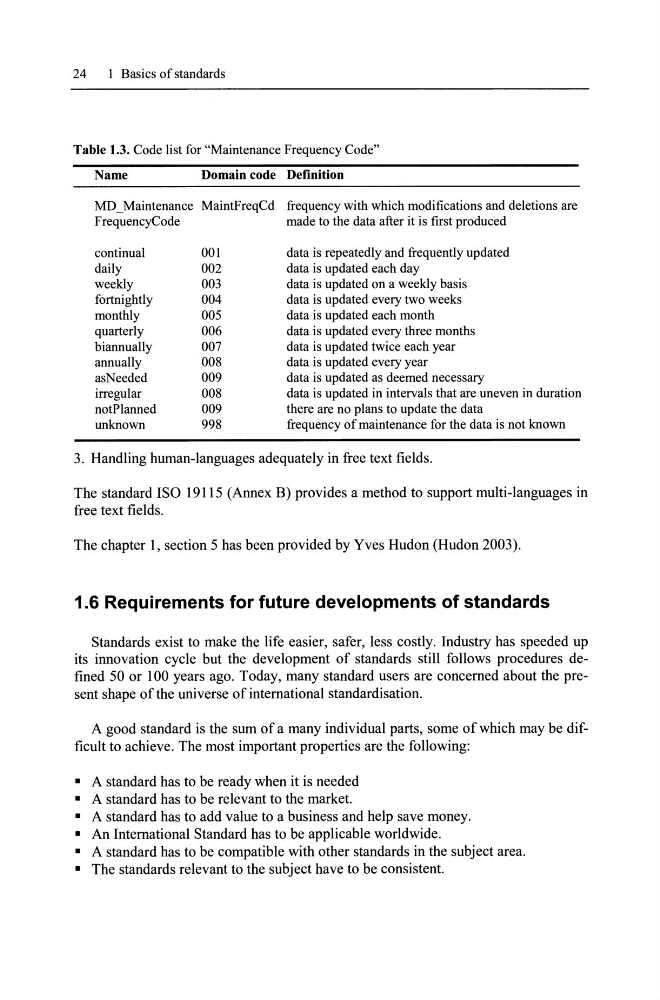
Table 1.3. Code list for "Maintenance Frequency Code"
Name
Domain code Definition
MD Maintenance MaintFreqCd frequency with which modifications and deletions are
FrequencyCode
made to the data after it is first produced
continual
daily
weekly
fortnightly
monthly
quarterly
biannually
annually
asNeeded
irregu1ar
notPlanned
unknown
001
002
003
004
005
006
007
008
009
008
009
998
data is repeatedly and frequently updated
data is updated each day
data is updated on a weekly basis
data is updated every two weeks
data is updated each month
data is updated every three months
data is updated twice each year
data is updated every year
data is updated as deemed necessary
data is updated in intervals that are uneven in duration
there are no plans to update the data
frequency of maintenance for the data is not known
3. Handling human-languages adequately in free text fields.
The standard ISO 19115 (Annex B) provides a method to support multi-languages in
free text fields.
The chapter 1, section 5 has been provided by Yves Hudon (Hudon 2003).
1.6 Requirements for future developments of standards
Standards exist to make the life easier, safer, less costly. Industry has speeded up
its innovation cyc1e but the development of standards still follows procedures defined 50 or 100 years ago. Today, many standard users are concerned about the present shape of the universe of international standardisation.
A good standard is the sum of a many individual parts, some of which may be difficult to achieve. The most important properties are the following:
• A standard has to be ready when it is needed
• A standard has to be relevant to the market.
• A standard has to add value to a business and help save money.
• An International Standard has to be applicable worldwide.
• A standard has to be compatible with other standards in the subject area.
• The standards relevant to the subject have to be consistent.
1 Basics of standards
Table 1.3. Code list for "Maintenance Frequency Code"
Name
Domain code Definition
MD Maintenance MaintFreqCd frequency with which modifications and deletions are
FrequencyCode
made to the data after it is first produced
continual
daily
weekly
fortnightly
monthly
quarterly
biannually
annually
asNeeded
irregu1ar
notPlanned
unknown
001
002
003
004
005
006
007
008
009
008
009
998
data is repeatedly and frequently updated
data is updated each day
data is updated on a weekly basis
data is updated every two weeks
data is updated each month
data is updated every three months
data is updated twice each year
data is updated every year
data is updated as deemed necessary
data is updated in intervals that are uneven in duration
there are no plans to update the data
frequency of maintenance for the data is not known
3. Handling human-languages adequately in free text fields.
The standard ISO 19115 (Annex B) provides a method to support multi-languages in
free text fields.
The chapter 1, section 5 has been provided by Yves Hudon (Hudon 2003).
1.6 Requirements for future developments of standards
Standards exist to make the life easier, safer, less costly. Industry has speeded up
its innovation cyc1e but the development of standards still follows procedures defined 50 or 100 years ago. Today, many standard users are concerned about the present shape of the universe of international standardisation.
A good standard is the sum of a many individual parts, some of which may be difficult to achieve. The most important properties are the following:
• A standard has to be ready when it is needed
• A standard has to be relevant to the market.
• A standard has to add value to a business and help save money.
• An International Standard has to be applicable worldwide.
• A standard has to be compatible with other standards in the subject area.
• The standards relevant to the subject have to be consistent.