

Atmospheric Boundary Layer: Concepts and Measurements
19
wind, allowing a range of directions (around 30° for each side). In case there is no
prevailing wind dominant, another opposite boom should be installed. This is the
case of the Cabauw Tower and the Kennedy Space Center Tower (which has an
approximate height of 150 m), which have two booms (opposite) at each level.
The sensors installed at the towers should measure the mean and fl uctuating
components. For the mean values that characterize the profi les (temperature, humidity, and winds), the absolute accuracy is the most important issue to be considered
(Kaimal, 1986). The time constant is in the range of 10–60 s, characterizing a slow
response type of sensor. The most used sensors for temperature and humidity (using
psychrometric technique) are platinum resistance thermometers, which has a time
constant of around 60 s. It is essential to protect the sensors against solar radiation
(radiation shields) with an aspiration rate of 5 m/s. For the winds, the cup anemometer
with a wind vane is usually used for wind measurements as they are separated apart
(each sensor does not infl uence the other), they are very simple and rugged. However,
they need periodic calibrations (at least yearly) that are conducted at wind tunnels.
For wind engineering purposes (especially associated with wind energy issues), this is
the sensor accepted by the users. Another low time response sensor used for horizontal winds is the propeller aerovane (Figure 2.3), which has the windspeed and vane at
the same body. The aerodynamic of the body rotates the sensor toward the prevailing
wind. So the propellers are always pointing to the mean wind direction. If the wind
direction rotates too fast, a cosine response function should be applied to the raw
data. For weak wind conditions, the threshold windspeed value has to be considered.
For both sensors (cup and propeller), it is around 0.5 m/s. Besides the profi le, radiation equipments (incident and refl ected short and long wave components measured
by radiometers) are installed at the top of the mast/towers. All these equipments are
measured at the sample rate of less than 0.5 Hz and 1–10 min averages are saved in
(a)
(b)
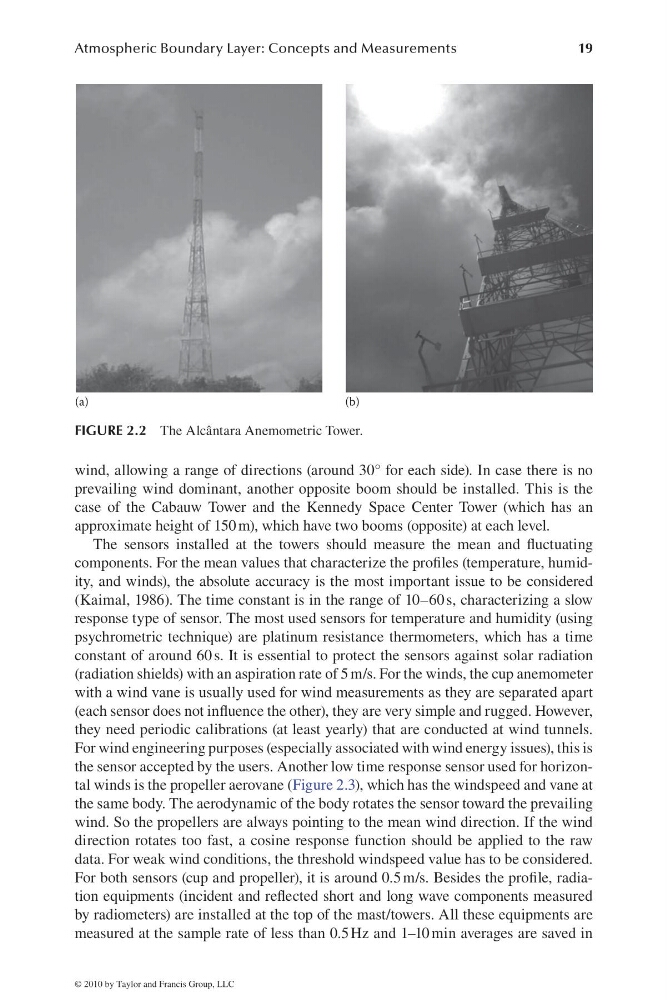
FIGURE 2.2 The Alcântara Anemometric Tower.
© 2010 by Taylor and Francis Group, LLC
19
wind, allowing a range of directions (around 30° for each side). In case there is no
prevailing wind dominant, another opposite boom should be installed. This is the
case of the Cabauw Tower and the Kennedy Space Center Tower (which has an
approximate height of 150 m), which have two booms (opposite) at each level.
The sensors installed at the towers should measure the mean and fl uctuating
components. For the mean values that characterize the profi les (temperature, humidity, and winds), the absolute accuracy is the most important issue to be considered
(Kaimal, 1986). The time constant is in the range of 10–60 s, characterizing a slow
response type of sensor. The most used sensors for temperature and humidity (using
psychrometric technique) are platinum resistance thermometers, which has a time
constant of around 60 s. It is essential to protect the sensors against solar radiation
(radiation shields) with an aspiration rate of 5 m/s. For the winds, the cup anemometer
with a wind vane is usually used for wind measurements as they are separated apart
(each sensor does not infl uence the other), they are very simple and rugged. However,
they need periodic calibrations (at least yearly) that are conducted at wind tunnels.
For wind engineering purposes (especially associated with wind energy issues), this is
the sensor accepted by the users. Another low time response sensor used for horizontal winds is the propeller aerovane (Figure 2.3), which has the windspeed and vane at
the same body. The aerodynamic of the body rotates the sensor toward the prevailing
wind. So the propellers are always pointing to the mean wind direction. If the wind
direction rotates too fast, a cosine response function should be applied to the raw
data. For weak wind conditions, the threshold windspeed value has to be considered.
For both sensors (cup and propeller), it is around 0.5 m/s. Besides the profi le, radiation equipments (incident and refl ected short and long wave components measured
by radiometers) are installed at the top of the mast/towers. All these equipments are
measured at the sample rate of less than 0.5 Hz and 1–10 min averages are saved in
(a)
(b)
FIGURE 2.2 The Alcântara Anemometric Tower.
© 2010 by Taylor and Francis Group, LLC