

Degradation of Pesticides in the Environment
HCI
CIO~ ~O~ CI -L CIO~ CO~ CI
- 1 -
- 1 1 -
CI-C-CI
CI-C-CI
CI
DDT
DOE
n
CIHCI
H
H
CI
CI
CI
H
HCI
L,
n
HC1
Hf
H
CI
CI
H
H CI
H CI
CHC (=8HC)
Pentachlorocyclohexane
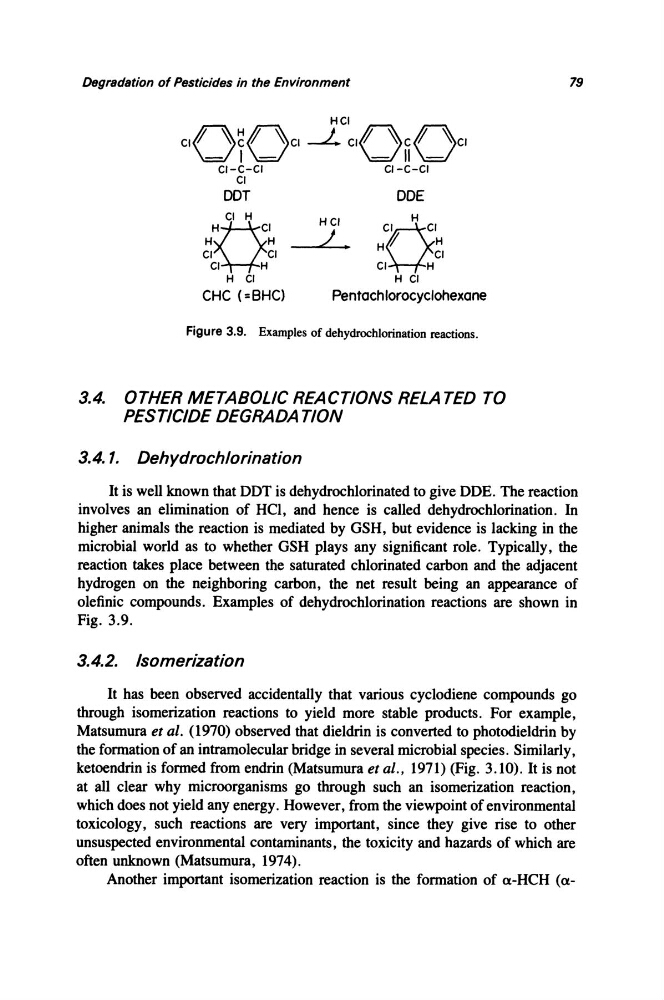
Figure 3.9. Examples of dehydrochlorination reactions.
3.4. OTHER METABOLIC REACTIONS RELATED TO
PESTICIDE DEGRADA TlON
3.4. 1. Dehydrochlorination
79
It is well known that DDT is dehydrochlorinated to give DDE. The reaction
involves an elimination of HCI, and hence is called dehydrochlorination. In
higher animals the reaction is mediated by GSH, but evidence is lacking in the
microbial world as to whether GSH plays any significant role. Typically, the
reaction takes place between the saturated chlorinated carbon and the adjacent
hydrogen on the neighboring carbon, the net result being an appearance of
olefinic compounds. Examples of dehydrochlorination reactions are shown in
Fig. 3.9.
3.4.2. Isomerization
It has been observed accidentally that various cyclodiene compounds go
through isomerization reactions to yield more stable products. For example,
Matsumura et al. (1970) observed that dieldrin is converted to photodieldrin by
the formation of an intramolecular bridge in several microbial species. Similarly,
ketoendrin is formed from endrin (Matsumura et al., 1971) (Fig. 3.10). It is not
at all clear why microorganisms go through such an isomerization reaction,
which does not yield any energy. However, from the viewpoint of environmental
toxicology, such reactions are very important, since they give rise to other
unsuspected environmental contaminants, the toxicity and hazards of which are
often unknown (Matsumura, 1974).
Another important isomerization reaction is the formation of a-HCH (a-
HCI
CIO~ ~O~ CI -L CIO~ CO~ CI
- 1 -
- 1 1 -
CI-C-CI
CI-C-CI
CI
DDT
DOE
n
CIHCI
H
H
CI
CI
CI
H
HCI
L,
n
HC1
Hf
H
CI
CI
H
H CI
H CI
CHC (=8HC)
Pentachlorocyclohexane
Figure 3.9. Examples of dehydrochlorination reactions.
3.4. OTHER METABOLIC REACTIONS RELATED TO
PESTICIDE DEGRADA TlON
3.4. 1. Dehydrochlorination
79
It is well known that DDT is dehydrochlorinated to give DDE. The reaction
involves an elimination of HCI, and hence is called dehydrochlorination. In
higher animals the reaction is mediated by GSH, but evidence is lacking in the
microbial world as to whether GSH plays any significant role. Typically, the
reaction takes place between the saturated chlorinated carbon and the adjacent
hydrogen on the neighboring carbon, the net result being an appearance of
olefinic compounds. Examples of dehydrochlorination reactions are shown in
Fig. 3.9.
3.4.2. Isomerization
It has been observed accidentally that various cyclodiene compounds go
through isomerization reactions to yield more stable products. For example,
Matsumura et al. (1970) observed that dieldrin is converted to photodieldrin by
the formation of an intramolecular bridge in several microbial species. Similarly,
ketoendrin is formed from endrin (Matsumura et al., 1971) (Fig. 3.10). It is not
at all clear why microorganisms go through such an isomerization reaction,
which does not yield any energy. However, from the viewpoint of environmental
toxicology, such reactions are very important, since they give rise to other
unsuspected environmental contaminants, the toxicity and hazards of which are
often unknown (Matsumura, 1974).
Another important isomerization reaction is the formation of a-HCH (a-