

10
H. Wyman Dorough and Sue K. Ballard
R'RCH-O-Y - - - . . . [R'~~~O-vl
H'O
J
- - - . . R'RC=O + HOY
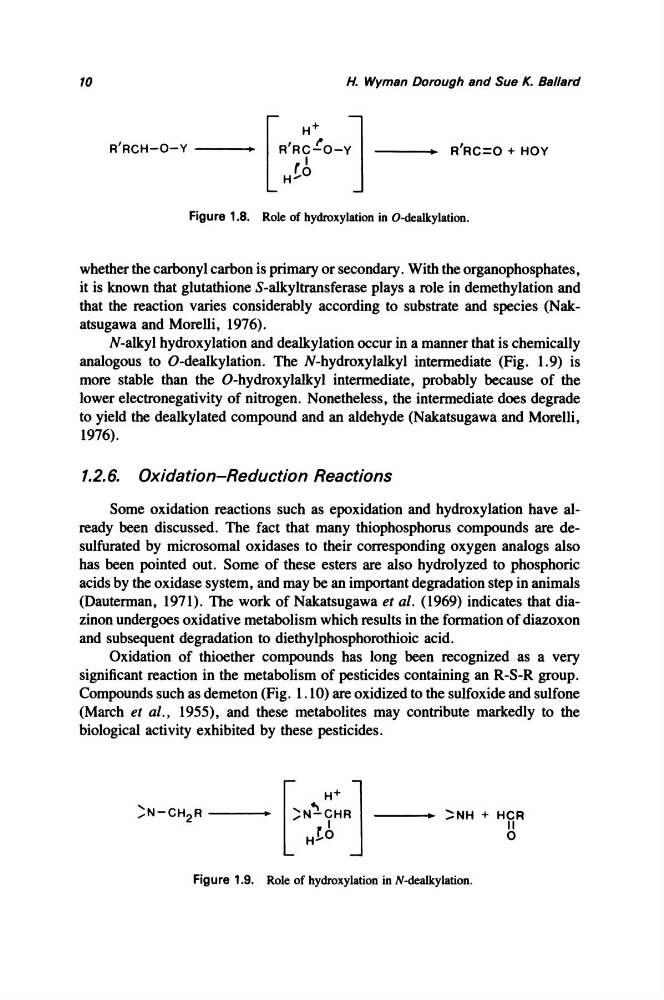
Figure 1.8. Role of hydroxylation in O-dealkylation.
whether the carbonyl carbon is primary or secondary. With the organophosphates,
it is known that glutathione S-alkyltransferase plays a role in demethylation and
that the reaction varies considerably according to substrate and species (Nakatsugawa and Morelli, 1976).
N-alkyl hydroxylation and dealkylation occur in a manner that is chemically
analogous to O-dealkylation. The N-hydroxylalkyl intermediate (Fig. 1.9) is
more stable than the O-hydroxylalkyl intermediate, probably because of the
lower electronegativity of nitrogen. Nonetheless, the intermediate does degrade
to yield the dealkylated compound and an aldehyde (Nakatsugawa and Morelli,
1976).
1.2.6. Oxidation-Reduction Reactions
Some oxidation reactions such as epoxidation and hydroxylation have already been discussed. The fact that many thiophosphorus compounds are desulfurated by microsomal oxidases to their corresponding oxygen analogs also
has been pointed out. Some of these esters are also hydrolyzed to phosphoric
acids by the oxidase system, and may be an important degradation step in animals
(Dauterman, 1971). The work of Nakatsugawa et al. (1969) indicates that diazinon undergoes oxidative metabolism which results in the formation of diazoxon
and subsequent degradation to diethylphosphorothioic acid.
Oxidation of thioether compounds has long been recognized as a very
significant reaction in the metabolism of pesticides containing an R-S-R group.
Compounds such as demeton (Fig. 1.10) are oxidized to the sulfoxide and sulfone
(March et al., 1955), and these metabolites may contribute markedly to the
biological activity exhibited by these pesticides.
- - -•• ::::NH + HCR
II
o
Figure 1.9. Role of hydroxylation in N-dealkylation.
H. Wyman Dorough and Sue K. Ballard
R'RCH-O-Y - - - . . . [R'~~~O-vl
H'O
J
- - - . . R'RC=O + HOY
Figure 1.8. Role of hydroxylation in O-dealkylation.
whether the carbonyl carbon is primary or secondary. With the organophosphates,
it is known that glutathione S-alkyltransferase plays a role in demethylation and
that the reaction varies considerably according to substrate and species (Nakatsugawa and Morelli, 1976).
N-alkyl hydroxylation and dealkylation occur in a manner that is chemically
analogous to O-dealkylation. The N-hydroxylalkyl intermediate (Fig. 1.9) is
more stable than the O-hydroxylalkyl intermediate, probably because of the
lower electronegativity of nitrogen. Nonetheless, the intermediate does degrade
to yield the dealkylated compound and an aldehyde (Nakatsugawa and Morelli,
1976).
1.2.6. Oxidation-Reduction Reactions
Some oxidation reactions such as epoxidation and hydroxylation have already been discussed. The fact that many thiophosphorus compounds are desulfurated by microsomal oxidases to their corresponding oxygen analogs also
has been pointed out. Some of these esters are also hydrolyzed to phosphoric
acids by the oxidase system, and may be an important degradation step in animals
(Dauterman, 1971). The work of Nakatsugawa et al. (1969) indicates that diazinon undergoes oxidative metabolism which results in the formation of diazoxon
and subsequent degradation to diethylphosphorothioic acid.
Oxidation of thioether compounds has long been recognized as a very
significant reaction in the metabolism of pesticides containing an R-S-R group.
Compounds such as demeton (Fig. 1.10) are oxidized to the sulfoxide and sulfone
(March et al., 1955), and these metabolites may contribute markedly to the
biological activity exhibited by these pesticides.
- - -•• ::::NH + HCR
II
o
Figure 1.9. Role of hydroxylation in N-dealkylation.