

Degradation of Pesticides by Animals
9
MAJOR METABOLITE
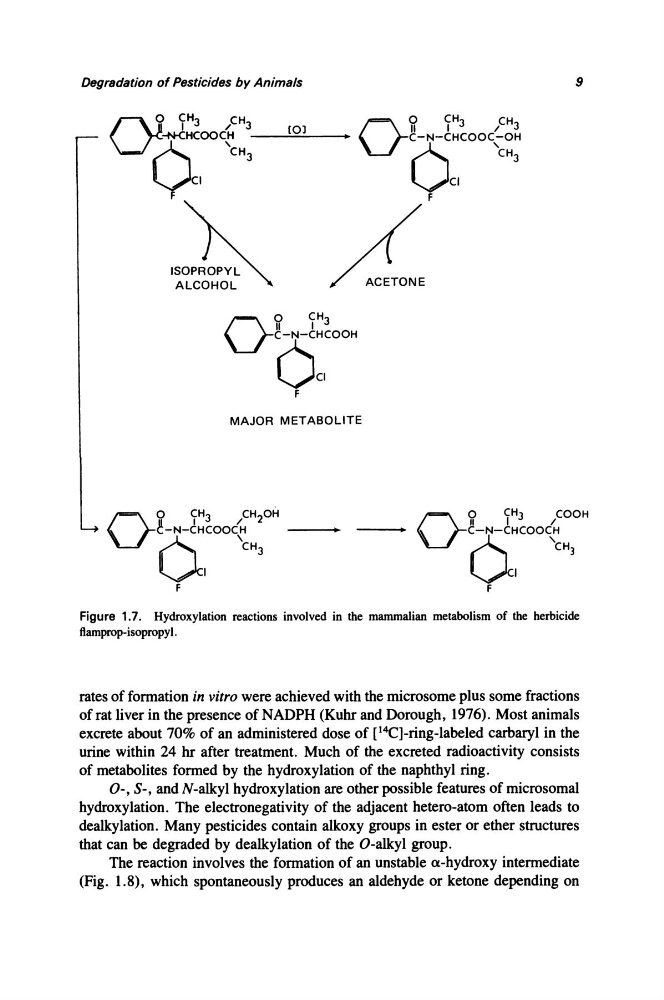
Figure 1.7. Hydroxylation reactions involved in the mammalian metabolism of the herbicide
ftamprop-isopropyl.
rates of formation in vitro were achieved with the microsome plus some fractions
of rat liver in the presence of NADPH (Kuhr and Dorough, 1976). Most animals
excrete about 70% of an administered dose of [14C]-ring-Iabeled carbaryl in the
urine within 24 hr after treatment. Much of the excreted radioactivity consists
of metabolites formed by the hydroxylation of the naphthyl ring.
0-, S-, and N-alkyl hydroxylation are other possible features of microsomal
hydroxylation. The electronegativity of the adjacent hetero-atom often leads to
dealkylation. Many pesticides contain alkoxy groups in ester or ether structures
that can be degraded by dealkylation of the a-alkyl group.
The reaction involves the formation of an unstable a-hydroxy intermediate
(Fig. 1.8), which spontaneously produces an aldehyde or ketone depending on
9
MAJOR METABOLITE
Figure 1.7. Hydroxylation reactions involved in the mammalian metabolism of the herbicide
ftamprop-isopropyl.
rates of formation in vitro were achieved with the microsome plus some fractions
of rat liver in the presence of NADPH (Kuhr and Dorough, 1976). Most animals
excrete about 70% of an administered dose of [14C]-ring-Iabeled carbaryl in the
urine within 24 hr after treatment. Much of the excreted radioactivity consists
of metabolites formed by the hydroxylation of the naphthyl ring.
0-, S-, and N-alkyl hydroxylation are other possible features of microsomal
hydroxylation. The electronegativity of the adjacent hetero-atom often leads to
dealkylation. Many pesticides contain alkoxy groups in ester or ether structures
that can be degraded by dealkylation of the a-alkyl group.
The reaction involves the formation of an unstable a-hydroxy intermediate
(Fig. 1.8), which spontaneously produces an aldehyde or ketone depending on