

6
H. Wyman Dorough and Sue K. Ballard
° " CHI
H,CyC-Ni:H
N
'
srO'N _ _
Sr
Br
HaCyCOOH
H1'~
sriL-Jsr
tribromo herbicide
tribromo acid
dibromo acid
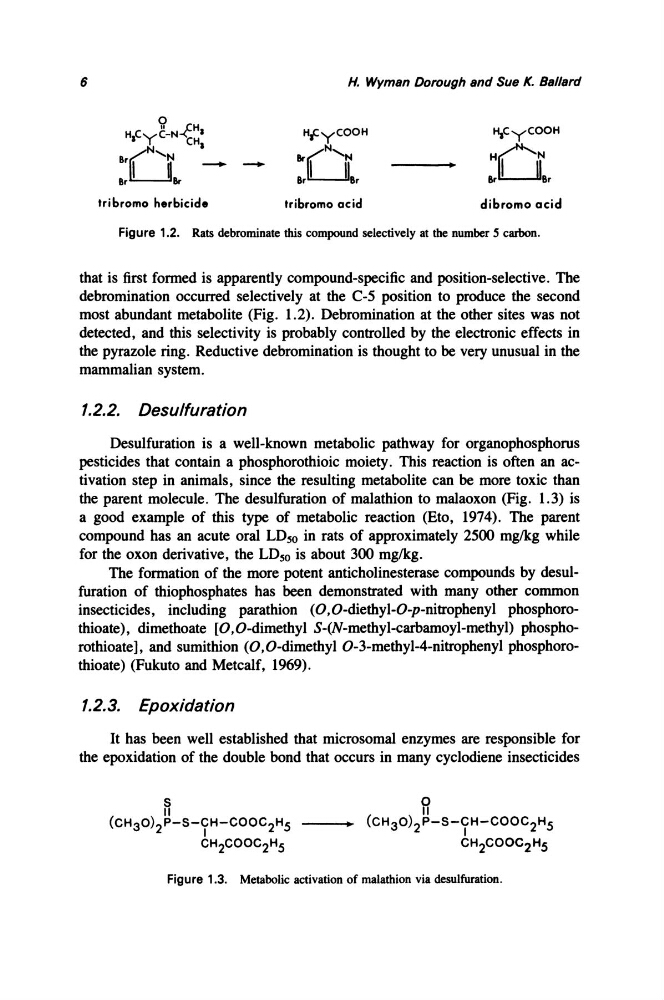
Figure 1.2. Rats debrominate this compound selectively at the number 5 carbon.
that is first formed is apparently compound-specific and position-selective. The
debromination occurred selectively at the C-5 position to produce the second
most abundant metabolite (Fig. 1.2). Debromination at the other sites was not
detected, and this selectivity is probably controlled by the electronic effects in
the pyrazole ring. Reductive debromination is thought to be very unusual in the
mammalian system.
1.2.2. Desulfuration
Desulfuration is a well-known metabolic pathway for organophosphorus
pesticides that contain a phosphorothioic moiety. This reaction is often an activation step in animals, since the resulting metabolite can be more toxic than
the parent molecule. The desulfuration of malathion to malaoxon (Fig. 1.3) is
a good example of this type of metabolic reaction (Eto, 1974). The parent
compound has an acute oral LDso in rats of approximately 2500 mg/kg while
for the oxon derivative, the LDso is about 300 mg/kg.
The formation of the more potent anticholinesterase compounds by desulfuration of thiophosphates has been demonstrated with many other common
insecticides, including parathion (O,O-diethyl-O-p-nitrophenyl phosphorothioate), dimethoate [O,O-dimethyl S-(N-methyl-carbamoyl-methyl) phosphorothioate], and sumithion (O,O-dimethyl 0-3-methyl-4-nitrophenyl phosphorothioate) (Fukuto and Metcalf, 1969).
1.2.3. Epoxidation
It has been well established that microsomal enzymes are responsible for
the epoxidation of the double bond that occurs in many cyclodiene insecticides
S
II
(CH30)2P-S-9H-COOC2HS
CH 2 COOC 2 H S
fr
- - . . . (CH30)2P-S-9H-COOC2HS
CH 2 COOC 2 HS
Figure 1.3. Metabolic activation of malathion via desulfuration.
H. Wyman Dorough and Sue K. Ballard
° " CHI
H,CyC-Ni:H
N
'
srO'N _ _
Sr
Br
HaCyCOOH
H1'~
sriL-Jsr
tribromo herbicide
tribromo acid
dibromo acid
Figure 1.2. Rats debrominate this compound selectively at the number 5 carbon.
that is first formed is apparently compound-specific and position-selective. The
debromination occurred selectively at the C-5 position to produce the second
most abundant metabolite (Fig. 1.2). Debromination at the other sites was not
detected, and this selectivity is probably controlled by the electronic effects in
the pyrazole ring. Reductive debromination is thought to be very unusual in the
mammalian system.
1.2.2. Desulfuration
Desulfuration is a well-known metabolic pathway for organophosphorus
pesticides that contain a phosphorothioic moiety. This reaction is often an activation step in animals, since the resulting metabolite can be more toxic than
the parent molecule. The desulfuration of malathion to malaoxon (Fig. 1.3) is
a good example of this type of metabolic reaction (Eto, 1974). The parent
compound has an acute oral LDso in rats of approximately 2500 mg/kg while
for the oxon derivative, the LDso is about 300 mg/kg.
The formation of the more potent anticholinesterase compounds by desulfuration of thiophosphates has been demonstrated with many other common
insecticides, including parathion (O,O-diethyl-O-p-nitrophenyl phosphorothioate), dimethoate [O,O-dimethyl S-(N-methyl-carbamoyl-methyl) phosphorothioate], and sumithion (O,O-dimethyl 0-3-methyl-4-nitrophenyl phosphorothioate) (Fukuto and Metcalf, 1969).
1.2.3. Epoxidation
It has been well established that microsomal enzymes are responsible for
the epoxidation of the double bond that occurs in many cyclodiene insecticides
S
II
(CH30)2P-S-9H-COOC2HS
CH 2 COOC 2 H S
fr
- - . . . (CH30)2P-S-9H-COOC2HS
CH 2 COOC 2 HS
Figure 1.3. Metabolic activation of malathion via desulfuration.