

Degradation of Pesticides by Animals
5
CI09HD-CI CCI 3
------- CI09HD-CI HCCI 2
p,p' -DDT
P,P'-DDD
I
j
CIO~D-CI CCI 2
C'QRD-C' HCCI
P,p'-DDE
P,P'-TDEE
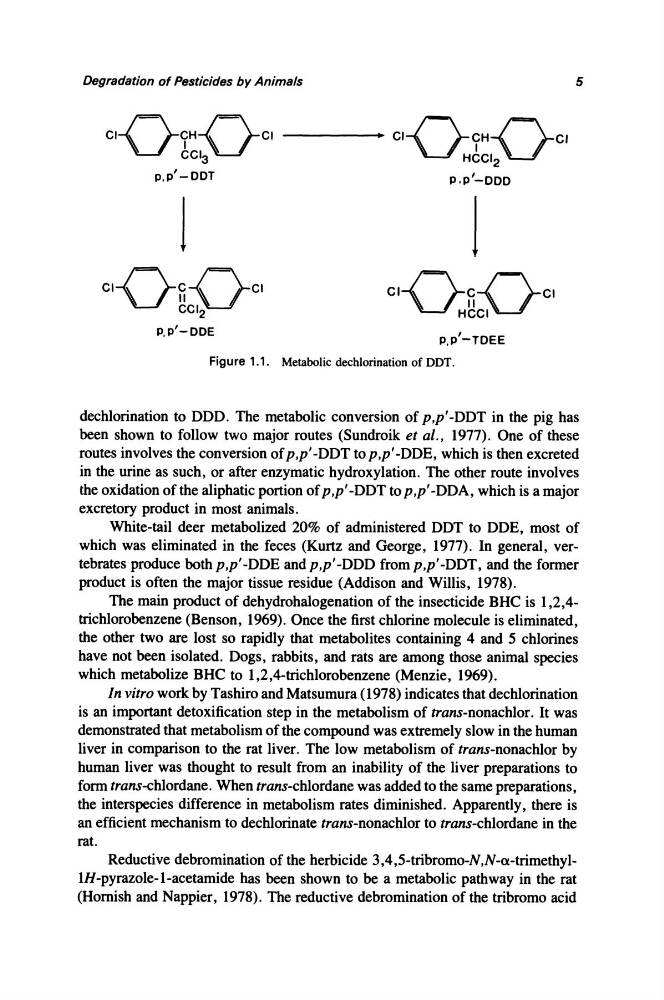
Figure 1,1, Metabolic dechlorination of DDT.
dechlorination to DDD, The metabolic conversion of p,p' -DDT in the pig has
been shown to follow two major routes (Sundroik et ai" 1977). One of these
routes involves the conversion of p,p' -DDT to p,p' -DDE, which is then excreted
in the urine as such, or after enzymatic hydroxylation. The other route involves
the oxidation of the aliphatic portion of p,p' -DDT to p,p' -DDA, which is a major
excretory product in most animals.
White-tail deer metabolized 20% of administered DDT to DDE, most of
which was eliminated in the feces (Kurtz and George, 1977). In general, vertebrates produce bothp,p'-DDE andp,p'-DDD fromp,p'-DDT, and the former
product is often the major tissue residue (Addison and Willis, 1978).
The main product of dehydrohalogenation of the insecticide BHC is 1,2,4trichlorobenzene (Benson, 1969). Once the first chlorine molecule is eliminated,
the other two are lost so rapidly that metabolites containing 4 and 5 chlorines
have not been isolated. Dogs, rabbits, and rats are among those animal species
which metabolize BHC to 1,2,4-trichlorobenzene (Menzie, 1969).
In vitro work by Tashiro and Matsumura (1978) indicates that dechlorination
is an important detoxification step in the metabolism of trans-nonachlor. It was
demonstrated that metabolism of the compound was extremely slow in the human
liver in comparison to the rat liver. The low metabolism of trans-nonachlor by
human liver was thought to result from an inability of the liver preparations to
form trans-chlordane. When trans-chlordane was added to the same preparations,
the interspecies difference in metabolism rates diminished. Apparently, there is
an efficient mechanism to dechlorinate trans-nonachlor to trans-chlordane in the
rat,
Reductive debromination of the herbicide 3,4,5-tribromo-N,N-a-trimethylIH-pyrazole-l-acetamide has been shown to be a metabolic pathway in the rat
(Homish and Nappier, 1978). The reductive debromination of the tribromo acid
5
CI09HD-CI CCI 3
------- CI09HD-CI HCCI 2
p,p' -DDT
P,P'-DDD
I
j
CIO~D-CI CCI 2
C'QRD-C' HCCI
P,p'-DDE
P,P'-TDEE
Figure 1,1, Metabolic dechlorination of DDT.
dechlorination to DDD, The metabolic conversion of p,p' -DDT in the pig has
been shown to follow two major routes (Sundroik et ai" 1977). One of these
routes involves the conversion of p,p' -DDT to p,p' -DDE, which is then excreted
in the urine as such, or after enzymatic hydroxylation. The other route involves
the oxidation of the aliphatic portion of p,p' -DDT to p,p' -DDA, which is a major
excretory product in most animals.
White-tail deer metabolized 20% of administered DDT to DDE, most of
which was eliminated in the feces (Kurtz and George, 1977). In general, vertebrates produce bothp,p'-DDE andp,p'-DDD fromp,p'-DDT, and the former
product is often the major tissue residue (Addison and Willis, 1978).
The main product of dehydrohalogenation of the insecticide BHC is 1,2,4trichlorobenzene (Benson, 1969). Once the first chlorine molecule is eliminated,
the other two are lost so rapidly that metabolites containing 4 and 5 chlorines
have not been isolated. Dogs, rabbits, and rats are among those animal species
which metabolize BHC to 1,2,4-trichlorobenzene (Menzie, 1969).
In vitro work by Tashiro and Matsumura (1978) indicates that dechlorination
is an important detoxification step in the metabolism of trans-nonachlor. It was
demonstrated that metabolism of the compound was extremely slow in the human
liver in comparison to the rat liver. The low metabolism of trans-nonachlor by
human liver was thought to result from an inability of the liver preparations to
form trans-chlordane. When trans-chlordane was added to the same preparations,
the interspecies difference in metabolism rates diminished. Apparently, there is
an efficient mechanism to dechlorinate trans-nonachlor to trans-chlordane in the
rat,
Reductive debromination of the herbicide 3,4,5-tribromo-N,N-a-trimethylIH-pyrazole-l-acetamide has been shown to be a metabolic pathway in the rat
(Homish and Nappier, 1978). The reductive debromination of the tribromo acid