

142
CH 3
CH 3
-
"NH+NO - -
N-N=O
CH /
2
CH /
3
3
Hugh D. Sisler
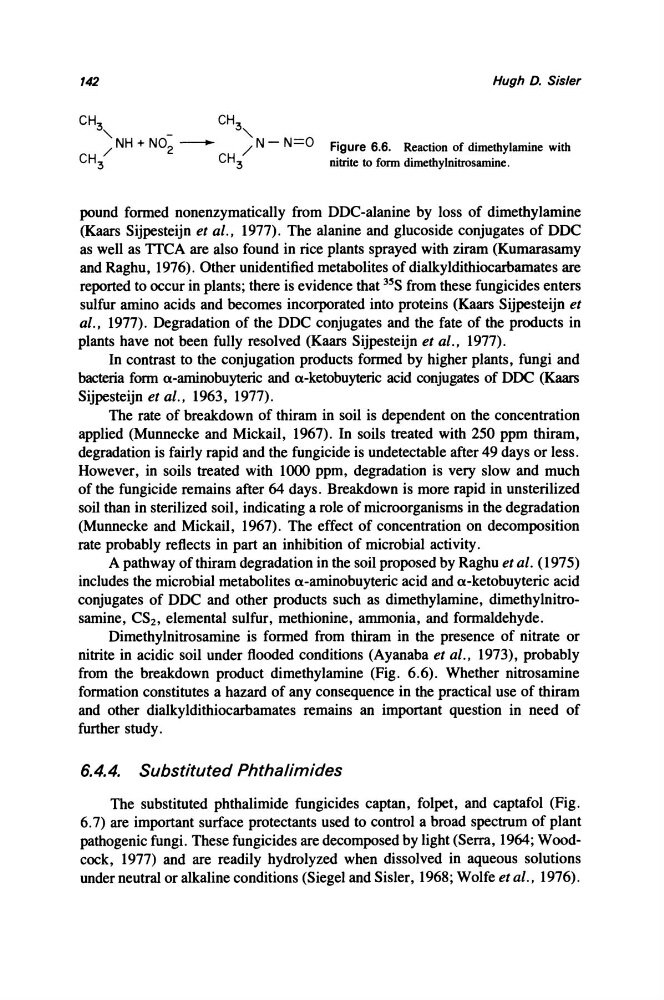
Figure 6.6. Reaction of dimethylamine with
nitrite to form dimethylnitrosamine.
pound formed nonenzymatically from DOC-alanine by loss of dimethylamine
(Kaars Sijpesteijn et ai., 1977). The alanine and glucoside conjugates of DOC
as well as TTCA are also found in rice plants sprayed with ziram (Kumarasamy
and Raghu, 1976). Other unidentified metabolites of dialkyldithiocarbamates are
reported to occur in plants; there is evidence that 3SS from these fungicides enters
sulfur amino acids and becomes incorporated into proteins (Kaars Sijpesteijn et
ai., 1977). Degradation of the DOC conjugates and the fate of the products in
plants have not been fully resolved (Kaars Sijpesteijn et ai., 1977).
In contrast to the conjugation products formed by higher plants, fungi and
bacteria form a-aminobuyteric and a-ketobuyteric acid conjugates of DOC (Kaars
Sijpesteijn et ai., 1963, 1977).
The rate of breakdown of thiram in soil is dependent on the concentration
applied (Munnecke and Mickail, 1967). In soils treated with 250 ppm thiram,
degradation is fairly rapid and the fungicide is undetectable after 49 days or less.
However, in soils treated with 1000 ppm, degradation is very slow and much
of the fungicide remains after 64 days. Breakdown is more rapid in unsterilized
soil than in sterilized soil, indicating a role of microorganisms in the degradation
(Munnecke and Mickail, 1967). The effect of concentration on decomposition
rate probably reflects in part an inhibition of microbial activity.
A pathway of thiram degradation in the soil proposed by Raghu et ai. (1975)
includes the microbial metabolites a-aminobuyteric acid and a-ketobuyteric acid
conjugates of DOC and other products such as dimethylamine, dimethylnitrosamine, CS2 , elemental sulfur, methionine, ammonia, and formaldehyde.
Dimethylnitrosamine is formed from thiram in the presence of nitrate or
nitrite in acidic soil under flooded conditions (Ayanaba et ai., 1973), probably
from the breakdown product dimethylamine (Fig. 6.6). Whether nitrosamine
formation constitutes a hazard of any consequence in the practical use of thiram
and other dialkyldithiocarbamates remains an important question in need of
further study.
6.4.4. Substituted Phthalimides
The substituted phthalimide fungicides captan, folpet, and captafol (Fig.
6.7) are important surface protectants used to control a broad spectrum of plant
pathogenic fungi. These fungicides are decomposed by light (Serra, 1964; Woodcock, 1977) and are readily hydrolyzed when dissolved in aqueous solutions
under neutral or alkaline conditions (Siegel and Sisler, 1968; Wolfe et ai., 1976).
CH 3
CH 3
-
"NH+NO - -
N-N=O
CH /
2
CH /
3
3
Hugh D. Sisler
Figure 6.6. Reaction of dimethylamine with
nitrite to form dimethylnitrosamine.
pound formed nonenzymatically from DOC-alanine by loss of dimethylamine
(Kaars Sijpesteijn et ai., 1977). The alanine and glucoside conjugates of DOC
as well as TTCA are also found in rice plants sprayed with ziram (Kumarasamy
and Raghu, 1976). Other unidentified metabolites of dialkyldithiocarbamates are
reported to occur in plants; there is evidence that 3SS from these fungicides enters
sulfur amino acids and becomes incorporated into proteins (Kaars Sijpesteijn et
ai., 1977). Degradation of the DOC conjugates and the fate of the products in
plants have not been fully resolved (Kaars Sijpesteijn et ai., 1977).
In contrast to the conjugation products formed by higher plants, fungi and
bacteria form a-aminobuyteric and a-ketobuyteric acid conjugates of DOC (Kaars
Sijpesteijn et ai., 1963, 1977).
The rate of breakdown of thiram in soil is dependent on the concentration
applied (Munnecke and Mickail, 1967). In soils treated with 250 ppm thiram,
degradation is fairly rapid and the fungicide is undetectable after 49 days or less.
However, in soils treated with 1000 ppm, degradation is very slow and much
of the fungicide remains after 64 days. Breakdown is more rapid in unsterilized
soil than in sterilized soil, indicating a role of microorganisms in the degradation
(Munnecke and Mickail, 1967). The effect of concentration on decomposition
rate probably reflects in part an inhibition of microbial activity.
A pathway of thiram degradation in the soil proposed by Raghu et ai. (1975)
includes the microbial metabolites a-aminobuyteric acid and a-ketobuyteric acid
conjugates of DOC and other products such as dimethylamine, dimethylnitrosamine, CS2 , elemental sulfur, methionine, ammonia, and formaldehyde.
Dimethylnitrosamine is formed from thiram in the presence of nitrate or
nitrite in acidic soil under flooded conditions (Ayanaba et ai., 1973), probably
from the breakdown product dimethylamine (Fig. 6.6). Whether nitrosamine
formation constitutes a hazard of any consequence in the practical use of thiram
and other dialkyldithiocarbamates remains an important question in need of
further study.
6.4.4. Substituted Phthalimides
The substituted phthalimide fungicides captan, folpet, and captafol (Fig.
6.7) are important surface protectants used to control a broad spectrum of plant
pathogenic fungi. These fungicides are decomposed by light (Serra, 1964; Woodcock, 1977) and are readily hydrolyzed when dissolved in aqueous solutions
under neutral or alkaline conditions (Siegel and Sisler, 1968; Wolfe et ai., 1976).