

Biodegradation of Agricultural Fungicides
141
CH 3
S
"
1\
N-C- S- No
CH/
CH 3
S
S
CH 3
, I I
U
/
N-C
C-N
/
's S" "
CH 3
-
CH 3
No DOC
Thirom
Zi ra m
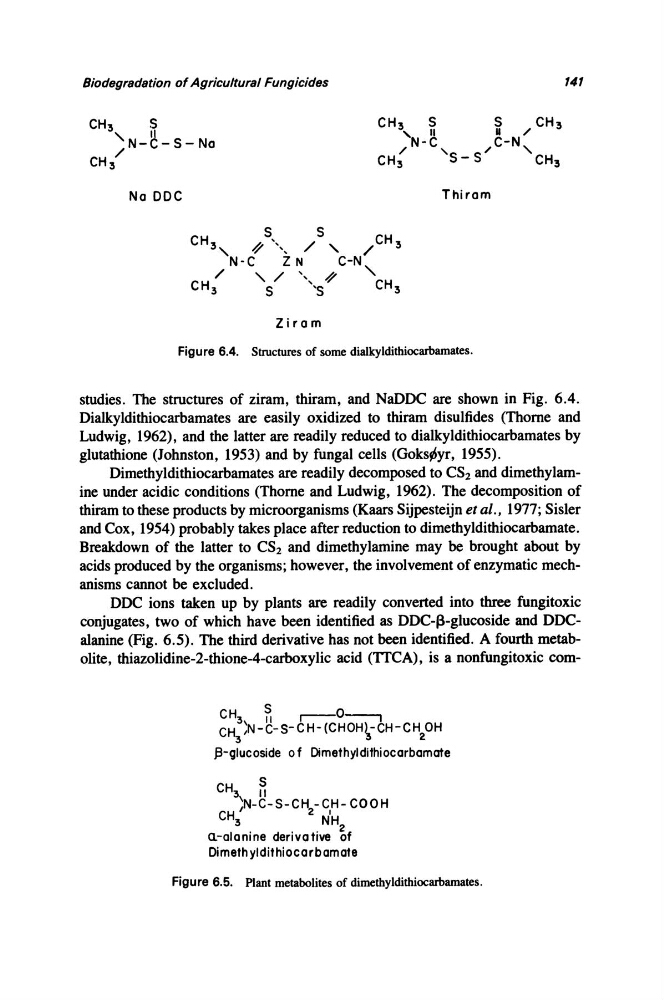
Figure 6.4. Structures of some dialkyldithiocarbamates.
studies. The structures of ziram, thiram, and NaDDC are shown in Fig. 6.4.
Dialkyldithiocarbamates are easily oxidized to thiram disulfides (Thorne and
Ludwig, 1962), and the latter are readily reduced to dialkyldithiocarbamates by
glutathione (Johnston, 1953) and by fungal cells (Goks9Syr, 1955).
Dimethyldithiocarbamates are readily decomposed to CS2 and dimethylamine under acidic conditions (Thorne and Ludwig, 1962). The decomposition of
thiram to these products by microorganisms (Kaars Sijpesteijn et ai., 1977; Sisler
and Cox, 1954) probably takes place after reduction to dimethyldithiocarbamate.
Breakdown of the latter to CS2 and dimethylamine may be brought about by
acids produced by the organisms; however, the involvement of enzymatic mechanisms cannot be excluded.
DDC ions taken up by plants are readily converted into three fungitoxic
conjugates, two of which have been identified as DDC-j3-glucoside and DDCalanine (Fig. 6.5). The third derivative has not been identified. A fourth metabolite, thiazolidine-2-thione-4-carboxylic acid (TTCA), is a nonfungitoxic comCH3
~
r--- 0 ---'
C~ ~-C-S-CH- (CHOHkCH-CH20H
j3-glucoside 0 f Dimethyldi1hiocarbamote
S
CH3
II
'N-C-S-CH -CH- COOH
CH I
2
I
3
NH2
a.-alanine deriva tive of
Dimeth yldithioca rb amate
Figure 6.5. Plant metabolites of dimethyldithiocarbamates.
141
CH 3
S
"
1\
N-C- S- No
CH/
CH 3
S
S
CH 3
, I I
U
/
N-C
C-N
/
's S" "
CH 3
-
CH 3
No DOC
Thirom
Zi ra m
Figure 6.4. Structures of some dialkyldithiocarbamates.
studies. The structures of ziram, thiram, and NaDDC are shown in Fig. 6.4.
Dialkyldithiocarbamates are easily oxidized to thiram disulfides (Thorne and
Ludwig, 1962), and the latter are readily reduced to dialkyldithiocarbamates by
glutathione (Johnston, 1953) and by fungal cells (Goks9Syr, 1955).
Dimethyldithiocarbamates are readily decomposed to CS2 and dimethylamine under acidic conditions (Thorne and Ludwig, 1962). The decomposition of
thiram to these products by microorganisms (Kaars Sijpesteijn et ai., 1977; Sisler
and Cox, 1954) probably takes place after reduction to dimethyldithiocarbamate.
Breakdown of the latter to CS2 and dimethylamine may be brought about by
acids produced by the organisms; however, the involvement of enzymatic mechanisms cannot be excluded.
DDC ions taken up by plants are readily converted into three fungitoxic
conjugates, two of which have been identified as DDC-j3-glucoside and DDCalanine (Fig. 6.5). The third derivative has not been identified. A fourth metabolite, thiazolidine-2-thione-4-carboxylic acid (TTCA), is a nonfungitoxic comCH3
~
r--- 0 ---'
C~ ~-C-S-CH- (CHOHkCH-CH20H
j3-glucoside 0 f Dimethyldi1hiocarbamote
S
CH3
II
'N-C-S-CH -CH- COOH
CH I
2
I
3
NH2
a.-alanine deriva tive of
Dimeth yldithioca rb amate
Figure 6.5. Plant metabolites of dimethyldithiocarbamates.