

Chapitre ІІ
Matériel et méthodes
23
4.2. Analyse quantitative
Différentes méthodes sont applicables pour l’étude du régime alimentaire, les contenus
des estomacs sont analysés selon ces méthodes (les indices alimentaires).
Pour réaliser ce travail, nous avons calculé 5 pourcentages Cv, Cr, Cn, Fp, Nm.
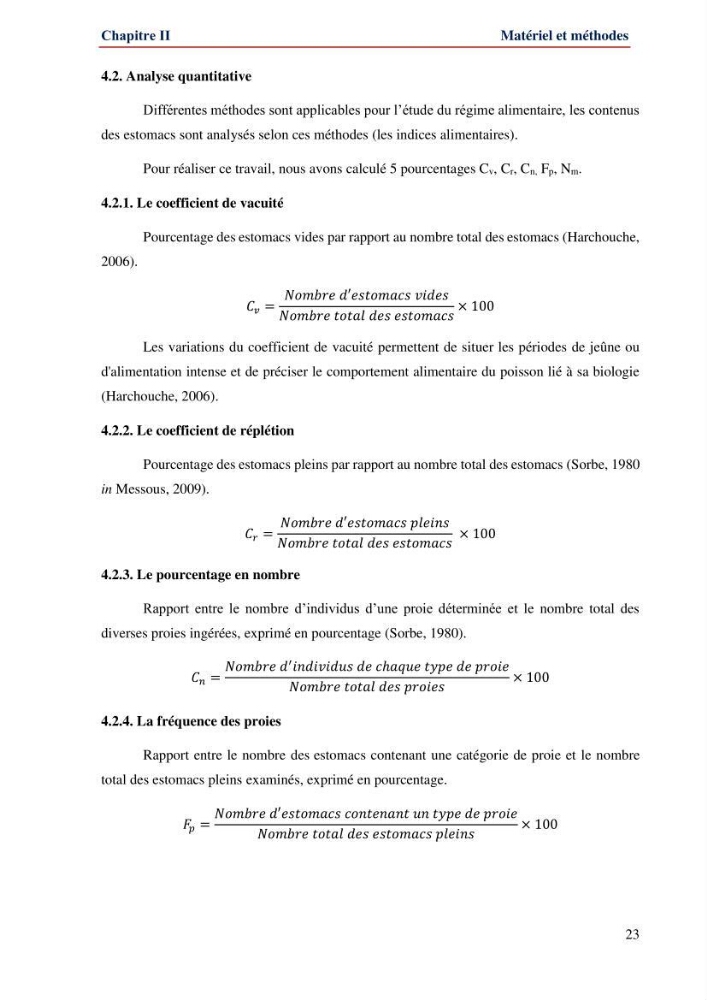
4.2.1. Le coefficient de vacuité
Pourcentage des estomacs vides par rapport au nombre total des estomacs (Harchouche,
2006).
í µí°¶ í µí±£ =
í µí±í µí±í µí±í µí±í µí±í µí± í µí±′í µí±í µí± í µí±¡í µí±í µí±í µí±í µí±í µí± í µí±£í µí±í µí±í µí±í µí±
í µí±í µí±í µí±í µí±í µí±í µí± í µí±¡í µí±í µí±¡í µí±í µí± í µí±í µí±í µí± í µí±í µí± í µí±¡í µí±í µí±í µí±í µí±í µí±
× 100
Les variations du coefficient de vacuité permettent de situer les périodes de jeûne ou
d'alimentation intense et de préciser le comportement alimentaire du poisson lié à sa biologie
(Harchouche, 2006).
4.2.2. Le coefficient de réplétion
Pourcentage des estomacs pleins par rapport au nombre total des estomacs (Sorbe, 1980
in Messous, 2009).
í µí°¶ í µí± =
í µí±í µí±í µí±í µí±í µí±í µí± í µí±′í µí±í µí± í µí±¡í µí±í µí±í µí±í µí±í µí± í µí±í µí±í µí±í µí±í µí±í µí±
í µí±í µí±í µí±í µí±í µí±í µí± í µí±¡í µí±í µí±¡í µí±í µí± í µí±í µí±í µí± í µí±í µí± í µí±¡í µí±í µí±í µí±í µí±í µí±
× 100
4.2.3. Le pourcentage en nombre
Rapport entre le nombre d’individus d’une proie déterminée et le nombre total des
diverses proies ingérées, exprimé en pourcentage (Sorbe, 1980).
í µí°¶ í µí± =
í µí±í µí±í µí±í µí±í µí±í µí± í µí±
′ í µí±í µí±í µí±í µí±í µí±£í µí±í µí±í µí±¢í µí± í µí±í µí± í µí±ℎí µí±í µí±í µí±¢í µí± í µí±¡í µí±¦í µí±í µí± í µí±í µí± í µí±í µí±í µí±í µí±í µí±
í µí±í µí±í µí±í µí±í µí±í µí± í µí±¡í µí±í µí±¡í µí±í µí± í µí±í µí±í µí± í µí±í µí±í µí±í µí±í µí±í µí±
× 100
4.2.4. La fréquence des proies
Rapport entre le nombre des estomacs contenant une catégorie de proie et le nombre
total des estomacs pleins examinés, exprimé en pourcentage.
í µí°¹ í µí± =
í µí±í µí±í µí±í µí±í µí±í µí± í µí±′í µí±í µí± í µí±¡í µí±í µí±í µí±í µí±í µí± í µí±í µí±í µí±í µí±¡í µí±í µí±í µí±í µí±í µí±¡ í µí±¢í µí± í µí±¡í µí±¦í µí±í µí± í µí±í µí± í µí±í µí±í µí±í µí±í µí±
í µí±í µí±í µí±í µí±í µí±í µí± í µí±¡í µí±í µí±¡í µí±í µí± í µí±í µí±í µí± í µí±í µí± í µí±¡í µí±í µí±í µí±í µí±í µí± í µí±í µí±í µí±í µí±í µí±í µí±
× 100
Matériel et méthodes
23
4.2. Analyse quantitative
Différentes méthodes sont applicables pour l’étude du régime alimentaire, les contenus
des estomacs sont analysés selon ces méthodes (les indices alimentaires).
Pour réaliser ce travail, nous avons calculé 5 pourcentages Cv, Cr, Cn, Fp, Nm.
4.2.1. Le coefficient de vacuité
Pourcentage des estomacs vides par rapport au nombre total des estomacs (Harchouche,
2006).
í µí°¶ í µí±£ =
í µí±í µí±í µí±í µí±í µí±í µí± í µí±′í µí±í µí± í µí±¡í µí±í µí±í µí±í µí±í µí± í µí±£í µí±í µí±í µí±í µí±
í µí±í µí±í µí±í µí±í µí±í µí± í µí±¡í µí±í µí±¡í µí±í µí± í µí±í µí±í µí± í µí±í µí± í µí±¡í µí±í µí±í µí±í µí±í µí±
× 100
Les variations du coefficient de vacuité permettent de situer les périodes de jeûne ou
d'alimentation intense et de préciser le comportement alimentaire du poisson lié à sa biologie
(Harchouche, 2006).
4.2.2. Le coefficient de réplétion
Pourcentage des estomacs pleins par rapport au nombre total des estomacs (Sorbe, 1980
in Messous, 2009).
í µí°¶ í µí± =
í µí±í µí±í µí±í µí±í µí±í µí± í µí±′í µí±í µí± í µí±¡í µí±í µí±í µí±í µí±í µí± í µí±í µí±í µí±í µí±í µí±í µí±
í µí±í µí±í µí±í µí±í µí±í µí± í µí±¡í µí±í µí±¡í µí±í µí± í µí±í µí±í µí± í µí±í µí± í µí±¡í µí±í µí±í µí±í µí±í µí±
× 100
4.2.3. Le pourcentage en nombre
Rapport entre le nombre d’individus d’une proie déterminée et le nombre total des
diverses proies ingérées, exprimé en pourcentage (Sorbe, 1980).
í µí°¶ í µí± =
í µí±í µí±í µí±í µí±í µí±í µí± í µí±
′ í µí±í µí±í µí±í µí±í µí±£í µí±í µí±í µí±¢í µí± í µí±í µí± í µí±ℎí µí±í µí±í µí±¢í µí± í µí±¡í µí±¦í µí±í µí± í µí±í µí± í µí±í µí±í µí±í µí±í µí±
í µí±í µí±í µí±í µí±í µí±í µí± í µí±¡í µí±í µí±¡í µí±í µí± í µí±í µí±í µí± í µí±í µí±í µí±í µí±í µí±í µí±
× 100
4.2.4. La fréquence des proies
Rapport entre le nombre des estomacs contenant une catégorie de proie et le nombre
total des estomacs pleins examinés, exprimé en pourcentage.
í µí°¹ í µí± =
í µí±í µí±í µí±í µí±í µí±í µí± í µí±′í µí±í µí± í µí±¡í µí±í µí±í µí±í µí±í µí± í µí±í µí±í µí±í µí±¡í µí±í µí±í µí±í µí±í µí±¡ í µí±¢í µí± í µí±¡í µí±¦í µí±í µí± í µí±í µí± í µí±í µí±í µí±í µí±í µí±
í µí±í µí±í µí±í µí±í µí±í µí± í µí±¡í µí±í µí±¡í µí±í µí± í µí±í µí±í µí± í µí±í µí± í µí±¡í µí±í µí±í µí±í µí±í µí± í µí±í µí±í µí±í µí±í µí±í µí±
× 100