

Mercury Speciation of MSWI Flue Gas on Pilot and Industrial Scales
405
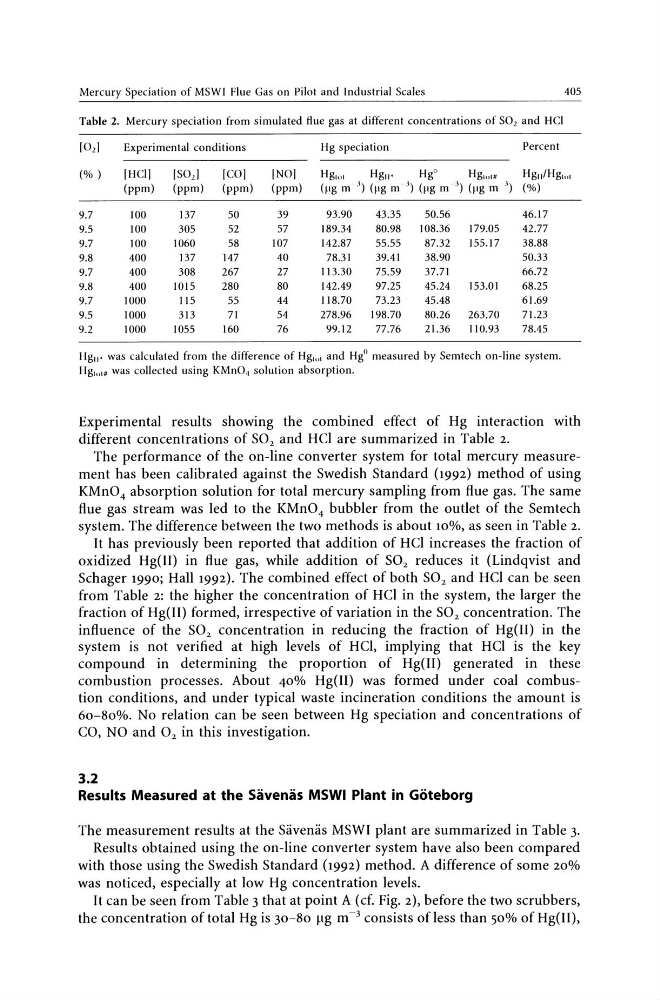
Table 2. Mercury speciation from simulated flue gas at different concentrations of 502 and Hel
[021
Experimental conditions
Hg speciation
Percent
(%)
[Hell
[5021
[CO]
[NO]
Hg,o'
Hgw
Hgo
Hg1ol#
Hg,,IHg\o\
(ppm)
(ppm)
(ppm)
(ppm)
(pg m ') (pg m ') (fLg m ') (pg m J) (%)
9.7
100
l37
50
39
93.90
43.35
50.56
46.17
9.5
100
305
52
57
189.34
80.98
108.36
179.05
42.77
9.7
100
1060
58
107
142.87
55.55
87.32
155.17
38.88
9.8
400
137
147
40
78.31
39.41
38.90
50.33
9.7
400
308
267
27
113.30
75.59
37.71
66.72
9.8
400
1015
280
80
142.49
97.25
45.24
153.01
68.25
9.7
1000
115
55
44
118.70
73.23
45.48
61.69
9.5
1000
313
71
54
278.96
198.70
80.26
263.70
71.23
9.2
1000
1055
160
76
99.12
77.76
21.36
110.93
78.45
Hg". was calculated from the difference of Hg\o\ and Hg" measured by Semtech on-line system.
Hg\o\# was collected using KMn04 solution absorption.
Experimental results showing the combined effect of Hg interaction with
different concentrations of S02 and HCI are summarized in Table 2.
The performance of the on-line converter system for total mercury measurement has been calibrated against the Swedish Standard (1992) method of using
KMnO 4 absorption solution for total mercury sampling from flue gas. The same
flue gas stream was led to the KMnO 4 bubbler from the outlet of the Semtech
system. The difference between the two methods is about 10%, as seen in Table 2.
It has previously been reported that addition of HCl increases the fraction of
oxidized Hg(II) in flue gas, while addition of S02 reduces it (Lindqvist and
Schager 1990; Hall 1992). The combined effect of both S02 and HCI can be seen
from Table 2: the higher the concentration of HCI in the system, the larger the
fraction of Hg(II) formed, irrespective of variation in the S02 concentration. The
influence of the S02 concentration in reducing the fraction of Hg(II) in the
system is not verified at high levels of HCI, implying that HCI is the key
compound in determining the proportion of Hg(II) generated in these
combustion processes. About 40% Hg(II) was formed under coal combustion conditions, and under typical waste incineration conditions the amount is
60-80%. No relation can be seen between Hg speciation and concentrations of
CO, NO and O2 in this investigation.
3.2
Results Measured at the Savenas MSWI Plant in Goteborg
The measurement results at the Savenas MSWI plant are summarized in Table 3.
Results obtained using the on-line converter system have also been compared
with those using the Swedish Standard (1992) method. A difference of some 20%
was noticed, especially at low Hg concentration levels.
It can be seen from Table 3 that at point A (cf. Fig. 2), before the two scrubbers,
the concentration of total Hg is 30-80 ~lg m -3 consists ofless than 50% of Hg(II),
405
Table 2. Mercury speciation from simulated flue gas at different concentrations of 502 and Hel
[021
Experimental conditions
Hg speciation
Percent
(%)
[Hell
[5021
[CO]
[NO]
Hg,o'
Hgw
Hgo
Hg1ol#
Hg,,IHg\o\
(ppm)
(ppm)
(ppm)
(ppm)
(pg m ') (pg m ') (fLg m ') (pg m J) (%)
9.7
100
l37
50
39
93.90
43.35
50.56
46.17
9.5
100
305
52
57
189.34
80.98
108.36
179.05
42.77
9.7
100
1060
58
107
142.87
55.55
87.32
155.17
38.88
9.8
400
137
147
40
78.31
39.41
38.90
50.33
9.7
400
308
267
27
113.30
75.59
37.71
66.72
9.8
400
1015
280
80
142.49
97.25
45.24
153.01
68.25
9.7
1000
115
55
44
118.70
73.23
45.48
61.69
9.5
1000
313
71
54
278.96
198.70
80.26
263.70
71.23
9.2
1000
1055
160
76
99.12
77.76
21.36
110.93
78.45
Hg". was calculated from the difference of Hg\o\ and Hg" measured by Semtech on-line system.
Hg\o\# was collected using KMn04 solution absorption.
Experimental results showing the combined effect of Hg interaction with
different concentrations of S02 and HCI are summarized in Table 2.
The performance of the on-line converter system for total mercury measurement has been calibrated against the Swedish Standard (1992) method of using
KMnO 4 absorption solution for total mercury sampling from flue gas. The same
flue gas stream was led to the KMnO 4 bubbler from the outlet of the Semtech
system. The difference between the two methods is about 10%, as seen in Table 2.
It has previously been reported that addition of HCl increases the fraction of
oxidized Hg(II) in flue gas, while addition of S02 reduces it (Lindqvist and
Schager 1990; Hall 1992). The combined effect of both S02 and HCI can be seen
from Table 2: the higher the concentration of HCI in the system, the larger the
fraction of Hg(II) formed, irrespective of variation in the S02 concentration. The
influence of the S02 concentration in reducing the fraction of Hg(II) in the
system is not verified at high levels of HCI, implying that HCI is the key
compound in determining the proportion of Hg(II) generated in these
combustion processes. About 40% Hg(II) was formed under coal combustion conditions, and under typical waste incineration conditions the amount is
60-80%. No relation can be seen between Hg speciation and concentrations of
CO, NO and O2 in this investigation.
3.2
Results Measured at the Savenas MSWI Plant in Goteborg
The measurement results at the Savenas MSWI plant are summarized in Table 3.
Results obtained using the on-line converter system have also been compared
with those using the Swedish Standard (1992) method. A difference of some 20%
was noticed, especially at low Hg concentration levels.
It can be seen from Table 3 that at point A (cf. Fig. 2), before the two scrubbers,
the concentration of total Hg is 30-80 ~lg m -3 consists ofless than 50% of Hg(II),