

404
.. ..
g
Ii:
i
Pump
Thennoctmp lc
Quart. chi ps
i Sodal ime
Convener
Ice ba:h
J. Wang et at.
CompUier
.. · °oB
••• ••• • •
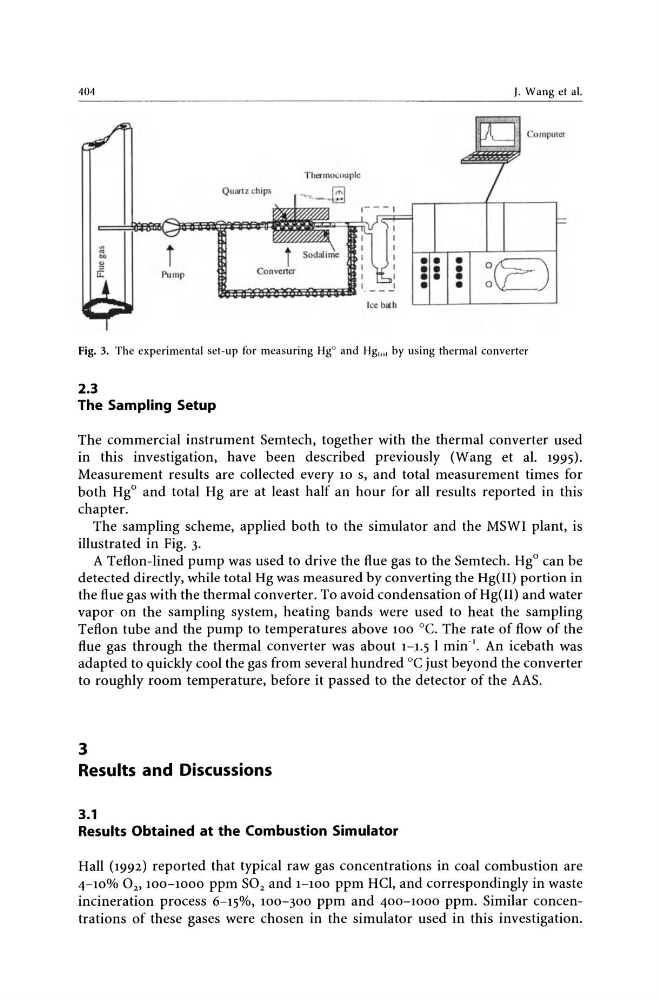
Fig. 3. The experimental set-up for measuring Hgo and Hg,,,, by using thermal converter
2.3
The Sampling Setup
The commercial instrument Semtech, together with the thermal converter used
in this investigation, have been described previously (Wang et al. 1995).
Measurement results are collected every 10 s, and total measurement times for
both Hgo and total Hg are at least half an hour for all results reported in this
chapter.
The sampling scheme, applied both to the simulator and the MSWI plant, is
illustrated in Fig. 3.
A Teflon-lined pump was used to drive the flue gas to the Semtech. Hgo can be
detected directly, while total Hg was measured by converting the Hg(II) portion in
the flue gas with the thermal converter. To avoid condensation of Hg(II) and water
vapor on the sampling system, heating bands were used to heat the sampling
Teflon tube and the pump to temperatures above 100 DC. The rate of flow of the
flue gas through the thermal converter was about 1-1.5 I min-I. An icebath was
adapted to quickly cool the gas from several hundred DC just beyond the converter
to roughly room temperature, before it passed to the detector of the AAS.
3
Results and Discussions
3.1
Results Obtained at the Combustion Simulator
Hall (1992) reported that typical raw gas concentrations in coal combustion are
4-10% O2, 100-1000 ppm S02 and 1-100 ppm HCl, and correspondingly in waste
incineration process 6-15%, 100-300 ppm and 400-1000 ppm. Similar concentrations of these gases were chosen in the simulator used in this investigation.
.. ..
g
Ii:
i
Pump
Thennoctmp lc
Quart. chi ps
i Sodal ime
Convener
Ice ba:h
J. Wang et at.
CompUier
.. · °oB
••• ••• • •
Fig. 3. The experimental set-up for measuring Hgo and Hg,,,, by using thermal converter
2.3
The Sampling Setup
The commercial instrument Semtech, together with the thermal converter used
in this investigation, have been described previously (Wang et al. 1995).
Measurement results are collected every 10 s, and total measurement times for
both Hgo and total Hg are at least half an hour for all results reported in this
chapter.
The sampling scheme, applied both to the simulator and the MSWI plant, is
illustrated in Fig. 3.
A Teflon-lined pump was used to drive the flue gas to the Semtech. Hgo can be
detected directly, while total Hg was measured by converting the Hg(II) portion in
the flue gas with the thermal converter. To avoid condensation of Hg(II) and water
vapor on the sampling system, heating bands were used to heat the sampling
Teflon tube and the pump to temperatures above 100 DC. The rate of flow of the
flue gas through the thermal converter was about 1-1.5 I min-I. An icebath was
adapted to quickly cool the gas from several hundred DC just beyond the converter
to roughly room temperature, before it passed to the detector of the AAS.
3
Results and Discussions
3.1
Results Obtained at the Combustion Simulator
Hall (1992) reported that typical raw gas concentrations in coal combustion are
4-10% O2, 100-1000 ppm S02 and 1-100 ppm HCl, and correspondingly in waste
incineration process 6-15%, 100-300 ppm and 400-1000 ppm. Similar concentrations of these gases were chosen in the simulator used in this investigation.