

420
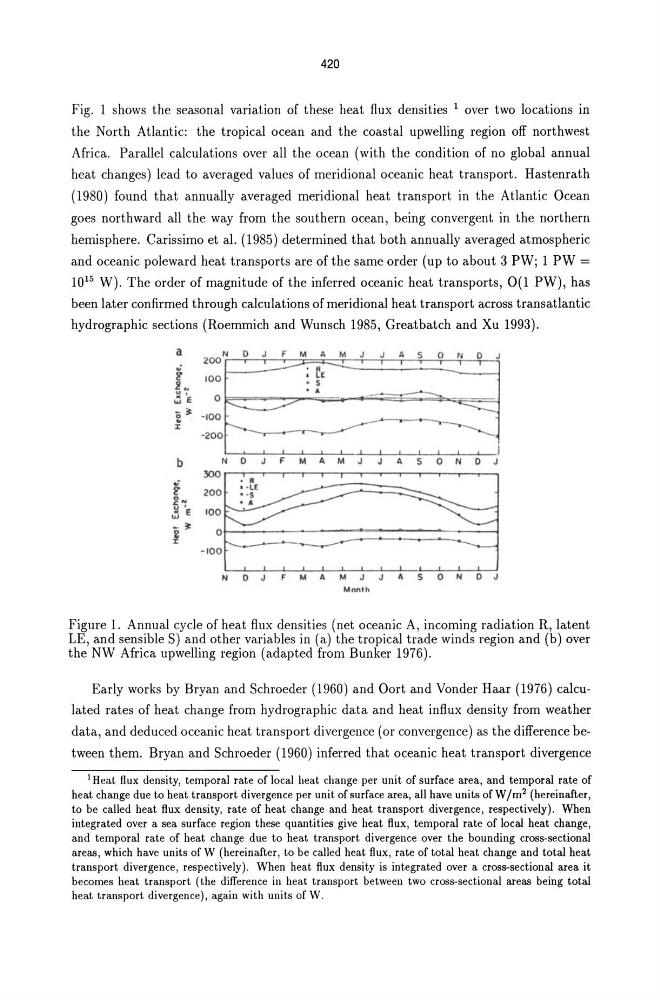
Fig. 1 shows the seasonal variation of these heat flux densities lover two locations in
the North Atlantic: the tropical ocean and the coastal upwelling region off northwest
Africa. Parallel calculations over all the ocean (with the condition of no global annual
heat changes) lead to averaged values of meridional oceanic heat transport. Hastenrath
(1980) found that annually averaged meridional heat transport in the Atlantic Ocean
goes northward all the way from the southern ocean, being convergent in the northern
hemisphere. Carissimo et al. (1985) determined that both annually averaged atmospheric
and oceanic poleward heat transports are of the same order (up to about 3 PW; 1 PW =
10 15 W) . The order of magnitude of the inferred oceanic heat transports, 0(1 PW), has
been later confirmed through calculations of meridional heat transport across transatlantic
hydrographic sections (Roemmich and Wunsch 1985, Greatbatch and Xu 1993).
a 200N
0
J
F M A
M
J
A S O N O J
~ 100
; e[
1!N
• 5
u,
• A
W E 0
;;~ - 100
.
:r
-200
b
N 0
J
F
M
A M J
A S O N D J
300
.;
F
200
l!H u'
100
.:l E
- ~ 0
l
-1 0 0
,",OJ
F M A M J J A S O , " , O J
Mon th
Figure l. Annual cycle of heat flux densities (net oceanic A, incoming radiation R, latent
LE, and sensible S) and other variables in (a) the tropical trade winds region and (b) over
the NW Africa upwelling region (adapted from Bunker 1976).
Early works by Bryan and Schroeder (1960) and Oort and Vonder Haar (1976) calculated rates of heat change from hydrographic data and heat influx density from weather
data, and deduced oceanic heat transport divergence (or convergence) as the difference between them. Bryan and Schroeder (1960) inferred that oceanic heat transport divergence
1 Heat flux density, temporal rate of local heat change per unit of surface area, and temporal rate of
heat change due to heat transport divergence per unit of surface area, all have units of W 1m 2 (hereinafter,
to be called heat flux density, rate of heat change and heat transport divergence, respectively). When
integrated over a sea surface region these quantities give heat flux, temporal rate of local heat change,
and temporal rate of heat change due to heat transport divergence over the bounding cross-sectional
areas, which have units of W (hereinafter , to be called heat flux, rate of total heat change and total heat
transport divergence, respectively). When heat flux density is integrated over a cross-sectional area it
becomes heat transport (the difference in heat transport between two cross-sectional areas being total
heat transport divergence), again with units of W.
Fig. 1 shows the seasonal variation of these heat flux densities lover two locations in
the North Atlantic: the tropical ocean and the coastal upwelling region off northwest
Africa. Parallel calculations over all the ocean (with the condition of no global annual
heat changes) lead to averaged values of meridional oceanic heat transport. Hastenrath
(1980) found that annually averaged meridional heat transport in the Atlantic Ocean
goes northward all the way from the southern ocean, being convergent in the northern
hemisphere. Carissimo et al. (1985) determined that both annually averaged atmospheric
and oceanic poleward heat transports are of the same order (up to about 3 PW; 1 PW =
10 15 W) . The order of magnitude of the inferred oceanic heat transports, 0(1 PW), has
been later confirmed through calculations of meridional heat transport across transatlantic
hydrographic sections (Roemmich and Wunsch 1985, Greatbatch and Xu 1993).
a 200N
0
J
F M A
M
J
A S O N O J
~ 100
; e[
1!N
• 5
u,
• A
W E 0
;;~ - 100
.
:r
-200
b
N 0
J
F
M
A M J
A S O N D J
300
.;
F
200
l!H u'
100
.:l E
- ~ 0
l
-1 0 0
,",OJ
F M A M J J A S O , " , O J
Mon th
Figure l. Annual cycle of heat flux densities (net oceanic A, incoming radiation R, latent
LE, and sensible S) and other variables in (a) the tropical trade winds region and (b) over
the NW Africa upwelling region (adapted from Bunker 1976).
Early works by Bryan and Schroeder (1960) and Oort and Vonder Haar (1976) calculated rates of heat change from hydrographic data and heat influx density from weather
data, and deduced oceanic heat transport divergence (or convergence) as the difference between them. Bryan and Schroeder (1960) inferred that oceanic heat transport divergence
1 Heat flux density, temporal rate of local heat change per unit of surface area, and temporal rate of
heat change due to heat transport divergence per unit of surface area, all have units of W 1m 2 (hereinafter,
to be called heat flux density, rate of heat change and heat transport divergence, respectively). When
integrated over a sea surface region these quantities give heat flux, temporal rate of local heat change,
and temporal rate of heat change due to heat transport divergence over the bounding cross-sectional
areas, which have units of W (hereinafter , to be called heat flux, rate of total heat change and total heat
transport divergence, respectively). When heat flux density is integrated over a cross-sectional area it
becomes heat transport (the difference in heat transport between two cross-sectional areas being total
heat transport divergence), again with units of W.