

3.2 Recombinant DNA Technology
In 1946, the U.S. geneticists J. Lederberg and E. Tatum, conducted experiments
with the E. coli that showed the possibility of combination between two genes
originating from different bacteria. This phenomenon was previously thought to
occur only in sexual reproduction among eukaryotes. As a result of their findings,
the two researchers explored the new field of bacterial genetics, and E. coli became
the best-understood organism in the field at the molecular level. It was E. coli that
brought about developments in recombinant DNA technology (i.e., techniques for
combining genes originating in different organisms) during the 1970s (Young et al.
1985).
Gene recombination technology is widely used today to transform DNA in
various cells for practical purposes. Through manipulation of genes in bacteria,
scientists have succeeded in producing large quantities of useful substances ranging
from anti-cancer agents to pesticides. It has also become possible for genes to be
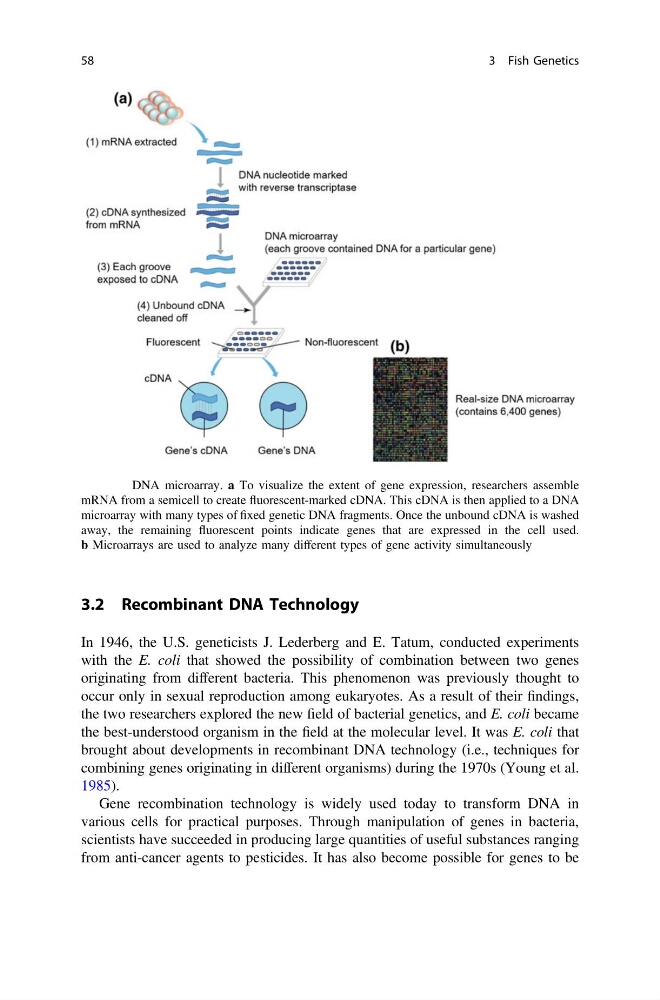
Fig. 3.2 DNA microarray. a To visualize the extent of gene expression, researchers assemble
mRNA from a semicell to create fluorescent-marked cDNA. This cDNA is then applied to a DNA
microarray with many types of fixed genetic DNA fragments. Once the unbound cDNA is washed
away, the remaining fluorescent points indicate genes that are expressed in the cell used.
b Microarrays are used to analyze many different types of gene activity simultaneously
58
3 Fish Genetics
In 1946, the U.S. geneticists J. Lederberg and E. Tatum, conducted experiments
with the E. coli that showed the possibility of combination between two genes
originating from different bacteria. This phenomenon was previously thought to
occur only in sexual reproduction among eukaryotes. As a result of their findings,
the two researchers explored the new field of bacterial genetics, and E. coli became
the best-understood organism in the field at the molecular level. It was E. coli that
brought about developments in recombinant DNA technology (i.e., techniques for
combining genes originating in different organisms) during the 1970s (Young et al.
1985).
Gene recombination technology is widely used today to transform DNA in
various cells for practical purposes. Through manipulation of genes in bacteria,
scientists have succeeded in producing large quantities of useful substances ranging
from anti-cancer agents to pesticides. It has also become possible for genes to be
Fig. 3.2 DNA microarray. a To visualize the extent of gene expression, researchers assemble
mRNA from a semicell to create fluorescent-marked cDNA. This cDNA is then applied to a DNA
microarray with many types of fixed genetic DNA fragments. Once the unbound cDNA is washed
away, the remaining fluorescent points indicate genes that are expressed in the cell used.
b Microarrays are used to analyze many different types of gene activity simultaneously
58
3 Fish Genetics