

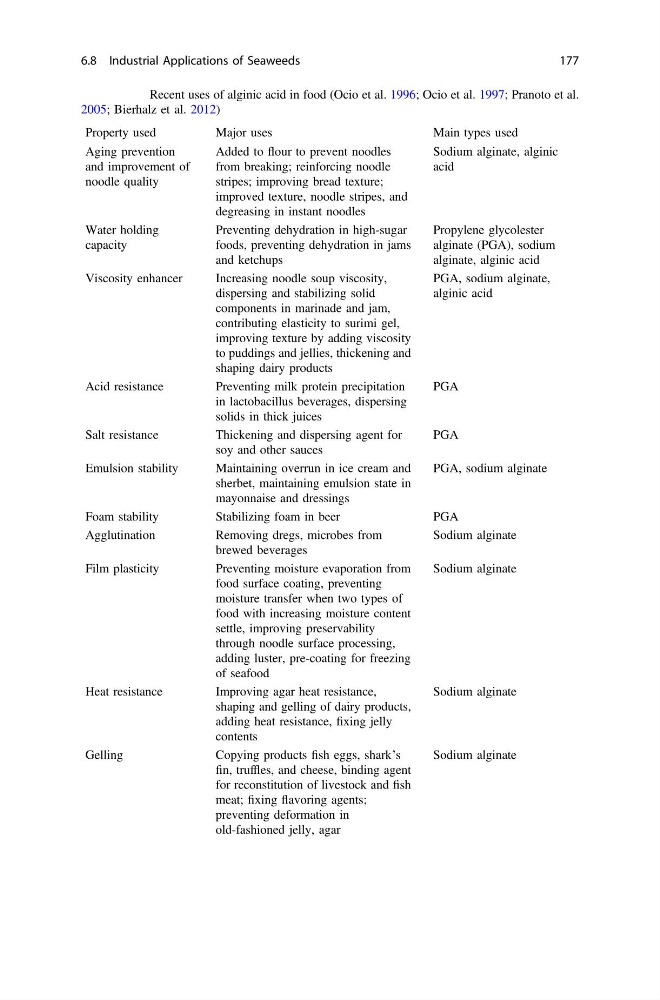
Table 6.12 Recent uses of alginic acid in food (Ocio et al. 1996; Ocio et al. 1997; Pranoto et al.
2005; Bierhalz et al. 2012)
Property used
Major uses
Main types used
Aging prevention
and improvement of
noodle quality
Added to flour to prevent noodles
from breaking; reinforcing noodle
stripes; improving bread texture;
improved texture, noodle stripes, and
degreasing in instant noodles
Sodium alginate, alginic
acid
Water holding
capacity
Preventing dehydration in high-sugar
foods, preventing dehydration in jams
and ketchups
Propylene glycolester
alginate (PGA), sodium
alginate, alginic acid
Viscosity enhancer
Increasing noodle soup viscosity,
dispersing and stabilizing solid
components in marinade and jam,
contributing elasticity to surimi gel,
improving texture by adding viscosity
to puddings and jellies, thickening and
shaping dairy products
PGA, sodium alginate,
alginic acid
Acid resistance
Preventing milk protein precipitation
in lactobacillus beverages, dispersing
solids in thick juices
PGA
Salt resistance
Thickening and dispersing agent for
soy and other sauces
PGA
Emulsion stability
Maintaining overrun in ice cream and
sherbet, maintaining emulsion state in
mayonnaise and dressings
PGA, sodium alginate
Foam stability
Stabilizing foam in beer
PGA
Agglutination
Removing dregs, microbes from
brewed beverages
Sodium alginate
Film plasticity
Preventing moisture evaporation from
food surface coating, preventing
moisture transfer when two types of
food with increasing moisture content
settle, improving preservability
through noodle surface processing,
adding luster, pre-coating for freezing
of seafood
Sodium alginate
Heat resistance
Improving agar heat resistance,
shaping and gelling of dairy products,
adding heat resistance, fixing jelly
contents
Sodium alginate
Gelling
Copying products fish eggs, shark’s
fin, truffles, and cheese, binding agent
for reconstitution of livestock and fish
meat; fixing flavoring agents;
preventing deformation in
old-fashioned jelly, agar
Sodium alginate
6.8 Industrial Applications of Seaweeds
177
2005; Bierhalz et al. 2012)
Property used
Major uses
Main types used
Aging prevention
and improvement of
noodle quality
Added to flour to prevent noodles
from breaking; reinforcing noodle
stripes; improving bread texture;
improved texture, noodle stripes, and
degreasing in instant noodles
Sodium alginate, alginic
acid
Water holding
capacity
Preventing dehydration in high-sugar
foods, preventing dehydration in jams
and ketchups
Propylene glycolester
alginate (PGA), sodium
alginate, alginic acid
Viscosity enhancer
Increasing noodle soup viscosity,
dispersing and stabilizing solid
components in marinade and jam,
contributing elasticity to surimi gel,
improving texture by adding viscosity
to puddings and jellies, thickening and
shaping dairy products
PGA, sodium alginate,
alginic acid
Acid resistance
Preventing milk protein precipitation
in lactobacillus beverages, dispersing
solids in thick juices
PGA
Salt resistance
Thickening and dispersing agent for
soy and other sauces
PGA
Emulsion stability
Maintaining overrun in ice cream and
sherbet, maintaining emulsion state in
mayonnaise and dressings
PGA, sodium alginate
Foam stability
Stabilizing foam in beer
PGA
Agglutination
Removing dregs, microbes from
brewed beverages
Sodium alginate
Film plasticity
Preventing moisture evaporation from
food surface coating, preventing
moisture transfer when two types of
food with increasing moisture content
settle, improving preservability
through noodle surface processing,
adding luster, pre-coating for freezing
of seafood
Sodium alginate
Heat resistance
Improving agar heat resistance,
shaping and gelling of dairy products,
adding heat resistance, fixing jelly
contents
Sodium alginate
Gelling
Copying products fish eggs, shark’s
fin, truffles, and cheese, binding agent
for reconstitution of livestock and fish
meat; fixing flavoring agents;
preventing deformation in
old-fashioned jelly, agar
Sodium alginate
6.8 Industrial Applications of Seaweeds
177