

7 – Primary Production, Nutrient Recycling and Energy Flow through Coral Reef Ecosystems
67
nitrogen comes from originally. Cyanobacteria (so called
‘blue-green algae’) are important parts of the production
line. One of their key characteristics is that they contain
an enzyme called nitrogenase that can split the powerful
triple bonds of atmospheric nitrogen gas (N 2 ) in a process
called ‘nitrogen fixation’. Such nitrogen fixing bacteria
occur in a large number of habitats and ecosystems, including microbial mats and symbioses such as with
sponges and legume plants. Recent work has revealed
that nitrogen fixation is prolific in coral reefs and may
play a critical role in supplying nitrogen to coral reef ecosystems. It appears that nitrogen fixers are abundant on
benthic surfaces (sediments, rocks) and in the water
column of coral reefs as blooms of the cyanobacterium
Trichodesmium (commonly called ‘sea sawdust’, Fig. 7.5).
Coral reefs are an exception to the general rule that
high primary productivity is strongly dependent on
the availability of a high standing stock of inorganic
nutrients (particularly N and P). Coral reef primary
production is indeed high, yet the nutrient levels in the
surrounding waters are exceeding low. What could be
going on? To find the answer to this problem, we need
to explore the ways that energy (contained in carbon
compounds) and more particularly nutrients (N and P
compounds) move through coral reef ecosystems after
the initials stages of primary production.
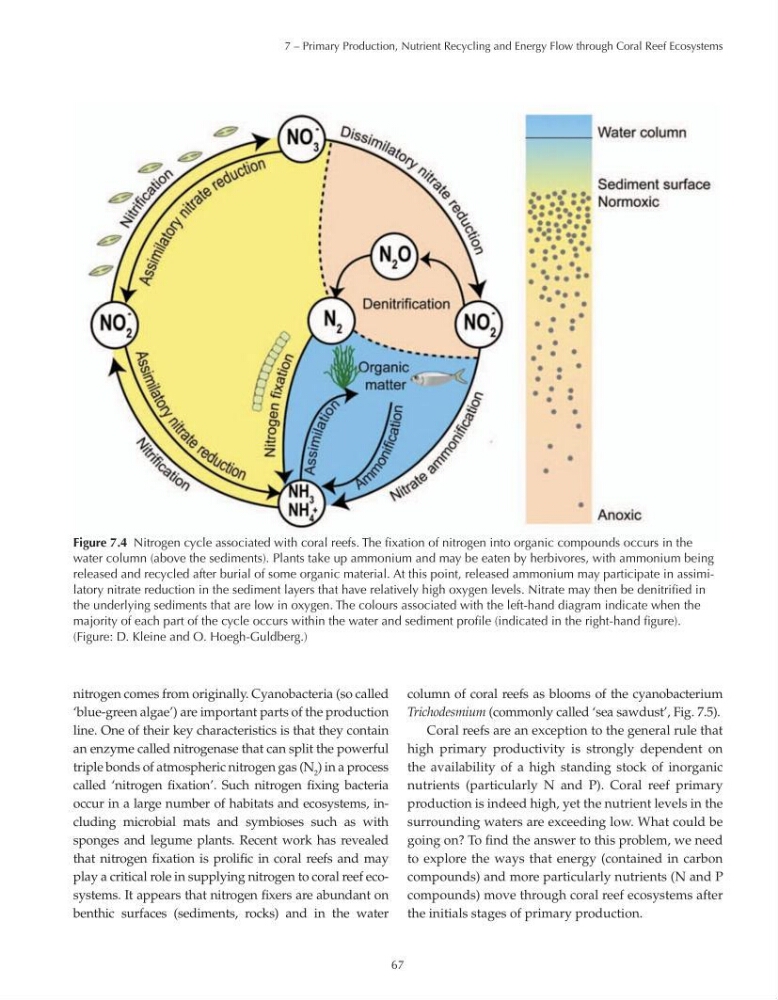
Figure 7.4 Nitrogen cycle associated with coral reefs. The fixation of nitrogen into organic compounds occurs in the
water column (above the sediments). Plants take up ammonium and may be eaten by herbivores, with ammonium being
released and recycled after burial of some organic material. At this point, released ammonium may participate in assimilatory nitrate reduction in the sediment layers that have relatively high oxygen levels. Nitrate may then be denitrified in
the underlying sediments that are low in oxygen. The colours associated with the left-hand diagram indicate when the
majority of each part of the cycle occurs within the water and sediment profile (indicated in the right-hand figure).
(Figure: D. Kleine and O. Hoegh-Guldberg.)
67
nitrogen comes from originally. Cyanobacteria (so called
‘blue-green algae’) are important parts of the production
line. One of their key characteristics is that they contain
an enzyme called nitrogenase that can split the powerful
triple bonds of atmospheric nitrogen gas (N 2 ) in a process
called ‘nitrogen fixation’. Such nitrogen fixing bacteria
occur in a large number of habitats and ecosystems, including microbial mats and symbioses such as with
sponges and legume plants. Recent work has revealed
that nitrogen fixation is prolific in coral reefs and may
play a critical role in supplying nitrogen to coral reef ecosystems. It appears that nitrogen fixers are abundant on
benthic surfaces (sediments, rocks) and in the water
column of coral reefs as blooms of the cyanobacterium
Trichodesmium (commonly called ‘sea sawdust’, Fig. 7.5).
Coral reefs are an exception to the general rule that
high primary productivity is strongly dependent on
the availability of a high standing stock of inorganic
nutrients (particularly N and P). Coral reef primary
production is indeed high, yet the nutrient levels in the
surrounding waters are exceeding low. What could be
going on? To find the answer to this problem, we need
to explore the ways that energy (contained in carbon
compounds) and more particularly nutrients (N and P
compounds) move through coral reef ecosystems after
the initials stages of primary production.
Figure 7.4 Nitrogen cycle associated with coral reefs. The fixation of nitrogen into organic compounds occurs in the
water column (above the sediments). Plants take up ammonium and may be eaten by herbivores, with ammonium being
released and recycled after burial of some organic material. At this point, released ammonium may participate in assimilatory nitrate reduction in the sediment layers that have relatively high oxygen levels. Nitrate may then be denitrified in
the underlying sediments that are low in oxygen. The colours associated with the left-hand diagram indicate when the
majority of each part of the cycle occurs within the water and sediment profile (indicated in the right-hand figure).
(Figure: D. Kleine and O. Hoegh-Guldberg.)