

The Great Barrier Reef
248
time, presumably many polychaetes have evolved and
became extinct, so today’s polychaetes are descendants
of a very ancient lineage. Many morphological characters, while closely resembling each other, may not necessarily indicate that species are closely related (i.e. are
homologous structures), rather they may have evolved
over long periods of time in response to the similar
environments in which the species live. So, while similar terms have been used across the families to describe
particular traits, they may not represent homologous
structures, making coding of characters for any phylogenetic analysis difficult. In addition, many species
have lost characters, which also makes coding difficult.
In the ‘Additional reading’ at the end of the chapter
references are given that will allow people interested in
this area of research to find out the latest developments.
Not only are the relationships within the polychaetes
still being actively debated, but also the relationships
of these segmented worms to other invertebrate groups.
For many years these segmented worms were regarded
as being closely related to the arthropods, based upon
the presence of segmentation in both groups, but
recently it has been shown that they are more closely
related to molluscs. Polychaetes remain one of the last
large groups of invertebrates for which a widely
accepted classification is still not available.
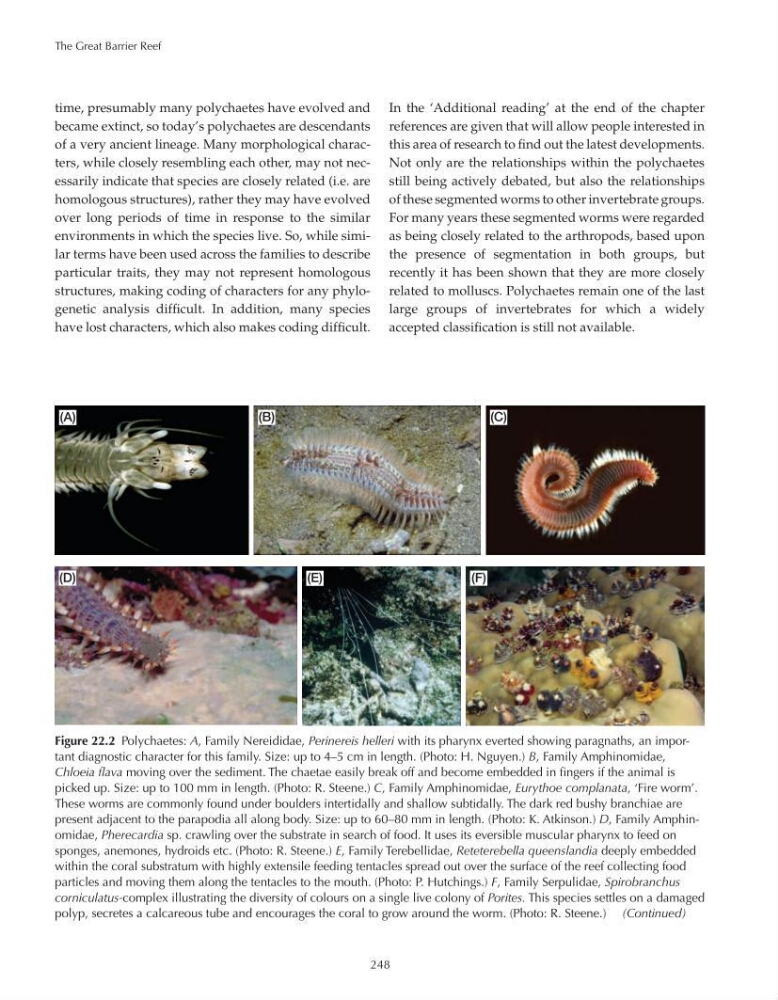
Figure 22.2 Polychaetes: A, Family Nereididae, Perinereis helleri with its pharynx everted showing paragnaths, an important diagnostic character for this family. Size: up to 4–5 cm in length. (Photo: H. Nguyen.) B, Family Amphinomidae,
Chloeia flava moving over the sediment. The chaetae easily break off and become embedded in fingers if the animal is
picked up. Size: up to 100 mm in length. (Photo: R. Steene.) C, Family Amphinomidae, Eurythoe complanata, ‘Fire worm’.
These worms are commonly found under boulders intertidally and shallow subtidally. The dark red bushy branchiae are
present adjacent to the parapodia all along body. Size: up to 60–80 mm in length. (Photo: K. Atkinson.) D, Family Amphinomidae, Pherecardia sp. crawling over the substrate in search of food. It uses its eversible muscular pharynx to feed on
sponges, anemones, hydroids etc. (Photo: R. Steene.) E, Family Terebellidae, Reteterebella queenslandia deeply embedded
within the coral substratum with highly extensile feeding tentacles spread out over the surface of the reef collecting food
particles and moving them along the tentacles to the mouth. (Photo: P. Hutchings.) F, Family Serpulidae, Spirobranchus
corniculatus-complex illustrating the diversity of colours on a single live colony of Porites. This species settles on a damaged
polyp, secretes a calcareous tube and encourages the coral to grow around the worm. (Photo: R. Steene.) (Continued)
(D)
(E)
(F)
(B)
(C)
(A)
248
time, presumably many polychaetes have evolved and
became extinct, so today’s polychaetes are descendants
of a very ancient lineage. Many morphological characters, while closely resembling each other, may not necessarily indicate that species are closely related (i.e. are
homologous structures), rather they may have evolved
over long periods of time in response to the similar
environments in which the species live. So, while similar terms have been used across the families to describe
particular traits, they may not represent homologous
structures, making coding of characters for any phylogenetic analysis difficult. In addition, many species
have lost characters, which also makes coding difficult.
In the ‘Additional reading’ at the end of the chapter
references are given that will allow people interested in
this area of research to find out the latest developments.
Not only are the relationships within the polychaetes
still being actively debated, but also the relationships
of these segmented worms to other invertebrate groups.
For many years these segmented worms were regarded
as being closely related to the arthropods, based upon
the presence of segmentation in both groups, but
recently it has been shown that they are more closely
related to molluscs. Polychaetes remain one of the last
large groups of invertebrates for which a widely
accepted classification is still not available.
Figure 22.2 Polychaetes: A, Family Nereididae, Perinereis helleri with its pharynx everted showing paragnaths, an important diagnostic character for this family. Size: up to 4–5 cm in length. (Photo: H. Nguyen.) B, Family Amphinomidae,
Chloeia flava moving over the sediment. The chaetae easily break off and become embedded in fingers if the animal is
picked up. Size: up to 100 mm in length. (Photo: R. Steene.) C, Family Amphinomidae, Eurythoe complanata, ‘Fire worm’.
These worms are commonly found under boulders intertidally and shallow subtidally. The dark red bushy branchiae are
present adjacent to the parapodia all along body. Size: up to 60–80 mm in length. (Photo: K. Atkinson.) D, Family Amphinomidae, Pherecardia sp. crawling over the substrate in search of food. It uses its eversible muscular pharynx to feed on
sponges, anemones, hydroids etc. (Photo: R. Steene.) E, Family Terebellidae, Reteterebella queenslandia deeply embedded
within the coral substratum with highly extensile feeding tentacles spread out over the surface of the reef collecting food
particles and moving them along the tentacles to the mouth. (Photo: P. Hutchings.) F, Family Serpulidae, Spirobranchus
corniculatus-complex illustrating the diversity of colours on a single live colony of Porites. This species settles on a damaged
polyp, secretes a calcareous tube and encourages the coral to grow around the worm. (Photo: R. Steene.) (Continued)
(D)
(E)
(F)
(B)
(C)
(A)