

21 – Octocorals
237
(A)
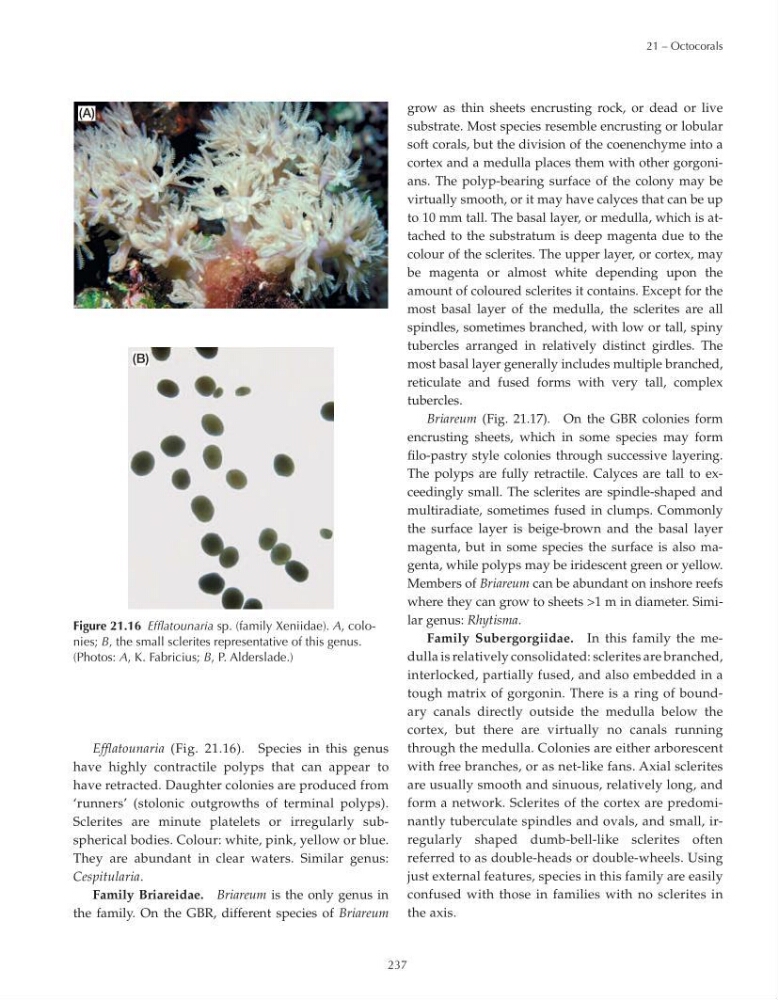
Figure 21.16 Efflatounaria sp. (family Xeniidae). A, colonies; B, the small sclerites representative of this genus.
(Photos: A, K. Fabricius; B, P. Alderslade.)
(B)
Efflatounaria (Fig. 21.16). Species in this genus
have highly contractile polyps that can appear to
have retracted. Daughter colonies are produced from
‘runners’ (stolonic outgrowths of terminal polyps).
Sclerites are minute platelets or irregularly subspherical bodies. Colour: white, pink, yellow or blue.
They are abundant in clear waters. Similar genus:
Cespitularia.
Family Briareidae. Briareum is the only genus in
the family. On the GBR, different species of Briareum
grow as thin sheets encrusting rock, or dead or live
substrate. Most species resemble encrusting or lobular
soft corals, but the division of the coenenchyme into a
cortex and a medulla places them with other gorgonians. The polyp-bearing surface of the colony may be
virtually smooth, or it may have calyces that can be up
to 10 mm tall. The basal layer, or medulla, which is attached to the substratum is deep magenta due to the
colour of the sclerites. The upper layer, or cortex, may
be magenta or almost white depending upon the
amount of coloured sclerites it contains. Except for the
most basal layer of the medulla, the sclerites are all
spindles, sometimes branched, with low or tall, spiny
tubercles arranged in relatively distinct girdles. The
most basal layer generally includes multiple branched,
reticulate and fused forms with very tall, complex
tubercles.
Briareum (Fig. 21.17). On the GBR colonies form
encrusting sheets, which in some species may form
filo-pastry style colonies through successive layering.
The polyps are fully retractile. Calyces are tall to exceedingly small. The sclerites are spindle-shaped and
multiradiate, sometimes fused in clumps. Commonly
the surface layer is beige-brown and the basal layer
magenta, but in some species the surface is also magenta, while polyps may be iridescent green or yellow.
Members of Briareum can be abundant on inshore reefs
where they can grow to sheets >1 m in diameter. Similar genus: Rhytisma.
Family Subergorgiidae. In this family the medulla is relatively consolidated: sclerites are branched,
interlocked, partially fused, and also embedded in a
tough matrix of gorgonin. There is a ring of boundary canals directly outside the medulla below the
cortex, but there are virtually no canals running
through the medulla. Colonies are either arborescent
with free branches, or as net-like fans. Axial sclerites
are usually smooth and sinuous, relatively long, and
form a network. Sclerites of the cortex are predominantly tuberculate spindles and ovals, and small, irregularly shaped dumb-bell-like sclerites often
referred to as double-heads or double-wheels. Using
just external features, species in this family are easily
confused with those in families with no sclerites in
the axis.
237
(A)
Figure 21.16 Efflatounaria sp. (family Xeniidae). A, colonies; B, the small sclerites representative of this genus.
(Photos: A, K. Fabricius; B, P. Alderslade.)
(B)
Efflatounaria (Fig. 21.16). Species in this genus
have highly contractile polyps that can appear to
have retracted. Daughter colonies are produced from
‘runners’ (stolonic outgrowths of terminal polyps).
Sclerites are minute platelets or irregularly subspherical bodies. Colour: white, pink, yellow or blue.
They are abundant in clear waters. Similar genus:
Cespitularia.
Family Briareidae. Briareum is the only genus in
the family. On the GBR, different species of Briareum
grow as thin sheets encrusting rock, or dead or live
substrate. Most species resemble encrusting or lobular
soft corals, but the division of the coenenchyme into a
cortex and a medulla places them with other gorgonians. The polyp-bearing surface of the colony may be
virtually smooth, or it may have calyces that can be up
to 10 mm tall. The basal layer, or medulla, which is attached to the substratum is deep magenta due to the
colour of the sclerites. The upper layer, or cortex, may
be magenta or almost white depending upon the
amount of coloured sclerites it contains. Except for the
most basal layer of the medulla, the sclerites are all
spindles, sometimes branched, with low or tall, spiny
tubercles arranged in relatively distinct girdles. The
most basal layer generally includes multiple branched,
reticulate and fused forms with very tall, complex
tubercles.
Briareum (Fig. 21.17). On the GBR colonies form
encrusting sheets, which in some species may form
filo-pastry style colonies through successive layering.
The polyps are fully retractile. Calyces are tall to exceedingly small. The sclerites are spindle-shaped and
multiradiate, sometimes fused in clumps. Commonly
the surface layer is beige-brown and the basal layer
magenta, but in some species the surface is also magenta, while polyps may be iridescent green or yellow.
Members of Briareum can be abundant on inshore reefs
where they can grow to sheets >1 m in diameter. Similar genus: Rhytisma.
Family Subergorgiidae. In this family the medulla is relatively consolidated: sclerites are branched,
interlocked, partially fused, and also embedded in a
tough matrix of gorgonin. There is a ring of boundary canals directly outside the medulla below the
cortex, but there are virtually no canals running
through the medulla. Colonies are either arborescent
with free branches, or as net-like fans. Axial sclerites
are usually smooth and sinuous, relatively long, and
form a network. Sclerites of the cortex are predominantly tuberculate spindles and ovals, and small, irregularly shaped dumb-bell-like sclerites often
referred to as double-heads or double-wheels. Using
just external features, species in this family are easily
confused with those in families with no sclerites in
the axis.