

The Great Barrier Reef
238
double discs and spindles. Colour: brown, orange, red
or yellow. Uncommon. Similar genera: Echinogorgia
and Verrucella.
Family Melithaeidae. The Melithaeidae consists
of fan-shaped or tangled bushy colonies in which the
axial medulla is segmented, comprised of a series of
short, rounded nodes alternating with longer, narrower
internodes. The swollen axial nodes on the stem and
main branches are generally conspicuous, while those
at the points of branching within the fan may not be so
obvious. With few exceptions, branching occurs at the
spongy gorgonin nodes. Colonies are quite fragile,
breaking at node-internode joints. The sclerites are usually coloured, and besides the axial rods they include
tuberculate clubs, ovals and spindles with ridges or
spines along one side, leaf-clubs, and multirotulates
(that look like two or more buns pressed together). The
family contains five nominal genera that are not easily
distinguished.
Melithaea (Fig. 21.19). Small to relatively large
fans (>1 m in diameter) that are sometimes reticulate.
Members of this genus have an axial skeleton of alternate nodes of gorgonin combined with small rod-like
sclerites and internodes of fused sclerites. Cortical sclerites include birotulates and knobbed clubs. Colour:
red, yellow or white. Uncommon but widely distributed. Similar genera: all other members of the family.
Family Acanthogorgiidae. Colonies are richly
branched, fan-like, net-like, bushy, or untidy and tangled. The most noticeable features are the very conspicuous nonretractile polyps, which are completely
covered with straight and curved spindle-shaped sclerites. These spindles are commonly arranged in eight
double rows. Some species have a conspicuous crown
of sharp spines around the top of the polyp. Colonies
have a black, purely horny hard axis, and a wide, hollow, soft, cross-chambered central core. In some species, the coenenchyme is so thin that the black axis can
be seen through it, which can be a clue to their identity;
but in others it is quite thick, full of sclerites and opaque.
Sclerites are mostly tuberculate spindles, but tripods
and capstans also occur. In other genera, however, the
coenenchyme is thick, and the polyps can look like the
calyces found in the family Plexauridae inside which a
retractable polyp can be found.
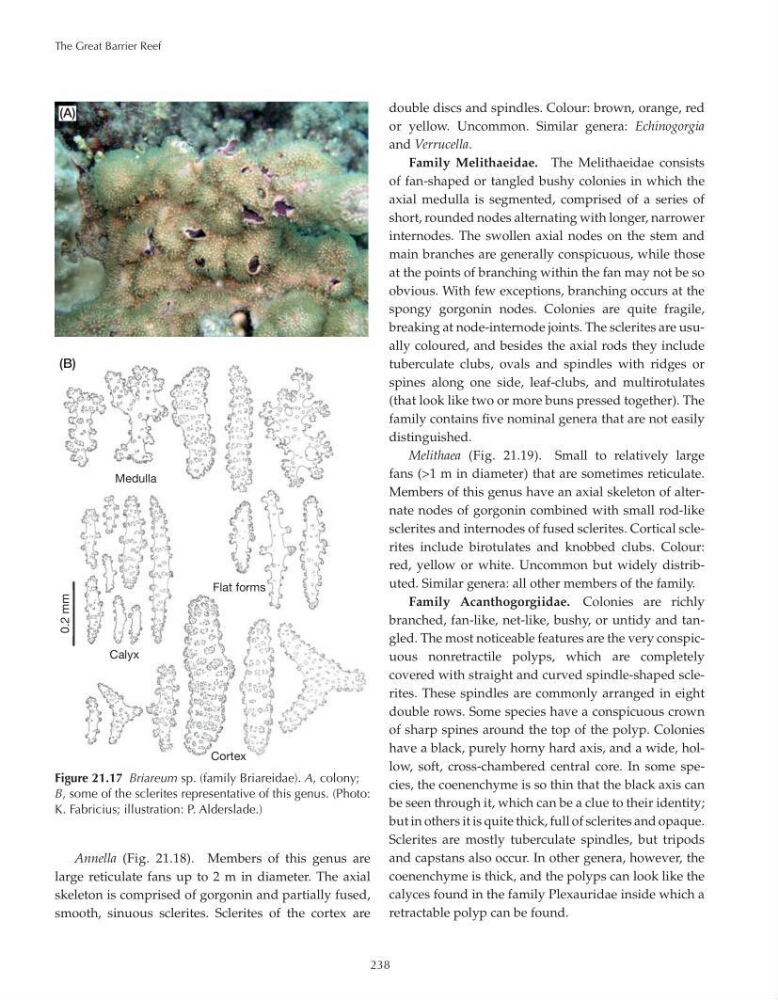
Figure 21.17 Briareum sp. (family Briareidae). A, colony;
B, some of the sclerites representative of this genus. (Photo:
K. Fabricius; illustration: P. Alderslade.)
(B)
Medulla
Calyx
Cortex
Flat forms
0.2 mm
(A)
Annella (Fig. 21.18). Members of this genus are
large reticulate fans up to 2 m in diameter. The axial
skeleton is comprised of gorgonin and partially fused,
smooth, sinuous sclerites. Sclerites of the cortex are
238
double discs and spindles. Colour: brown, orange, red
or yellow. Uncommon. Similar genera: Echinogorgia
and Verrucella.
Family Melithaeidae. The Melithaeidae consists
of fan-shaped or tangled bushy colonies in which the
axial medulla is segmented, comprised of a series of
short, rounded nodes alternating with longer, narrower
internodes. The swollen axial nodes on the stem and
main branches are generally conspicuous, while those
at the points of branching within the fan may not be so
obvious. With few exceptions, branching occurs at the
spongy gorgonin nodes. Colonies are quite fragile,
breaking at node-internode joints. The sclerites are usually coloured, and besides the axial rods they include
tuberculate clubs, ovals and spindles with ridges or
spines along one side, leaf-clubs, and multirotulates
(that look like two or more buns pressed together). The
family contains five nominal genera that are not easily
distinguished.
Melithaea (Fig. 21.19). Small to relatively large
fans (>1 m in diameter) that are sometimes reticulate.
Members of this genus have an axial skeleton of alternate nodes of gorgonin combined with small rod-like
sclerites and internodes of fused sclerites. Cortical sclerites include birotulates and knobbed clubs. Colour:
red, yellow or white. Uncommon but widely distributed. Similar genera: all other members of the family.
Family Acanthogorgiidae. Colonies are richly
branched, fan-like, net-like, bushy, or untidy and tangled. The most noticeable features are the very conspicuous nonretractile polyps, which are completely
covered with straight and curved spindle-shaped sclerites. These spindles are commonly arranged in eight
double rows. Some species have a conspicuous crown
of sharp spines around the top of the polyp. Colonies
have a black, purely horny hard axis, and a wide, hollow, soft, cross-chambered central core. In some species, the coenenchyme is so thin that the black axis can
be seen through it, which can be a clue to their identity;
but in others it is quite thick, full of sclerites and opaque.
Sclerites are mostly tuberculate spindles, but tripods
and capstans also occur. In other genera, however, the
coenenchyme is thick, and the polyps can look like the
calyces found in the family Plexauridae inside which a
retractable polyp can be found.
Figure 21.17 Briareum sp. (family Briareidae). A, colony;
B, some of the sclerites representative of this genus. (Photo:
K. Fabricius; illustration: P. Alderslade.)
(B)
Medulla
Calyx
Cortex
Flat forms
0.2 mm
(A)
Annella (Fig. 21.18). Members of this genus are
large reticulate fans up to 2 m in diameter. The axial
skeleton is comprised of gorgonin and partially fused,
smooth, sinuous sclerites. Sclerites of the cortex are