

21 – Octocorals
231
include tuberculate or prickly spindles, clubs, 6– or
8–radiates, ovals and dumb-bells.
Sinularia (Fig. 21.8). Members of this genus form
encrusting colonies, with the upper surface formed into
knobs, ridges, simple or branched lobes. Very diverse in
shape, encrusting forms can grow several metres in diameter. The polyps are retractile and monomorphic.
The interior sclerites are large warty spindles; surface
sclerites are mostly clubs. Colour: brown, cream, yellow
or green. Sinularia is a very species-rich genus that is
widely distributed and found even at high latitudes and
dark depths (despite the presence of zooxanthellae).
Similar genera: Lobophytum, Lemnalia and Paralemnalia.
Sarcophyton (Fig. 21.9). Colonies have a distinct
stalk and a rounded capitulum with a straight or undulating margin. Members of this genus can grow up to a
metre in diameter. Polyps are abundant and dimorphic.
The autozooids are retractile. The interior sclerites are
spindle-shaped; surface ones include many clubs. Colour: brownish, cream, yellow or green. The genus is
very widely distributed. Similar genus: Lobophytum.
Lobophytum (Fig. 21.10). Colonies are encrusting,
often large. The upper surface is lobate, digitate or with
ridges, and covered in abundant dimorphic polyps.
Autozooids are retractile. Sclerites of the interior are
spindle to barrel-shaped with tubercles often in girdles.
(A)
(B)
(C)
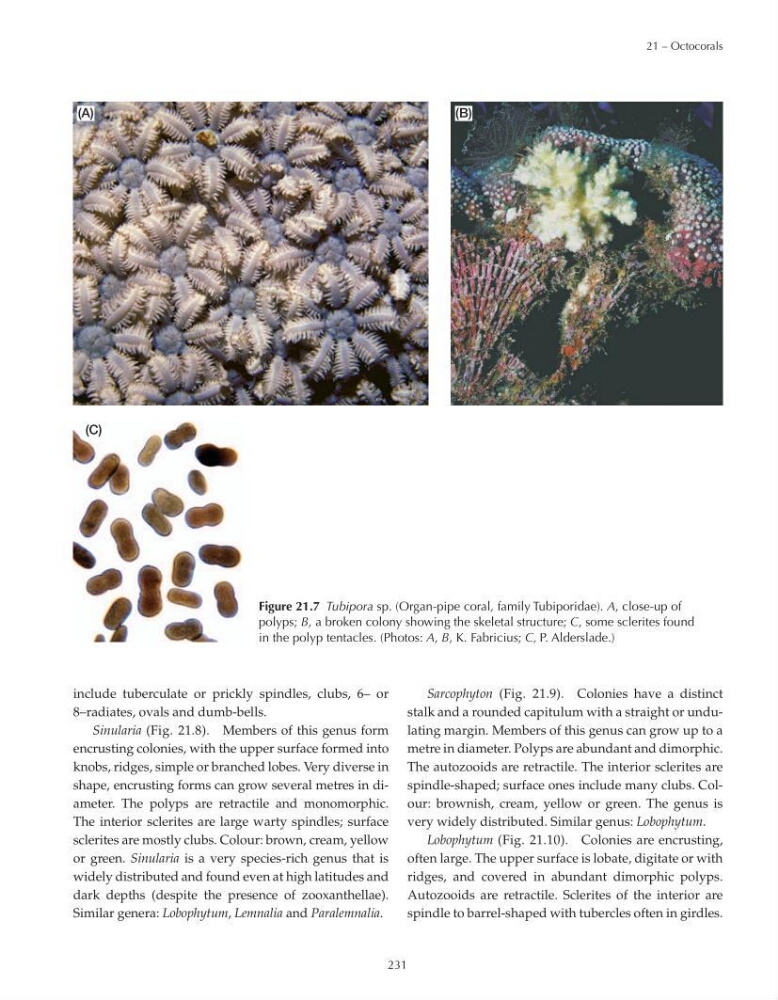
Figure 21.7 Tubipora sp. (Organ-pipe coral, family Tubiporidae). A, close-up of
polyps; B, a broken colony showing the skeletal structure; C, some sclerites found
in the polyp tentacles. (Photos: A, B, K. Fabricius; C, P. Alderslade.)
231
include tuberculate or prickly spindles, clubs, 6– or
8–radiates, ovals and dumb-bells.
Sinularia (Fig. 21.8). Members of this genus form
encrusting colonies, with the upper surface formed into
knobs, ridges, simple or branched lobes. Very diverse in
shape, encrusting forms can grow several metres in diameter. The polyps are retractile and monomorphic.
The interior sclerites are large warty spindles; surface
sclerites are mostly clubs. Colour: brown, cream, yellow
or green. Sinularia is a very species-rich genus that is
widely distributed and found even at high latitudes and
dark depths (despite the presence of zooxanthellae).
Similar genera: Lobophytum, Lemnalia and Paralemnalia.
Sarcophyton (Fig. 21.9). Colonies have a distinct
stalk and a rounded capitulum with a straight or undulating margin. Members of this genus can grow up to a
metre in diameter. Polyps are abundant and dimorphic.
The autozooids are retractile. The interior sclerites are
spindle-shaped; surface ones include many clubs. Colour: brownish, cream, yellow or green. The genus is
very widely distributed. Similar genus: Lobophytum.
Lobophytum (Fig. 21.10). Colonies are encrusting,
often large. The upper surface is lobate, digitate or with
ridges, and covered in abundant dimorphic polyps.
Autozooids are retractile. Sclerites of the interior are
spindle to barrel-shaped with tubercles often in girdles.
(A)
(B)
(C)
Figure 21.7 Tubipora sp. (Organ-pipe coral, family Tubiporidae). A, close-up of
polyps; B, a broken colony showing the skeletal structure; C, some sclerites found
in the polyp tentacles. (Photos: A, B, K. Fabricius; C, P. Alderslade.)