

The Great Barrier Reef
190
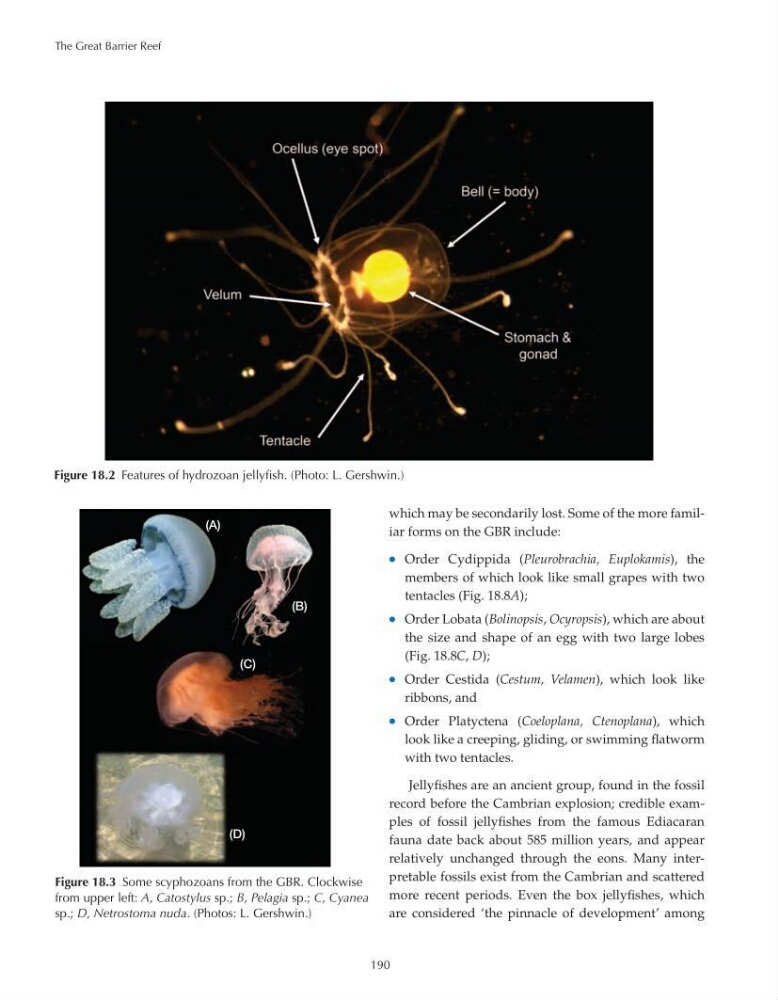
Figure 18.2 Features of hydrozoan jellyfish. (Photo: L. Gershwin.)
(B)
(C)
(D)
(A)
Figure 18.3 Some scyphozoans from the GBR. Clockwise
from upper left: A, Catostylus sp.; B, Pelagia sp.; C, Cyanea
sp.; D, Netrostoma nuda. (Photos: L. Gershwin.)
which may be secondarily lost. Some of the more familiar forms on the GBR include:
L Order Cydippida (Pleurobrachia, Euplokamis), the
members of which look like small grapes with two
tentacles (Fig. 18.8A);
L Order Lobata (Bolinopsis, Ocyropsis), which are about
the size and shape of an egg with two large lobes
(Fig. 18.8C, D);
L Order Cestida (Cestum, Velamen), which look like
ribbons, and
L Order Platyctena (Coeloplana, Ctenoplana), which
look like a creeping, gliding, or swimming flatworm
with two tentacles.
Jellyfishes are an ancient group, found in the fossil
record before the Cambrian explosion; credible examples of fossil jellyfishes from the famous Ediacaran
fauna date back about 585 million years, and appear
relatively unchanged through the eons. Many interpretable fossils exist from the Cambrian and scattered
more recent periods. Even the box jellyfishes, which
are considered ‘the pinnacle of development’ among
190
Figure 18.2 Features of hydrozoan jellyfish. (Photo: L. Gershwin.)
(B)
(C)
(D)
(A)
Figure 18.3 Some scyphozoans from the GBR. Clockwise
from upper left: A, Catostylus sp.; B, Pelagia sp.; C, Cyanea
sp.; D, Netrostoma nuda. (Photos: L. Gershwin.)
which may be secondarily lost. Some of the more familiar forms on the GBR include:
L Order Cydippida (Pleurobrachia, Euplokamis), the
members of which look like small grapes with two
tentacles (Fig. 18.8A);
L Order Lobata (Bolinopsis, Ocyropsis), which are about
the size and shape of an egg with two large lobes
(Fig. 18.8C, D);
L Order Cestida (Cestum, Velamen), which look like
ribbons, and
L Order Platyctena (Coeloplana, Ctenoplana), which
look like a creeping, gliding, or swimming flatworm
with two tentacles.
Jellyfishes are an ancient group, found in the fossil
record before the Cambrian explosion; credible examples of fossil jellyfishes from the famous Ediacaran
fauna date back about 585 million years, and appear
relatively unchanged through the eons. Many interpretable fossils exist from the Cambrian and scattered
more recent periods. Even the box jellyfishes, which
are considered ‘the pinnacle of development’ among