

18 – Pelagic Cnidaria and Ctenophora
191
jellyfishes, were fully developed by the Pennsylvanian
(about 300 Mya).
Currently, well over a hundred jellyfish species are
recorded from the GBR region. Many of these species,
however, are still awaiting formal classification. Most
are tiny and inconspicuous hydromedusae, presenting
no serious medical threat, giving a ‘sea lice’ sting at the
very most. However, they may at times occur in such
dense aggregations that visibility may become severely
diminished and even minor stings become annoying if
in large number. Furthermore, Irukandji jellyfishes are
often found aggregating with dense swarms of salps
(pelagic tunicates, see Chapter 14) and hydromedusae,
so it is advisable to take extra safety precautions or not
enter the water on days when there are dense gelatinous zooplankton blooms.
N BIOLOGY AND ECOLOGY
The cnidarian jellyfishes typically have a complex (metagenic) life cycle wherein the medusa (sexual jellyfish
stage) alternates with a sessile polyp (asexual hydra
stage, Figs 18.10, 18.11). In most cases, the jellyfish are
either male or female, and spawn freely into the water
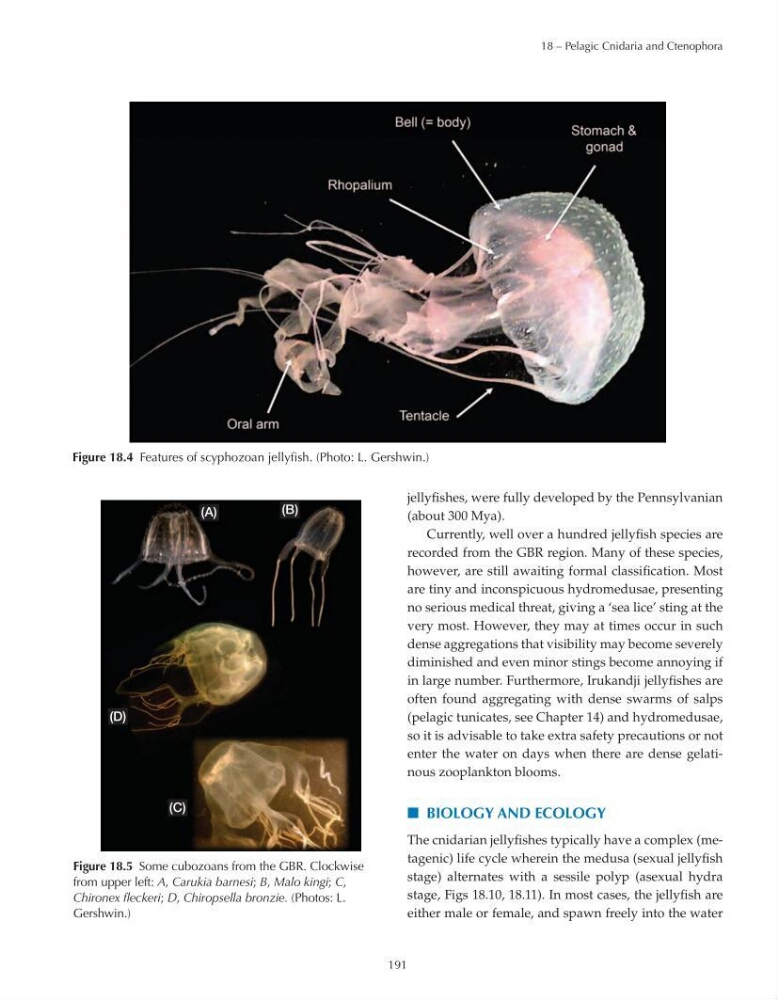
Figure 18.4 Features of scyphozoan jellyfish. (Photo: L. Gershwin.)
(A)
(D)
(C)
(B)
Figure 18.5 Some cubozoans from the GBR. Clockwise
from upper left: A, Carukia barnesi; B, Malo kingi; C,
Chironex fleckeri; D, Chiropsella bronzie. (Photos: L.
Gershwin.)
191
jellyfishes, were fully developed by the Pennsylvanian
(about 300 Mya).
Currently, well over a hundred jellyfish species are
recorded from the GBR region. Many of these species,
however, are still awaiting formal classification. Most
are tiny and inconspicuous hydromedusae, presenting
no serious medical threat, giving a ‘sea lice’ sting at the
very most. However, they may at times occur in such
dense aggregations that visibility may become severely
diminished and even minor stings become annoying if
in large number. Furthermore, Irukandji jellyfishes are
often found aggregating with dense swarms of salps
(pelagic tunicates, see Chapter 14) and hydromedusae,
so it is advisable to take extra safety precautions or not
enter the water on days when there are dense gelatinous zooplankton blooms.
N BIOLOGY AND ECOLOGY
The cnidarian jellyfishes typically have a complex (metagenic) life cycle wherein the medusa (sexual jellyfish
stage) alternates with a sessile polyp (asexual hydra
stage, Figs 18.10, 18.11). In most cases, the jellyfish are
either male or female, and spawn freely into the water
Figure 18.4 Features of scyphozoan jellyfish. (Photo: L. Gershwin.)
(A)
(D)
(C)
(B)
Figure 18.5 Some cubozoans from the GBR. Clockwise
from upper left: A, Carukia barnesi; B, Malo kingi; C,
Chironex fleckeri; D, Chiropsella bronzie. (Photos: L.
Gershwin.)