

15 – Macroalgae
147
Spatial and temporal distribution
Biogeography
The algal flora of the GBR belongs to the Solanderian
biogeographical province in terms of the benthic algal
flora of Australia. This province is less diverse when
compared to southern Australia (Flindersian province)
and New South Wales (Peronian province). Endemism
on the GBR is low, since most species are widely distributed in the Indo-East Pacific biogeographical region, and many GBR species are also thought to be
present in the tropical Atlantic. However, recent studies using DNA markers has revealed that some of the
species that look identical are actually distinct.
Spatial distribution
The distribution and abundance of macroalgae on coral
reefs are determined by the resources they require (i.e.
light, carbon dioxide, mineral nutrients and substrate),
the effects of environmental factors (e.g. temperature,
salinity and water movement), individual rates of recruitment, mortality and dispersal, and biological interactions such as competition and herbivory.
Macroalgal communities of the GBR are highly variable, showing latitudinal, cross shelf and within reef
variation in composition and abundance. Many GBR
macroalgae are also highly seasonal.
Cross shelf distributions – offshore and inshore reefs.
Offshore reefs usually have low abundance of fleshy
macroalgae and high cover of algal turfs and crustose
calcareous algae (CCA) compared to inshore reefs. Some
fleshy macroalgae, such as the green fleshy macroalgae
Caulerpa, Chlorodesmis, Halimeda, and the reds Laurencia,
Galaxaura and Liagora are common in offshore reefs but
in low abundance. Crustose calcareous algae are abundant and diverse on offshore reefs and play significant
roles in reef construction. Common taxa on offshore
reefs include the CCA Porolithon onkodes, and species of
Neogoniolithon and Lithophyllum. The cross shelf distribution of the algal functional groups is predominantly affected by fish grazing and water quality (nutrient
availability and sedimentation).
Inshore reefs usually have abundant and conspicuous
stands of fleshy macroalgae. In particular, brown macroalgae of the Order Fucales such as Sargassum, Hormophysa, Turbinaria and Cystoseira, form dense and highly
productive beds of c. 2 m height. Other fleshy brown
macroalgae such as Lobophora variegata, Dictyota, Colpomenia, Chnoospora and Padina and the red Asparagopsis
taxiformis, may also be abundant in shallow inshore
reefs. Lobophora variegata can be particularly abundant
in inshore reefs, especially between branches of corals
and after coral disturbance such as bleaching. Crustose
calcareous algae are common but are not abundant.
Within reef distribution. Algal zonation is quite
clear in rocky intertidal coasts but is normally diffuse in
subtidal reefs, where algal communities are distributed
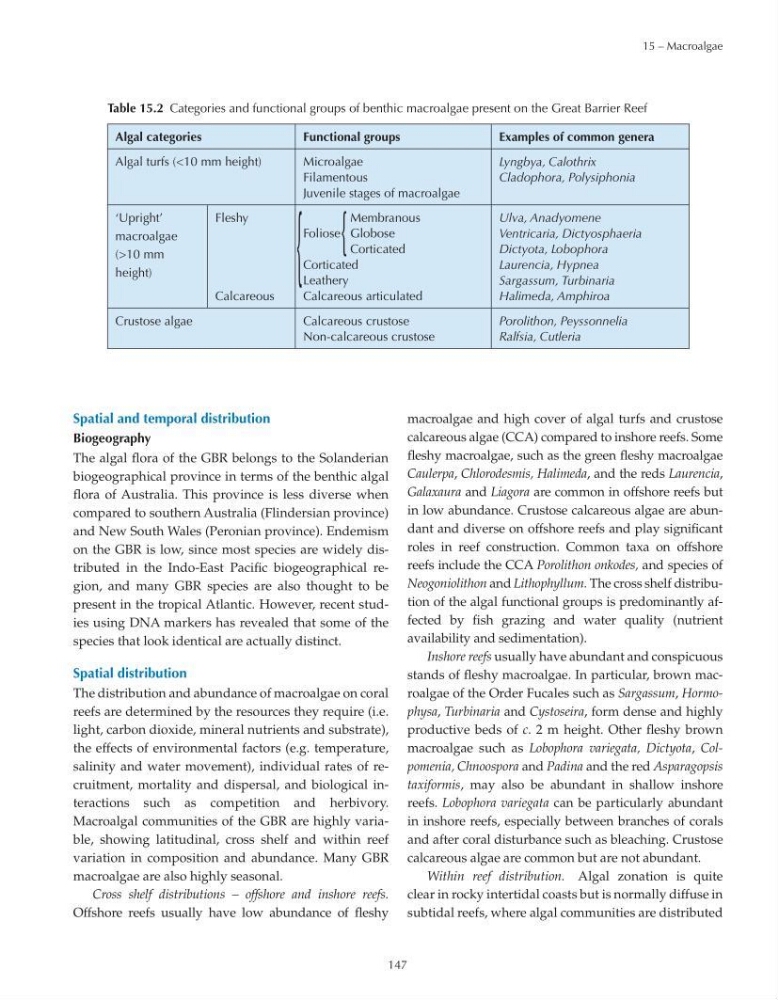
Table 15.2 Categories and functional groups of benthic macroalgae present on the Great Barrier Reef
Algal categories
Functional groups
Examples of common genera
Algal turfs (<10 mm height)
Microalgae
Filamentous
Juvenile stages of macroalgae
Lyngbya, Calothrix
Cladophora, Polysiphonia
‘Upright’
macroalgae
(>10 mm
height)
Fleshy
Calcareous
Membranous
Foliose Globose
Corticated
Corticated
Leathery
Calcareous articulated
Ulva, Anadyomene
Ventricaria, Dictyosphaeria
Dictyota, Lobophora
Laurencia, Hypnea
Sargassum, Turbinaria
Halimeda, Amphiroa
Crustose algae
Calcareous crustose
Non-calcareous crustose
Porolithon, Peyssonnelia
Ralfsia, Cutleria
147
Spatial and temporal distribution
Biogeography
The algal flora of the GBR belongs to the Solanderian
biogeographical province in terms of the benthic algal
flora of Australia. This province is less diverse when
compared to southern Australia (Flindersian province)
and New South Wales (Peronian province). Endemism
on the GBR is low, since most species are widely distributed in the Indo-East Pacific biogeographical region, and many GBR species are also thought to be
present in the tropical Atlantic. However, recent studies using DNA markers has revealed that some of the
species that look identical are actually distinct.
Spatial distribution
The distribution and abundance of macroalgae on coral
reefs are determined by the resources they require (i.e.
light, carbon dioxide, mineral nutrients and substrate),
the effects of environmental factors (e.g. temperature,
salinity and water movement), individual rates of recruitment, mortality and dispersal, and biological interactions such as competition and herbivory.
Macroalgal communities of the GBR are highly variable, showing latitudinal, cross shelf and within reef
variation in composition and abundance. Many GBR
macroalgae are also highly seasonal.
Cross shelf distributions – offshore and inshore reefs.
Offshore reefs usually have low abundance of fleshy
macroalgae and high cover of algal turfs and crustose
calcareous algae (CCA) compared to inshore reefs. Some
fleshy macroalgae, such as the green fleshy macroalgae
Caulerpa, Chlorodesmis, Halimeda, and the reds Laurencia,
Galaxaura and Liagora are common in offshore reefs but
in low abundance. Crustose calcareous algae are abundant and diverse on offshore reefs and play significant
roles in reef construction. Common taxa on offshore
reefs include the CCA Porolithon onkodes, and species of
Neogoniolithon and Lithophyllum. The cross shelf distribution of the algal functional groups is predominantly affected by fish grazing and water quality (nutrient
availability and sedimentation).
Inshore reefs usually have abundant and conspicuous
stands of fleshy macroalgae. In particular, brown macroalgae of the Order Fucales such as Sargassum, Hormophysa, Turbinaria and Cystoseira, form dense and highly
productive beds of c. 2 m height. Other fleshy brown
macroalgae such as Lobophora variegata, Dictyota, Colpomenia, Chnoospora and Padina and the red Asparagopsis
taxiformis, may also be abundant in shallow inshore
reefs. Lobophora variegata can be particularly abundant
in inshore reefs, especially between branches of corals
and after coral disturbance such as bleaching. Crustose
calcareous algae are common but are not abundant.
Within reef distribution. Algal zonation is quite
clear in rocky intertidal coasts but is normally diffuse in
subtidal reefs, where algal communities are distributed
Table 15.2 Categories and functional groups of benthic macroalgae present on the Great Barrier Reef
Algal categories
Functional groups
Examples of common genera
Algal turfs (<10 mm height)
Microalgae
Filamentous
Juvenile stages of macroalgae
Lyngbya, Calothrix
Cladophora, Polysiphonia
‘Upright’
macroalgae
(>10 mm
height)
Fleshy
Calcareous
Membranous
Foliose Globose
Corticated
Corticated
Leathery
Calcareous articulated
Ulva, Anadyomene
Ventricaria, Dictyosphaeria
Dictyota, Lobophora
Laurencia, Hypnea
Sargassum, Turbinaria
Halimeda, Amphiroa
Crustose algae
Calcareous crustose
Non-calcareous crustose
Porolithon, Peyssonnelia
Ralfsia, Cutleria