

The Great Barrier Reef
146
together with the northern Australian coast, is one of the
lesser known floras on the Australian continent.
The Rhodophyta are the most diverse phylum for the
GBR, with 323 species contained in 131 genera, with
Laurencia (27 species), Polysiphonia (19) and Ceramium
(16) the most speciose. There are 111 species of Phaeophyceae, with more than 50% of the species belonging
to Sargassum (47 species) and Dictyota (11). Thirty-two
genera of brown algae have been recorded for the GBR.
The Chlorophyta include 195 species in 51 genera, of
which Caulerpa (36 species), Halimeda (23), and Cladophora
(19) contain the highest number of species.
Functional group diversity
Besides traditional species classification, macroalgae can
also be classified based on ecological terms following a
functional form group approach. This approach takes
into consideration key plant attributes and ecological
characteristics, such as the form of the plant, size, plant
toughness, photosynthetic ability and growth, grazing
resistance etc. Functional group classification is helpful
in understanding the distribution of algal communities
and their responses to environmental factors, since morphologically and anatomically similar algae have similar responses to environmental pressures regardless of
their taxonomic affinities. The functional approach is
useful particularly when identification to species level is
not possible and consequently has been widely used in
ecological studies on coral reefs of the GBR.
The functional group approach includes three main
algal categories (Table 15.2):
L Algal turfs. Assemblages or multispecies associations of minute filamentous algae and the early life
history stages of larger macroalgae, with high productivity, fast growth and colonisation rates. Turfs are
ubiquitous and have low biomass but dominate much
of the reef framework’s surface. Analogous to some
grasslands in terrestrial environments, turfs owe their
continued existence to herbivores that graze on them,
thereby preventing overgrowth by fleshy macroalgae.
The term ‘epilithic algal community’ or EAC is often
used to refer collectively to the algal assemblage that
grows on the substrate; usually this refers to an
assemblage dominated by filamentous algal turfs.
L Upright macroalgae. Large algal forms, more rigid
and anatomically more complex than algal turfs,
abundant in zones of low herbivory such as the intertidal, reef flats, or inshore reefs where strong wave
action, heavy predation, or water quality limit grazing. They often contain chemical compounds that
deter grazing from fishes.
L Crustose algae. Calcareous plants that grow completely adhered to the substrate forming crusts, with
slow growth rates in general, and are abundant in
shallow reefs with high herbivory pressure. This
group includes species from the families Peyssonneliaceae and Corallinaceae.
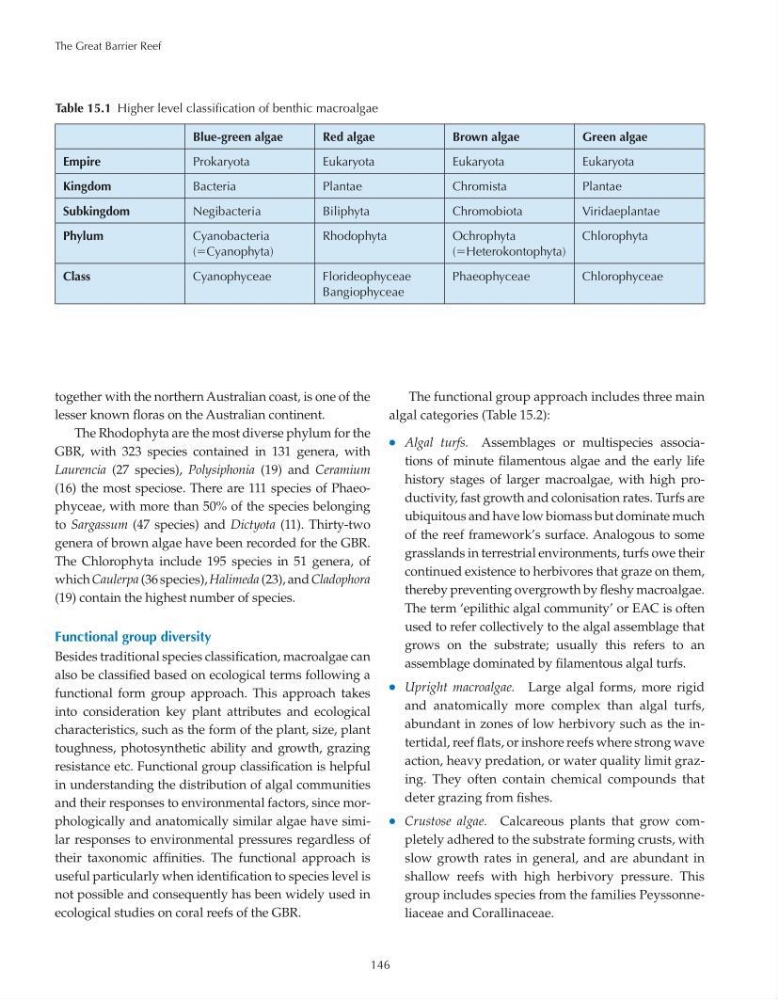
Table 15.1 Higher level classification of benthic macroalgae
Blue-green algae
Red algae
Brown algae
Green algae
Empire
Prokaryota
Eukaryota
Eukaryota
Eukaryota
Kingdom
Bacteria
Plantae
Chromista
Plantae
Subkingdom
Negibacteria
Biliphyta
Chromobiota
Viridaeplantae
Phylum
Cyanobacteria
(Cyanophyta)
Rhodophyta
Ochrophyta
(Heterokontophyta)
Chlorophyta
Class
Cyanophyceae
Florideophyceae
Bangiophyceae
Phaeophyceae
Chlorophyceae
146
together with the northern Australian coast, is one of the
lesser known floras on the Australian continent.
The Rhodophyta are the most diverse phylum for the
GBR, with 323 species contained in 131 genera, with
Laurencia (27 species), Polysiphonia (19) and Ceramium
(16) the most speciose. There are 111 species of Phaeophyceae, with more than 50% of the species belonging
to Sargassum (47 species) and Dictyota (11). Thirty-two
genera of brown algae have been recorded for the GBR.
The Chlorophyta include 195 species in 51 genera, of
which Caulerpa (36 species), Halimeda (23), and Cladophora
(19) contain the highest number of species.
Functional group diversity
Besides traditional species classification, macroalgae can
also be classified based on ecological terms following a
functional form group approach. This approach takes
into consideration key plant attributes and ecological
characteristics, such as the form of the plant, size, plant
toughness, photosynthetic ability and growth, grazing
resistance etc. Functional group classification is helpful
in understanding the distribution of algal communities
and their responses to environmental factors, since morphologically and anatomically similar algae have similar responses to environmental pressures regardless of
their taxonomic affinities. The functional approach is
useful particularly when identification to species level is
not possible and consequently has been widely used in
ecological studies on coral reefs of the GBR.
The functional group approach includes three main
algal categories (Table 15.2):
L Algal turfs. Assemblages or multispecies associations of minute filamentous algae and the early life
history stages of larger macroalgae, with high productivity, fast growth and colonisation rates. Turfs are
ubiquitous and have low biomass but dominate much
of the reef framework’s surface. Analogous to some
grasslands in terrestrial environments, turfs owe their
continued existence to herbivores that graze on them,
thereby preventing overgrowth by fleshy macroalgae.
The term ‘epilithic algal community’ or EAC is often
used to refer collectively to the algal assemblage that
grows on the substrate; usually this refers to an
assemblage dominated by filamentous algal turfs.
L Upright macroalgae. Large algal forms, more rigid
and anatomically more complex than algal turfs,
abundant in zones of low herbivory such as the intertidal, reef flats, or inshore reefs where strong wave
action, heavy predation, or water quality limit grazing. They often contain chemical compounds that
deter grazing from fishes.
L Crustose algae. Calcareous plants that grow completely adhered to the substrate forming crusts, with
slow growth rates in general, and are abundant in
shallow reefs with high herbivory pressure. This
group includes species from the families Peyssonneliaceae and Corallinaceae.
Table 15.1 Higher level classification of benthic macroalgae
Blue-green algae
Red algae
Brown algae
Green algae
Empire
Prokaryota
Eukaryota
Eukaryota
Eukaryota
Kingdom
Bacteria
Plantae
Chromista
Plantae
Subkingdom
Negibacteria
Biliphyta
Chromobiota
Viridaeplantae
Phylum
Cyanobacteria
(Cyanophyta)
Rhodophyta
Ochrophyta
(Heterokontophyta)
Chlorophyta
Class
Cyanophyceae
Florideophyceae
Bangiophyceae
Phaeophyceae
Chlorophyceae