

14 – Plankton
133
Tropical waters are generally considered oligotrophic
and Charles Darwin considered this a great paradox
given the wealth and diversity of life in tropical waters. There is regionalised and sporadic upwelling
along the shelf of the GBR, but this is poorly understood. It is clearly not as great as in some temperate
regions, but is of great potential importance to the tropho-dynamics of reef and inter-reefal habitats. Cool
upwelled waters, and therefore high density waters,
often hug the bottom rather than emerging at the surface. They immerse deep inter-reefal assemblages in
nutrient rich waters. Phytoplankton thrive in these
conditions and ultimately disperse throughout the
water column to support a diversity of consumers. On
some occasions, upwelling intrusions, probably
driven by winds, can almost extend across the entire
shelf of the GBR.
N A SIZE HIERARCHY OF ORGANISMS
Plankton ranges in size from a few microns to metres.
An understanding of planktonic assemblages, therefore,
is based on a synthesis from equipment that is suited
to collecting specific size fractions of plankton. Traditionally, plankton has been broken into: femtoplankton
(<0.2 μm) (the viruses); picoplankton (0.2–2 μm) (including bacteria, cyanobacteria and prochlorophytes that
are primary producers, heterotrophs and nitrogen
fixers) (Fig. 14.6); nanoplankton (2–20 μm) (flagellates,
diatoms and cyanobacteria that are producers, grazers,
nitrogen fixers and predators); microplankton (20–200 μm)
(diatoms, dinoflagellates and ciliates that are also producers, grazers, nitrogen fixers and predators); Mesoplankton (0.2–20 mm) (copepods, other zooplankton
and cyanobacteria—Trichodesmium colonies—that are
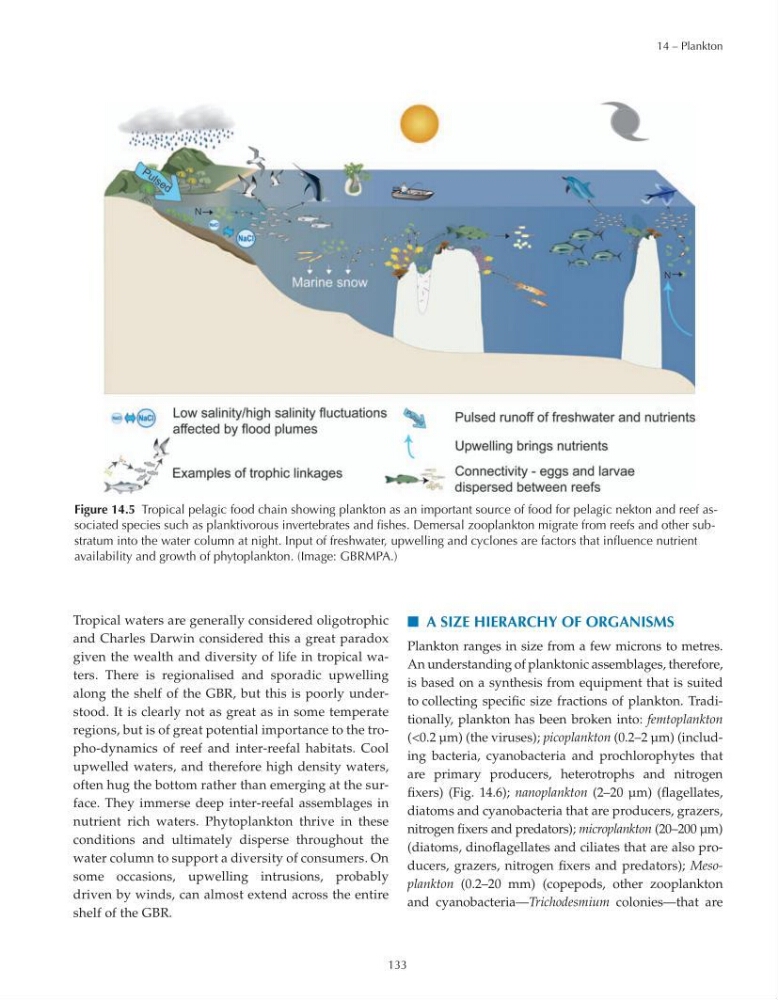
Figure 14.5 Tropical pelagic food chain showing plankton as an important source of food for pelagic nekton and reef associated species such as planktivorous invertebrates and fishes. Demersal zooplankton migrate from reefs and other substratum into the water column at night. Input of freshwater, upwelling and cyclones are factors that influence nutrient
availability and growth of phytoplankton. (Image: GBRMPA.)
133
Tropical waters are generally considered oligotrophic
and Charles Darwin considered this a great paradox
given the wealth and diversity of life in tropical waters. There is regionalised and sporadic upwelling
along the shelf of the GBR, but this is poorly understood. It is clearly not as great as in some temperate
regions, but is of great potential importance to the tropho-dynamics of reef and inter-reefal habitats. Cool
upwelled waters, and therefore high density waters,
often hug the bottom rather than emerging at the surface. They immerse deep inter-reefal assemblages in
nutrient rich waters. Phytoplankton thrive in these
conditions and ultimately disperse throughout the
water column to support a diversity of consumers. On
some occasions, upwelling intrusions, probably
driven by winds, can almost extend across the entire
shelf of the GBR.
N A SIZE HIERARCHY OF ORGANISMS
Plankton ranges in size from a few microns to metres.
An understanding of planktonic assemblages, therefore,
is based on a synthesis from equipment that is suited
to collecting specific size fractions of plankton. Traditionally, plankton has been broken into: femtoplankton
(<0.2 μm) (the viruses); picoplankton (0.2–2 μm) (including bacteria, cyanobacteria and prochlorophytes that
are primary producers, heterotrophs and nitrogen
fixers) (Fig. 14.6); nanoplankton (2–20 μm) (flagellates,
diatoms and cyanobacteria that are producers, grazers,
nitrogen fixers and predators); microplankton (20–200 μm)
(diatoms, dinoflagellates and ciliates that are also producers, grazers, nitrogen fixers and predators); Mesoplankton (0.2–20 mm) (copepods, other zooplankton
and cyanobacteria—Trichodesmium colonies—that are
Figure 14.5 Tropical pelagic food chain showing plankton as an important source of food for pelagic nekton and reef associated species such as planktivorous invertebrates and fishes. Demersal zooplankton migrate from reefs and other substratum into the water column at night. Input of freshwater, upwelling and cyclones are factors that influence nutrient
availability and growth of phytoplankton. (Image: GBRMPA.)