

9 – Human Impact on Coral Reefs
93
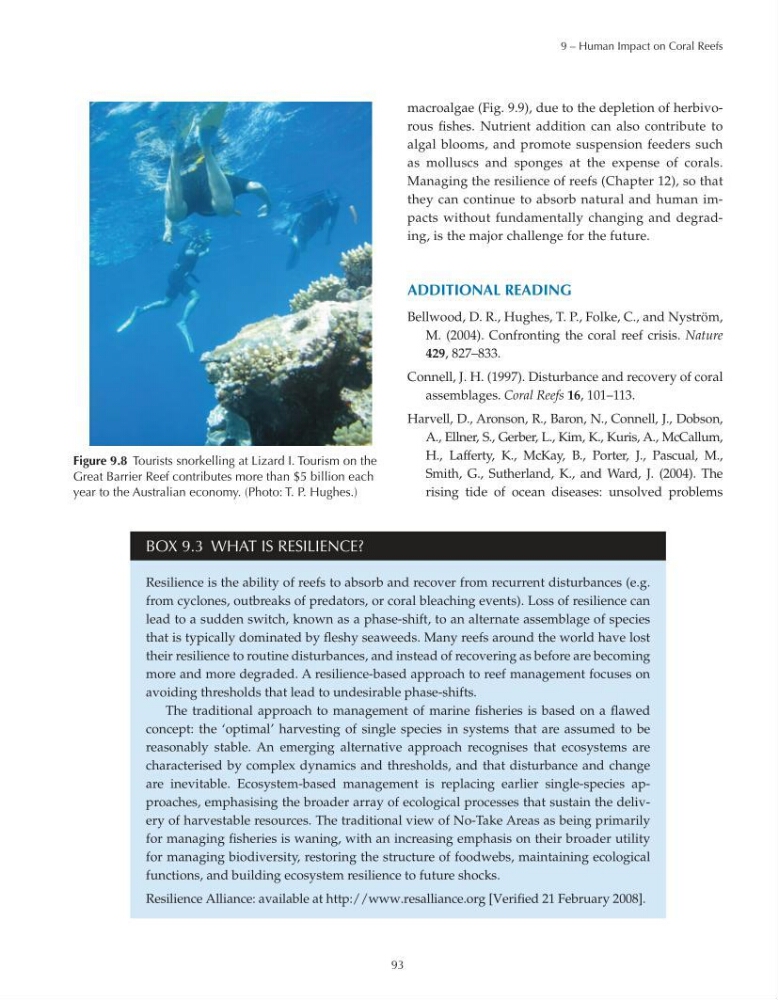
Figure 9.8 Tourists snorkelling at Lizard I. Tourism on the
Great Barrier Reef contributes more than $5 billion each
year to the Australian economy. (Photo: T. P. Hughes.)
macroalgae (Fig. 9.9), due to the depletion of herbivorous fishes. Nutrient addition can also contribute to
algal blooms, and promote suspension feeders such
as molluscs and sponges at the expense of corals.
Managing the resilience of reefs (Chapter 12), so that
they can continue to absorb natural and human impacts without fundamentally changing and degrading, is the major challenge for the future.
ADDITIONAL READING
Bellwood, D. R., Hughes, T. P., Folke, C., and Nyström,
M. (2004). Confronting the coral reef crisis. Nature
429, 827–833.
Connell, J. H. (1997). Disturbance and recovery of coral
assemblages. Coral Reefs 16, 101–113.
Harvell, D., Aronson, R., Baron, N., Connell, J., Dobson,
A., Ellner, S., Gerber, L., Kim, K., Kuris, A., McCallum,
H., Lafferty, K., McKay, B., Porter, J., Pascual, M.,
Smith, G., Sutherland, K., and Ward, J. (2004). The
rising tide of ocean diseases: unsolved problems
BOX 9.3 WHAT IS RESILIENCE?
Resilience is the ability of reefs to absorb and recover from recurrent disturbances (e.g.
from cyclones, outbreaks of predators, or coral bleaching events). Loss of resilience can
lead to a sudden switch, known as a phase-shift, to an alternate assemblage of species
that is typically dominated by fleshy seaweeds. Many reefs around the world have lost
their resilience to routine disturbances, and instead of recovering as before are becoming
more and more degraded. A resilience-based approach to reef management focuses on
avoiding thresholds that lead to undesirable phase-shifts.
The traditional approach to management of marine fisheries is based on a flawed
concept: the ‘optimal’ harvesting of single species in systems that are assumed to be
reasonably stable. An emerging alternative approach recognises that ecosystems are
characterised by complex dynamics and thresholds, and that disturbance and change
are inevitable. Ecosystem-based management is replacing earlier single-species approaches, emphasising the broader array of ecological processes that sustain the delivery of harvestable resources. The traditional view of No-Take Areas as being primarily
for managing fisheries is waning, with an increasing emphasis on their broader utility
for managing biodiversity, restoring the structure of foodwebs, maintaining ecological
functions, and building ecosystem resilience to future shocks.
Resilience Alliance: available at http://www.resalliance.org [Verified 21 February 2008].
93
Figure 9.8 Tourists snorkelling at Lizard I. Tourism on the
Great Barrier Reef contributes more than $5 billion each
year to the Australian economy. (Photo: T. P. Hughes.)
macroalgae (Fig. 9.9), due to the depletion of herbivorous fishes. Nutrient addition can also contribute to
algal blooms, and promote suspension feeders such
as molluscs and sponges at the expense of corals.
Managing the resilience of reefs (Chapter 12), so that
they can continue to absorb natural and human impacts without fundamentally changing and degrading, is the major challenge for the future.
ADDITIONAL READING
Bellwood, D. R., Hughes, T. P., Folke, C., and Nyström,
M. (2004). Confronting the coral reef crisis. Nature
429, 827–833.
Connell, J. H. (1997). Disturbance and recovery of coral
assemblages. Coral Reefs 16, 101–113.
Harvell, D., Aronson, R., Baron, N., Connell, J., Dobson,
A., Ellner, S., Gerber, L., Kim, K., Kuris, A., McCallum,
H., Lafferty, K., McKay, B., Porter, J., Pascual, M.,
Smith, G., Sutherland, K., and Ward, J. (2004). The
rising tide of ocean diseases: unsolved problems
BOX 9.3 WHAT IS RESILIENCE?
Resilience is the ability of reefs to absorb and recover from recurrent disturbances (e.g.
from cyclones, outbreaks of predators, or coral bleaching events). Loss of resilience can
lead to a sudden switch, known as a phase-shift, to an alternate assemblage of species
that is typically dominated by fleshy seaweeds. Many reefs around the world have lost
their resilience to routine disturbances, and instead of recovering as before are becoming
more and more degraded. A resilience-based approach to reef management focuses on
avoiding thresholds that lead to undesirable phase-shifts.
The traditional approach to management of marine fisheries is based on a flawed
concept: the ‘optimal’ harvesting of single species in systems that are assumed to be
reasonably stable. An emerging alternative approach recognises that ecosystems are
characterised by complex dynamics and thresholds, and that disturbance and change
are inevitable. Ecosystem-based management is replacing earlier single-species approaches, emphasising the broader array of ecological processes that sustain the delivery of harvestable resources. The traditional view of No-Take Areas as being primarily
for managing fisheries is waning, with an increasing emphasis on their broader utility
for managing biodiversity, restoring the structure of foodwebs, maintaining ecological
functions, and building ecosystem resilience to future shocks.
Resilience Alliance: available at http://www.resalliance.org [Verified 21 February 2008].